
Journalist

Wolfgang Preiser, Cheryl Baxter, Jean Nachega
-
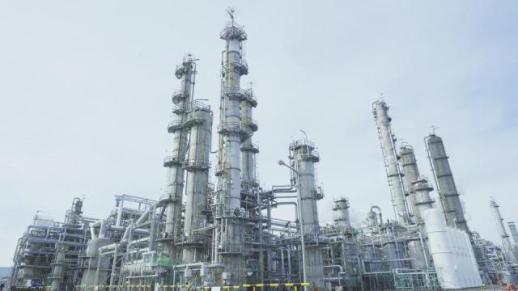 Lotte Chemical and HD Hyundai to Launch Integrated Corporation in June Lotte Chemical and HD Hyundai Chemical are set to begin preparations for the launch of their integrated corporation next month. Following an organizational restructuring, they plan to gradually merge their Daesan naphtha cracking center (NCC). According to industry sources on May 20, Lotte Chemical and HD Hyundai Chemical will officially launch the spinoff company, tentatively named Lotte Daesan Petrochemical, on June 1. Employees from Lotte Chemical's Daesan plant in Seosan, South Chungcheong Province, will initially transfer to this new entity. The integration process with HD Hyundai Chemical is expected to be completed by September 1, finalizing the transition to a new joint venture structure. This move follows a February agreement between the two companies regarding the restructuring of the Daesan Project. The Daesan Project aims to consolidate HD Hyundai Chemical, a joint venture between Hyundai Oilbank and Lotte Chemical, with Lotte Chemical's Daesan plant. The goal is to enhance the competitiveness of the struggling petrochemical business through joint operations and process efficiencies. Regarding employment, the principle of 100% retention will be upheld. Employees of Lotte Chemical who are part of the integration will maintain their existing employment relationships without layoffs, and their salaries, allowances, benefits, and promotion systems will remain unchanged. Annual leave and seniority will also be recognized. However, concerns persist among employees about future workforce management and treatment systems. The most sensitive issue is the difference in employment structures between Lotte Chemical and HD Hyundai. While Lotte Chemical employees will fully transition to the integrated corporation, personnel from Hyundai Oilbank and HD Hyundai Chemical will work in the new entity for four to five years before returning to their original companies. This structure has raised concerns about fairness, particularly since Hyundai Oilbank's wage and benefit levels are relatively higher, potentially leading to disparities even within the same operations. Additionally, the dispatch system for HD Hyundai Chemical personnel may pose labor risks. If employees maintain their formal affiliations while working in mixed operations, it could lead to allegations of illegal dispatch. An industry insider noted, "As we are still in the early stages ahead of the integrated corporation's launch, specific details regarding workforce reallocation or wage and benefits systems have not been finalized. However, given that employees from different companies are merging into one organization, some issues regarding workforce management and treatment are inevitable."* This article has been translated by AI. 2026-05-21 05:06:00
 -
 The Importance of Authenticity in Public Officials Recently, a controversial statement by Kim Yong-beom, the head of the Presidential Office's Policy Office, regarding a potential 'national dividend' sparked significant debate. As discussions about possible excess tax revenue emerged, his comments hinted at a possible refund to citizens, prompting immediate market reactions. The Presidential Office quickly clarified that no decisions had been made. It is true that the country's finances are being bolstered faster than expected due to a semiconductor boom, soaring stock prices, and a recovery in corporate taxes. However, an increase in tax revenue does not automatically translate into a 'national dividend.' Words from public officials carry weight; they can influence markets, shape expectations, and sometimes create confusion. For this reason, public officials must choose their words carefully. Unverified policies require caution, and issues directly affecting citizens' lives demand even greater restraint. Coincidentally, around the same time, a different approach was taken by Minister of Agriculture, Food and Rural Affairs, Song Mi-ryeong, who appeared as a 'daily host' in an online studio in Iksan, North Jeolla Province. To assist farmers struggling with oversupply and falling onion prices, she participated in a live commerce broadcast to encourage consumption. Beyond simply conveying messages, she explained the benefits and storage methods of onions while promoting sales. Realistically, the minister's role as a host will not dramatically boost onion prices. Agricultural pricing is a complex issue intertwined with supply, demand, and distribution structures. Oversupply cannot be resolved through a few live commerce sessions. However, citizens do not evaluate policies solely based on efficiency. For farmers facing livelihood challenges due to price drops, the mere presence of the relevant minister in the field signals meaningful support. Messages such as “the government is aware,” “not ignoring us,” and “we are in this together” serve as critical foundations for trust, as important as the policies themselves. Conversely, policies that rely solely on numbers and political rhetoric, detached from the realities on the ground, can quickly become hollow. While authenticity is a subjective concept, citizens are often more perceptive than expected in reading the attitudes of public officials. The recent controversies surrounding policies could have been mitigated if policymakers had better understood and engaged with the realities of the field. The same applies to real estate policies. The government emphasizes 'protecting actual users,' but what matters to low-income individuals without homes is whether housing prices are genuinely stabilizing and whether they feel an increase in supply. No matter how many figures and plans are announced, if citizens do not perceive changes in their lives, trust will inevitably wane. The situation with prices is similar. The government has introduced various measures, including price caps, fuel tax reductions, and discount support, in response to shocks from the Middle East. However, citizens judge the effectiveness of these policies based on the prices at their local gas stations and grocery stores, rather than the numbers in briefing materials. The authenticity of public officials is revealed not through grand slogans but through their understanding of the field and their awareness of the frustrations faced by citizens. More concerning than policy failures is the cynicism that arises from the belief that “these people do not understand our lives.” Especially now, as polarization and asset gaps widen, the attitudes of public officials are as crucial as the policies themselves. Citizens pay more attention to who is trying to understand their realities than to who is making the right statements. The same policy can be received very differently depending on the attitude with which it is explained. Ultimately, the authenticity of public officials does not stem from grand sacrifices or performances. Citizens desire a government that seeks to understand their lives more than a perfect policy. This sincerity is often more clearly demonstrated through small actions in the field than through statements in briefings or on social media. This is why those in high positions should speak less and engage more closely with the community. 2026-05-21 05:03:58
 -
 Strategies for Achieving Carbon Neutrality in the Era of 100GW Renewable Energy The South Korean government's commitment to expanding renewable energy is clear. The ambitious goal of reaching 100GW by 2030 reflects a determination to accelerate the energy transition. However, the term "ambitious" implies that achieving this target will not be easy. Increasing the share of renewable energy complicates the balance of supply and demand in the power grid, particularly as it interacts with the rigid nature of nuclear power. As the process of expanding renewable energy continues, the number of electricity providers is steadily increasing, with new players entering the market. Their entry will lead to overlapping interests and roles within the existing market and system, sometimes resulting in conflicts that will heighten the demand for changes in the electricity market. It is no longer sufficient to simply increase the quantity of generation facilities; solutions are needed for how to accommodate and manage them. The bottleneck in the energy transition must be addressed through both technology and regulation. A key challenge is enhancing grid flexibility. Coincidentally, both renewable energy and nuclear power, which are carbon-free sources, have limitations in adjusting output. Ultimately, flexibility in this era must be secured from the demand side. While batteries are often mentioned as a solution, they alone are not sufficient. There are economic constraints, and to respond to long-term and large-scale variability, complementary measures are necessary. The future power system must be designed to allow demand to adjust according to grid conditions, rather than simply having supply follow demand. In this process, we also face the challenge of electrifying sectors that currently use fossil fuels as their final energy source. Notable examples include electric vehicles in the transportation sector and heat pumps in the heating sector. Electric vehicles can contribute to grid operation by adjusting charging times or distributing demand according to grid conditions. Similarly, heat pumps can become flexible demand resources that adjust their operation based on grid conditions when combined with a certain scale of thermal storage facilities. They can increase charging and heat storage during surplus electricity periods and reduce usage during shortages. This approach of absorbing excess electricity from the power sector into other sectors like transportation and heating is known as "sector coupling." The relevant technologies are already largely prepared. The issue lies in the lack of a market and regulatory framework to effectively utilize them. For distributed consumer assets to become meaningful flexible resources, there needs to be a mechanism to aggregate them and provide their value to the grid in monetary terms. However, the current regulatory framework does not adequately support this function. With new types of market participants and technologies emerging, there is an urgent need to establish governance to coordinate these changes. Equally important as technical solutions is the establishment of rules, specifically the advancement of grid technology standards. These standards must address two simultaneous challenges. One is long-term directionality: institutionally supporting a transition path where the share of renewable energy continues to grow while existing fossil fuel generation is gradually reduced. The other is short-term operational stability: managing the grid to prevent immediate issues during the transition process. Well-designed technical standards can meet both challenges simultaneously. They should not be mechanisms to maintain a generator-centric grid but rather a roadmap for a stable transition to a renewable energy-centric grid. For all these technical and regulatory improvements to function, a fundamental overhaul of governance is necessary. The flexibility created by existing methods, electrification, and sector coupling must operate together within a single system. In this process, technology-neutral judgments that do not favor specific technologies or businesses are essential. The interests of market participants can vary significantly depending on which resources are compensated and how output control and demand adjustments are managed. Fair coordination functions are also crucial. The discussions surrounding the establishment of the Electricity Regulatory Commission are significant in this context. Beyond being a simple regulatory body, it needs to act as a "referee" that ensures the efficient operation of a renewable energy-centric grid and fairly mediates conflicting interests. At the same time, it must serve as a "helmsman" guiding the entire system toward carbon neutrality. The energy transition is not merely about replacing power sources. It signifies a fundamental transformation in how electricity is produced and consumed, as well as the regulations governing it. In the face of rapid electrification, stable operation of the power grid is directly linked to national economic and industrial competitiveness. It is now essential to design a new energy system where technological and regulatory innovations are aligned.* This article has been translated by AI. 2026-05-21 05:03:00
 -
 Five Candidates Compete for Next Head of Credit Finance Association Five candidates have confirmed their applications for the position of the next president of the Credit Finance Association. The upcoming election is shaping up to be a competitive five-way race, with candidates from both the private sector and political circles entering the fray. According to the credit finance industry on May 20, the association's candidate recommendation committee closed applications for the next president at 6 p.m. the previous day. A total of five individuals have applied for the position. The known candidates include Lee Dong-cheol, former president of KB Kookmin Card; Park Kyung-hoon, former CEO of Woori Financial Capital; Kim Sang-bong, an economics professor at Hansung University; Yoon Chang-hwan, former chief secretary to the Speaker of the National Assembly; and Jang Do-jung, former policy advisor at the Ministry of Economy and Finance. Among the candidates, Park is being prominently mentioned as a strong contender from the private sector, while Yoon is seen as a significant figure from the political realm. Park, who previously served as CEO of Woori Financial Capital, has emerged as a dark horse in the application process. Yoon, who held the position of chief secretary to the Speaker of the National Assembly during the Moon Jae-in administration in 2018, brings political experience to the table. However, both candidates lack direct experience leading the card industry, which is a significant segment of the credit finance sector. Given the importance of card companies within the association, issues such as card fees, merchant regulations, and expansion of new business areas are expected to be critical factors in evaluating the next president's qualifications. In contrast, Lee Dong-cheol's background as the former head of KB Kookmin Card is considered a strong advantage. Kim Sang-bong, an expert in finance and economics, offers a unique perspective as an academic candidate.* This article has been translated by AI. 2026-05-21 03:36:59
 -
 LIV Golf Begins Preparations for Bankruptcy Amid Financial Crisis LIV Golf has reportedly begun preparations for a bankruptcy filing in the United States following Saudi Arabia's decision to withdraw its financial support. On May 20, major international news outlets including Bloomberg and Reuters reported that "LIV Golf is exploring various options, including seeking new investors, but is preparing for the possibility of the tour collapsing by the end of the season in August." Bloomberg also noted that LIV Golf is considering relocating its headquarters to the U.S. to take advantage of more favorable bankruptcy laws. The consideration of a bankruptcy filing in the U.S. is linked to the country's 'Chapter 11' bankruptcy law, which allows companies to restructure their finances and continue operations without fully dissolving. This move is seen as an effort to find a path to recovery while preventing complete dissolution of LIV Golf. Launched in 2022 to challenge the PGA Tour's monopoly, LIV Golf has attracted top players worldwide with astronomical signing bonuses and prize money, backed by the Saudi Public Investment Fund (PIF). Over four years, it has spent more than $5 billion (approximately 7.54 trillion won) on player transfer fees and operational costs. However, disappointing commercial performance has hindered its success. The tour has faced difficulties generating additional revenue, such as broadcasting rights, due to poor television ratings in the U.S., leading to cumulative losses exceeding $1 billion (approximately 1.51 trillion won). Consequently, PIF announced last month that it would cease funding after the current season. As bankruptcy rumors surfaced, LIV Golf has sought to clarify its position. A spokesperson for LIV Golf stated in response to Bloomberg's report, "We are focused on finding long-term strategic partners, and discussions are just beginning."* This article has been translated by AI. 2026-05-21 01:15:50
 -
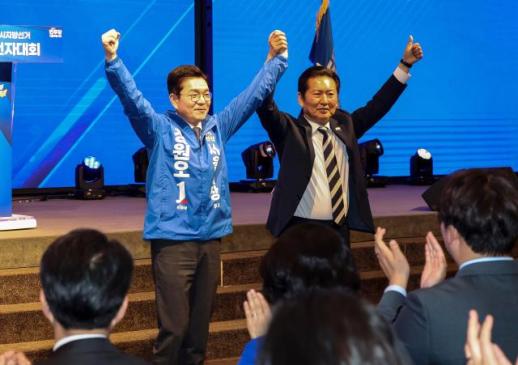 Election Campaigns Kick Off for Local Elections in South Korea The Democratic Party and the People Power Party launched their official election campaigns on May 21, kicking off active canvassing efforts. Jung Cheong-rae, the Democratic Party leader, focused on supporting Jeong Won-oh, the party's candidate for the Seoul mayoral election, while Jang Dong-hyuk targeted Yang Hyang-ja, who is vying to reclaim the Gyeonggi governor's office. Jung began his support for Jeong at the Dong Seoul Postal Center, where he emphasized delivering a new vision for Seoul that residents can feel. He participated in receiving policy proposals from the 25 districts of Seoul and engaged in sorting packages to encourage the postal workers. After the work concluded, Jung told reporters, "I want to deliver the future of Seoul to our descendants through this local election. I envision the changes and developments in Seoul, as Jeong demonstrated during his tenure as the Seongdong District mayor. I believe I am delivering Jeong Won-oh's victory." He added, "I want to deliver a bright and hopeful South Korea, where democracy shines, by eradicating the 12.3 emergency martial law and insurrection alongside the people on June 3." Conversely, Jang visited Yang's hunger strike site in Pyeongtaek, where he urged a compromise between labor and management at Samsung Electronics, focusing on the Gyeonggi region, which narrowly lost in the last local elections. Jang explained his choice to start his campaign at Yang's hunger strike site, stating, "I thought it would be good to begin the election campaign in a place where Yang is fighting desperately to prevent South Korea from coming to a standstill. I believe party members, supporters, and all citizens will remember and evaluate Yang's determination to undertake this hunger strike." He highlighted the recent provisional agreement reached between Samsung Electronics' labor and management on May 20, saying, "Yang has fought with the urgency that if the semiconductor industry stops, South Korea stops. I believe this agreement was reached because of her life-and-death struggle." Meanwhile, Oh Se-hoon and Choo Mi-ae, who are competing against Jeong and Yang in the Seoul mayoral and Gyeonggi gubernatorial races, respectively, also began their campaign activities. Oh visited the Garak-dong Agricultural and Fishery Wholesale Market, aiming to revitalize Seoul's economy, while Choo announced the start of her campaign at the Wolam Public Garage in Uiwang, Gyeonggi Province.* This article has been translated by AI. 2026-05-21 01:04:05
 -
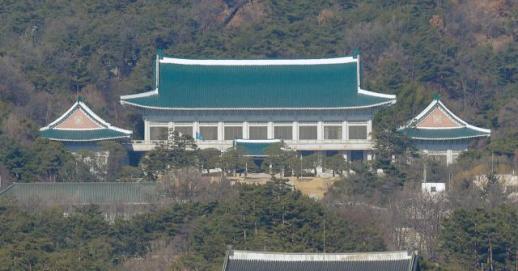 Blue House Thanks Samsung Electronics for Labor Agreement Decision On May 20, the Blue House expressed gratitude for the labor-management agreement reached just before a planned strike at Samsung Electronics, stating, "We appreciate the labor and management's grand decision for the nation and the people."In a press release that evening, the Blue House commented on the Samsung labor union's decision to postpone the strike.The statement added, "This is the result of the efforts of government officials, including Minister of Labor Kim Young-hoon, who worked tirelessly to mediate the situation."On the night of May 20, Samsung Electronics and its labor union signed a tentative agreement on performance bonuses for 2026 at the Gyeonggi Provincial Labor Relations Commission.With the tentative wage agreement for 2026 now in place, the planned strike set for May 21 has been postponed for the time being.* This article has been translated by AI. 2026-05-20 23:48:38
 -
 Korean Business Group Welcomes Samsung Electronics Labor Agreement The Korean Employers Federation (KEF) expressed relief on May 20 after Samsung Electronics and its labor union reached a tentative agreement on performance bonuses. The KEF stated, "It is fortunate that an agreement was reached, avoiding the worst-case scenario of a strike." In a statement released around 11 p.m., the KEF noted that the agreement is significant as it reflects both parties stepping back to find common ground amid a challenging business environment characterized by intensified competition in the semiconductor industry and growing uncertainties in the global market. However, the KEF voiced concerns about the potential spread of the union's demands for performance bonuses across the broader industry. The KEF emphasized, "This agreement reflects Samsung Electronics' unique circumstances, and the labor sector should not generalize it to promote excessive demands for performance bonuses across the industry. We hope that both labor and management will use this agreement as a stepping stone to quickly resolve uncertainties and establish a rational labor-management relationship." Samsung Electronics and its labor union dramatically signed the tentative agreement about an hour and a half before the union's planned general strike on May 21. The union has decided to postpone the strike and will conduct a vote among its members on the tentative agreement from May 22 to May 28.* This article has been translated by AI. 2026-05-20 23:33:45
 -
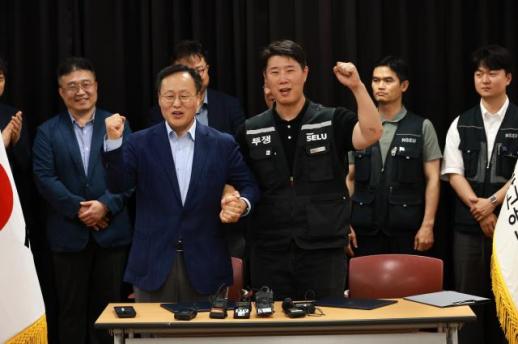 Samsung Electronics Avoids Major Strike as Union Votes on Tentative Agreement Samsung Electronics and its labor union reached a tentative agreement just hours before a planned strike. Labor Minister Kim Young-hoon intervened in the negotiations, which lasted six hours at the Gyeonggi Employment and Labor Agency, leading to the agreement. On May 20, the union's joint action headquarters announced that the planned strike from May 21 to June 7 would be postponed until further notice. All members are expected to participate in a vote on the tentative wage agreement from May 23 at 9 a.m. to May 28 at 10 a.m. Choi Seung-ho, chairman of the union's joint action headquarters, expressed gratitude for the government's mediation efforts and acknowledged the internal conflicts that had caused public concern. He stated, "We have reached a tentative agreement just hours before the strike and decided to postpone it. The vote will take place from May 22 to 27." Yeom Young-gu, head of the Samsung Electronics DS People Team, apologized to employees for the prolonged negotiations and thanked the union and the government for their efforts. He emphasized the importance of the agreement in fostering a cooperative labor-management culture and committed to implementing the terms faithfully. Minister Kim remarked, "Our support for democracy stems from our belief in the power of dialogue to address common challenges. I extend my sincere gratitude to both parties for reaching a tentative agreement through autonomous negotiations." He acknowledged the anxiety felt by the public amid challenging domestic and international conditions and credited the government's role in facilitating dialogue. "This is a growing pain, and I believe it demonstrates the K-competitiveness of resolving issues through conversation," he added. Regarding the specifics of the agreement, Kim noted that while there were contentious issues, both sides made concessions to find a solution. Choi explained that the company agreed to postpone the distribution method for loss-making divisions for one year, which had been a point of contention. Yeom added that the company and the union shared a common goal and worked collaboratively to resolve the issues, highlighting the minister's contributions to the successful conclusion of the negotiations. The tentative agreement was reached after the labor committee's mediation failed earlier that morning. Kim emphasized the government's commitment to facilitating dialogue and understanding the reasons behind the breakdown in negotiations to find a way forward. He concluded by stating that while principles are important, there are no absolute exceptions, and he was pleased that the company accepted the agreement. Yeom noted that the agreement reflects a commitment to rewarding performance while adhering to fundamental principles. 2026-05-20 23:22:13
 -
 Samsung Avoids Strike Crisis, But Vote Looms as Deadline Approaches Samsung Electronics has temporarily averted a major crisis as a strike loomed. Just over an hour before a planned strike on May 21, the company and its labor union reached a tentative agreement. However, concerns remain as a final vote by union members is still pending.The Samsung Electronics union's joint action committee announced around 10:30 p.m. on May 20 that the planned strike from May 21 to June 7 would be postponed until further notice.With the strike averted at the last moment, the union immediately began the process of gathering member opinions and securing control over the vote. The union plans to conduct a vote on the tentative agreement regarding the 2026 wage negotiations from 2 p.m. on May 22 to 10 a.m. on May 27.This agreement effectively buys Samsung Electronics a crucial week, as even a brief halt in semiconductor production can lead to losses amounting to billions of won. The postponement of the strike is seen as a decision by both parties to prevent a disaster.However, it remains uncertain whether the tentative agreement will ultimately be approved. If the results of the member vote, to be announced in a week, show a majority against the agreement, the union has indicated it will immediately resume preparations for a long-term strike. This effectively pushes the deadline for a potential strike back by a week.Should the union vote reject the agreement and a strike materialize, the government is likely to activate its previously announced strong legal measures, including the 'emergency mediation authority.'Earlier, Prime Minister Kim Min-seok stated in a public address on May 17 that if the Samsung Electronics strike poses a significant threat to the national economy, the government would have no choice but to consider all legal measures, including emergency mediation. The government cannot afford to remain passive in the face of a disruption to the semiconductor supply chain, which is vital to the national economy.Emergency mediation authority is a powerful legal measure that the Minister of Employment and Labor can invoke when there is a significant risk to the national economy or public safety. Once activated, the union must immediately cease all strike activities, and a complete ban on strikes will be in effect for 30 days. This measure serves to prevent the escalation of the strike.During this cooling-off period, if no voluntary agreement is reached between the parties, the chair of the Central Labor Relations Commission can decide to refer the matter for mediation. The mediation decision at this stage has the same effect as a collective agreement, meaning both parties must comply. 2026-05-20 23:19:05