
Journalist

Wolfgang Preiser, Cheryl Baxter, Jean Nachega
-
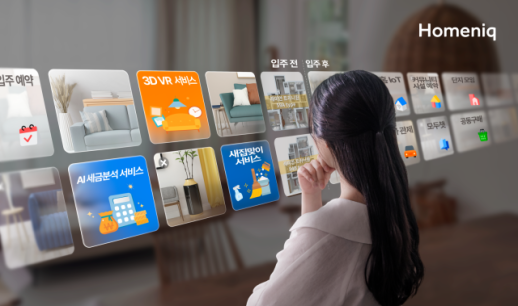 Samsung C&T Expands Home Platform Services to Pre-Move-In Stage Samsung C&T's construction division is expanding the services of its home platform, HomeNick, to include the pre-move-in stage for apartments. On May 19, Samsung C&T announced a collaboration with interior design firm Hanssem to introduce the "HomeStyle" service for prospective residents. Those moving into new developments where HomeNick is implemented will be able to view 3D interior concepts tailored to their apartment size and can book consultations at showrooms, leading to purchase options. The HomeStyle service will first be applied at the "Banpo Raemian Trinion," which is set to welcome residents in August. Prospective residents can check interior concepts through HomeNick and schedule consultations at Hanssem's flagship store in Nonhyeon or at the Hanssem I-Park Mall in Yongsan. A discount of up to 8% will be offered upon signing a purchase contract. Additionally, Samsung C&T is collaborating with the move-in service platform "Hello Move-In." This partnership allows users to compare and apply for essential services, such as move-in cleaning and partial construction, directly through HomeNick. Hello Move-In boasts 13 million construction experiences and will continue to provide home care services through HomeNick after residents move in. In April, Samsung C&T partnered with AI tax solution company TaxEye to add features to HomeNick, including simulations for acquisition and property taxes, as well as calculations for capital gains and inheritance taxes. The company plans to gradually expand financial asset management services in the future. TaxEye, operated by NewEye, is recognized for its achievements, including winning the Minister of Land, Infrastructure and Transport Award at a real estate startup competition and being selected by various organizations such as the Ministry of SMEs and Startups TIPS program and KDB Industrial Bank. Meanwhile, Samsung C&T aims to develop HomeNick into a comprehensive apartment life care solution that encompasses the contract, move-in, and residency stages.* This article has been translated by AI. 2026-05-19 15:59:44
 -
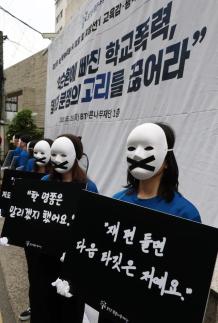 South Korean elementary school violence rate hits 12.5 percent SEOUL, May 19 (AJP) - One in eight South Korean elementary school students experienced school violence last year, driven by a surge in physical altercations and a collapse in bystander intervention, a survey showed Tuesday. The findings highlight persistent challenges in youth protection just a year after the government overhauled its disciplinary review system. A survey of 8,476 students conducted late last year by the Blue Tree Foundation found 12.5 percent of elementary students reported abuse. This significantly outpaced older groups, with 3.4 percent of middle school students and 1.6 percent of high school students reporting similar harm. The foundation attributed the elementary school spike to younger children struggling to separate rough play from actual harm. While verbal abuse remained the most common form of violence across all grades at 23.8 percent, physical violence jumped from 10.6 percent in 2023 to 17.9 percent, marking its highest share since the current survey series began in 2019. "Elementary students can feel the boundary between physical play, rough-housing, and violence as ambiguous," Kim Mi-jung, head of the foundation's counseling division, said at a press conference. "A child may think it was fine while playing together, but a day later decides it was harmful and reports it." Cyberbullying, which made up 14.5 percent of overall cases, showed a decisive shift toward online gaming. Roughly 40 percent of cyber-violence victims cited gaming platforms as the source, with 95.7 percent of that group stating the abuse crossed back and forth between online and offline environments. Witness intervention deteriorated sharply alongside the rising violence rates. The proportion of students who saw an incident but took no action reached 54.6 percent, more than doubling from 21.5 percent in 2021. Institutional responses also showed strain following the March 2024 launch of a new district-level disciplinary system by the Ministry of Education. The share of victims who reported abuse but saw no resulting action tripled to 33 percent from 2021, even as 70.8 percent of victims stated they primarily wanted an apology from the perpetrator. The foundation called on local election candidates to adopt stronger administrative responses and expanded mental health infrastructure ahead of the June 3 vote. "School violence policy is an important benchmark for student safety and trust in the school system," Lee Jong-ik, the foundation's chief executive, said. 2026-05-19 15:55:56
 -
 Uniqlo Returns to Myeongdong, Recovering Sales After Boycott Uniqlo, which left Myeongdong due to the No Japan movement and the impact of COVID-19, is returning to the area after five years. With an increase in foreign tourists and improving Japan-South Korea relations, the company is set to target Myeongdong with its largest store in the country.The "Uniqlo Myeongdong" store will officially open on May 22 in the Myeongdong area of Seoul. The store spans three floors and covers a total area of 3,254.8 square meters, making it the largest in South Korea. It will feature a wide range of products for women, men, kids, and babies. Previously, the Uniqlo store at the Lotte Department Store in the same area closed at the end of last month, making the Myeongdong store the flagship location in Seoul's central business district.On the first floor, a dedicated area for graphic T-shirts, known as the UT (Uniqlo T-shirt) zone, will showcase limited-edition shirts created in collaboration with local businesses like BAF (HBAF) and Eulji Dabang. The store will also feature a pickup locker zone for customers to collect online purchases. A Uniqlo representative explained, "The pickup locker zone allows customers to collect their online orders at the designated store one hour after purchase, enhancing the integration of online and offline shopping." There will be a total of 54 fitting rooms across the first to third floors, with a separate women's fitting room located near the women's innerwear section on the second floor.On the third floor, the store will house the third "ReUniqlo Studio" in the country. This area will include a recycling bin for customers to drop off used clothing, as well as a customization service featuring about 100 embroidery patterns and clothing alteration services. Currently, ReUniqlo Studios are also operating at the Lotte World Mall in Songpa-gu, Seoul, and in Daegu's Dongseongro. Uniqlo's renewed focus on Myeongdong aligns with the area's recovery. The brand experienced a significant drop in sales following the No Japan movement, which emerged during the Japan-South Korea trade dispute in 2019, compounded by the COVID-19 pandemic. Sales plummeted from 1.37 trillion won in 2019 to 629.8 billion won in 2020 and 582.4 billion won in 2021. Consequently, Uniqlo closed its store located near Exit 6 of Myeongdong Station in 2021.However, recent trends indicate a shift. The number of foreign visitors to South Korea is increasing, revitalizing the Myeongdong area, and consumer resistance to Japanese brands has reportedly eased. Uniqlo's sales are also on the rise. FRL Korea, which operates Uniqlo in South Korea, reported sales of 1.35 trillion won last year, a 27.5% increase from the previous year's 1.06 trillion won.In response, Uniqlo plans to leverage the Myeongdong store, which attracts foreign tourists, to continue its growth in the domestic market. Takao Kuwahara, co-CEO of FRL Korea, stated, "We expect to provide all product lines of Uniqlo LifeWear and a differentiated brand experience and customer service to both Korean customers and global visitors, making Myeongdong a new landmark."* This article has been translated by AI. 2026-05-19 15:51:47
 -
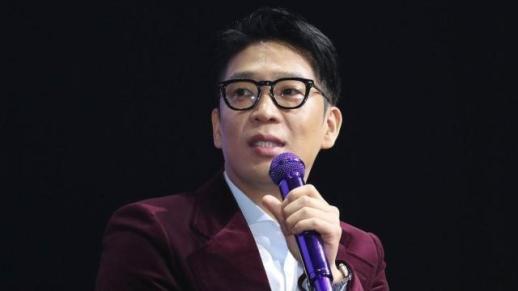 MC Mong's TikTok Account Suspended After Celebrity Allegations 가수 MC몽이 소셜미디어(SNS) 계정을 정지당했다고 밝혔다. On May 19, MC Mong announced that his TikTok account was suspended for a week due to "specific expressions" he used. Previously, on May 18, during a live broadcast on his social media, MC Mong claimed that there exists an illegal gambling ring involving celebrities, mentioning Kim Min-jong as one of its members. In response, Kim Min-jong stated through his legal representative, the law firm Okims, that he firmly denies the allegations being discussed. He added, "We will thoroughly verify and clarify the facts regarding this matter, and we will pursue legal action if necessary. I will act cautiously to avoid disappointing those who have supported me for a long time." Kim Min-jong further expressed concern over the unfounded rumors and malicious suspicions surrounding him, stating, "The reputation of an artist who has received great love from the public is being seriously damaged." He concluded, "All claims regarding Kim Min-jong are clearly false. He will confront these issues head-on without any compromise to prove his integrity." Meanwhile, MC Mong co-founded One Hundred with Cha Ga-won, chairman of the Piak Group, in 2023 but left the company in July of the previous year. Since then, allegations have emerged that MC Mong used company funds for illegal gambling.* This article has been translated by AI. 2026-05-19 15:48:55
 -
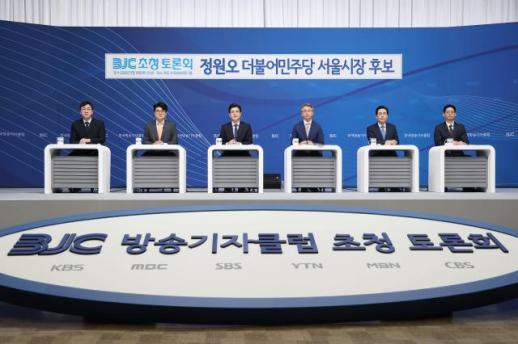 Jung Won-oh: It's Unwise for the Seoul Mayor to Engage in Political Conflicts Jung Won-oh, the Democratic Party's candidate for Seoul mayor, stated that it is unwise for the mayor, as the head of local government, to be embroiled in political conflicts. Speaking at a discussion hosted by the Broadcasting Journalists Club in Mok-dong, Yangcheon-gu, on May 19, Jung emphasized, "The place for the mayor to stand is not in the midst of political disputes but in the midst of people's livelihoods." He added, "If discussions are heading in a direction that is very different from citizens' opinions or does not align with judicial justice, then it is necessary to voice those opinions on behalf of the citizens." He noted that while discussions are currently stalled, he intends to actively represent citizens' views when they resume. When asked to evaluate the real estate policies of the Lee Jae-myung administration, Jung responded, "I believe we need to reach at least a turning point to make a judgment. It is difficult to assign scores at this time." Jung pointed out that since President Yoon Suk-yeol took office, the housing market has seen a sharp rise in prices due to the reversal of the land transaction permit system by Oh Se-hoon, the candidate from the People Power Party. He noted that while the Lee administration's policies, such as those implemented on June 27 and November 5, had somewhat stabilized housing prices, there has been a recent uptick in market activity. He stressed that the key issue is how consistently the Seoul mayor, the city government, the Ministry of Land, Infrastructure and Transport, and the national government send signals. "If we do not speak with one voice, the market could become unstable, leading to uncontrollable housing price increases," he warned. Regarding his pledge to provide property tax relief for single homeowners without income, Jung stated, "Since it is a relief on the increase, there should not be significant issues in securing funding," explaining that the burden would be shared between the districts and the city of Seoul. On the matter of reducing the long-term holding special deduction and increasing property taxes, he asserted, "It is clear that the current rights of single homeowners must be protected," emphasizing that actions should be taken from the perspective of citizens and within the bounds of common sense. In response to criticisms labeling his urban development plans as 'Park Won-soon’s Urban Regeneration Season 2,' Jung countered, "My approach to urban regeneration balances development and preservation, focusing on creative and citizen-led initiatives." He expressed opposition to superficial urban regeneration efforts that merely involve painting murals, arguing that areas needing new construction should be developed, while those suitable for remodeling should be remodeled. Additionally, Jung identified 'administrative direction and philosophy' as issues under Oh Se-hoon's administration. He stated, "The citizens should be the owners, and we must do what they want, but the current administration operates as if the mayor is the owner." He concluded by praising the swift designation of maintenance zones through rapid integrated planning and the small-scale housing maintenance project ideas through the 'Moa Town' initiative.* This article has been translated by AI. 2026-05-19 15:46:26
 -
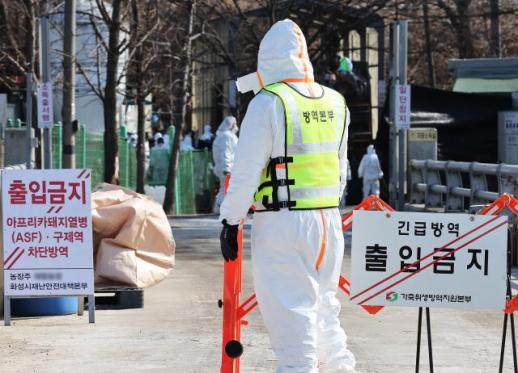 87% of This Year's African Swine Fever Cases Linked to Foreign Sources This year, 87% of the confirmed cases of African swine fever (ASF) in South Korean farms have been traced back to foreign sources. The primary routes of transmission are believed to be through feed ingredients and the compounded feed made from them. The Animal and Plant Quarantine Agency released the findings of its epidemiological investigation into the causes of ASF on May 19. Between January 16 and March 16, 24 cases of ASF were reported across seven provinces nationwide. Notably, the disease spread to regions beyond the previously affected areas of Gyeonggi, Gangwon, and North Gyeongsang, including South Chungcheong, North Jeolla, South Jeolla, and South Gyeongsang. Of the 24 cases, three were of a type previously identified in South Korea, while 21 were linked to strains originating from abroad. Key factors contributing to the outbreak include infection through feed ingredients, illegal distribution of livestock products, and contamination from wild boars. The Central Disaster Management Headquarters noted that ASF genes from foreign strains were detected in feed ingredients and compounded feed supplied to the affected farms, confirming a link between the farms and the contaminated feed. Additionally, ASF genes were found in six unreported products seized during crackdowns on illegal livestock products, raising concerns about the potential for virus entry through border inspection networks. Authorities also believe that contamination from wild boar carcasses may have transmitted the virus to domesticated pigs on farms. The Central Disaster Management Headquarters is enhancing its biosecurity measures. A testing system for ASF has been established, requiring inspections of all pigs being shipped from slaughterhouses nationwide. To prevent ASF entry through illegal livestock products, the agency is expanding X-ray inspections of travelers' luggage. Park Jeong-hoon, head of the Food Policy Office at the Ministry of Agriculture, Food and Rural Affairs, stated, "We are implementing proactive biosecurity measures starting from the entry of foreign workers to slaughterhouses and wild boars to prevent a recurrence of ASF. We urge farms to actively cooperate with biosecurity management, including restricting access for people and vehicles and prohibiting the entry of illegal livestock products into farms."* This article has been translated by AI. 2026-05-19 15:43:35
 -
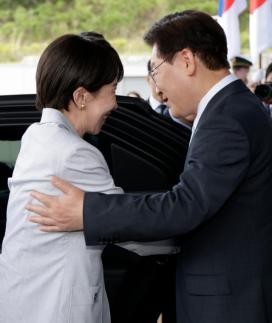 President Lee Welcomes Japanese Prime Minister Takaichi in Andong President Lee Jae-myung personally welcomed Japanese Prime Minister Sanae Takaichi on May 19 in Andong, where they were set to hold a Korea-Japan summit.President Lee stood at the entrance of a hotel in downtown Andong around 1:40 p.m. waiting for the arrival of Prime Minister Takaichi's vehicle.As the black car arrived, President Lee greeted Takaichi with a bright smile, clapping his hands and shaking her hand.The two leaders, meeting for the third time in an official capacity, displayed their camaraderie by holding hands and patting each other on the shoulder."I appreciate you coming all the way to our small rural city. I have been waiting since last night," President Lee said in welcoming Takaichi.Takaichi praised the traditional music band and honor guard that preceded her vehicle, saying, "Wonderful," and smiled broadly at President Lee, expressing her gratitude.Before entering the meeting venue, Takaichi bowed to the band and the press, following President Lee's lead.On this day, President Lee wore a sky-blue tie that matched the tone of Takaichi's suit jacket.A Blue House official explained, "The tie was chosen to convey a friendly feeling with a special meaning of shuttle diplomacy, symbolizing respect and trust."* This article has been translated by AI. 2026-05-19 15:42:00
 -
 Kim Kwan-young Leads Slightly Over Lee Won-taek in Jeonbuk Governor Race A recent poll indicates a tight race between Lee Won-taek of the Democratic Party and independent candidate Kim Kwan-young in the Jeonbuk governor election. The survey, conducted by Hangil Research on May 16-17 and commissioned by the New Jeonbuk Newspaper, involved 1,001 residents aged 18 and older in Jeonbuk. The results, released on May 18, show Kim Kwan-young leading with 42.1% support, while Lee Won-taek follows closely with 40.5%. The poll also recorded 4.9% for Yang Jeong-moo of the People Power Party, and 2.7% and 2.4% for independent candidate Kim Seong-soo and Baek Seung-jae of the Justice Party, respectively. The 1.6 percentage point gap between Kim and Lee falls within the margin of error, indicating a highly competitive race. Historically, Jeonbuk has been a stronghold for the Democratic Party, but the emergence of Kim Kwan-young as an independent candidate, following his expulsion from the party over allegations of cash distribution, has fragmented voter support. The poll was conducted using a mobile phone ARS method, achieving an 8.5% response rate. The margin of error is ±3.1 percentage points at a 95% confidence level. For more details, please refer to the Central Election Survey Deliberation Committee's website. * This article has been translated by AI. 2026-05-19 15:39:22
 -
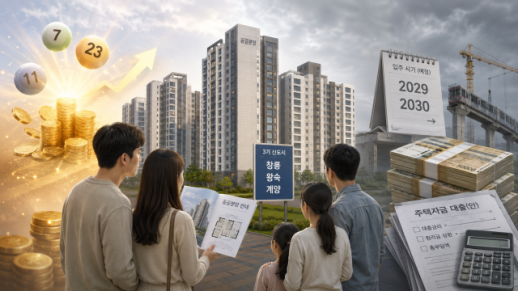 Public Housing Applications Open for New Towns in South Korea As public housing applications begin for key districts in South Korea's third new towns, prospective buyers are facing complex calculations. While the application price cap is expected to make these units more competitively priced than surrounding markets, rising construction and land costs have led to higher-than-expected prices, making it difficult to view these applications as a "lottery" opportunity. According to the Ministry of Land, Infrastructure and Transport, the Korea Land and Housing Corporation (LH), and the housing industry, special applications for the Namyangju Wangsu 2 A-1 and A-3 blocks and the Goyang Changnyeong S-1 block will start on May 26, followed by general applications. The new public housing application for Incheon Gyeyang A9 block will take place from May 27 to 28. Last month, a notice was issued for the recruitment of residents for 2,309 units in these third new towns. The largest offering comes from the Namyangju Wangsu 2 district, with a total of 1,498 units available: 812 units in the A-1 block and 686 units in the A-3 block. This marks the first public sale in the Wangsu 2 district, adding to its significance. The A-3 block will feature 390 units of 59 square meters, 102 units of 74 square meters, and 194 units of 84 square meters. The A-1 block is a public-private partnership project developed by LH and Kumho Construction. The prices for the A-1 block's 84 square meter units are set at 693.63 million won, while those in the A-3 block are priced at 732.45 million won. The A-1 block's 59 square meter units are priced at 493.04 million won, and the 74 square meter units at 613.68 million won. In the A-3 block, the 59 square meter units range from 526.34 million to 527.14 million won, and the 74 square meter units are priced at 646.11 million won. The proximity to the Dasan New Town and improvements in transportation, such as the Gangdong-Hanam-Namyangju line, are expected to sustain interest from buyers. The Goyang Changnyeong S-1 block boasts strong accessibility to the northwest region of Seoul. The "Goyang Changnyeong Umirin Grenity" is a public-private partnership project involving the Umirin Construction consortium, comprising 494 units. The units range from 59 to 84 square meters, with an average price of 783.40 million won for the 84 square meter units. This public sale follows a pre-application process conducted in July 2022, targeting remaining units after excluding those allocated to pre-application winners. The application schedule includes special applications on May 26, general applications on May 27-28, a winner announcement on June 11, and contract signings from July 27-30. Particularly, the Changnyeong district's proximity to the Eunpyeong and Mapo areas of Seoul, along with expectations for a new GTX-A Changnyeong station, is likely to attract significant demand. However, the inclusion of pre-application winners may limit the actual number of new units available for application. While the accessibility to Seoul and the brand reputation of the development are seen as advantages, the rising price of 84 square meter units into the upper 700 million won range may impact buyers' ability to finance their applications. The Incheon Gyeyang A9 block is the only newlywed hope town among the major offerings. Out of a total of 475 units, 317 will be available for public sale, while 158 will be designated as happy housing for future supply. The block consists solely of 55 square meter units, with average prices ranging from 491.35 million to 496.53 million won. This development is targeted at newlyweds, prospective newlyweds, and single-parent families, making the applicant pool relatively limited compared to Wangsu 2 and Changnyeong. Market interest centers on whether these developments can be considered "lottery applications" in the metropolitan area. The Wangsu 2 district is viewed as competitively priced compared to major units in the nearby Dasan New Town. Similarly, Changnyeong's accessibility to northwest Seoul and anticipated transportation improvements may enhance its appeal to genuine buyers. However, there are notable concerns. The price for the 84 square meter units in Wangsu 2 is around 700 million won, while Changnyeong's units are priced in the upper 700 million won range, posing a significant initial financial burden for prospective buyers. Complaints have also arisen regarding the higher-than-expected prices compared to pre-application estimates. The time remaining until occupancy is another variable; the Goyang Changnyeong S-1 block is scheduled for occupancy in May 2029, while the Namyangju Wangsu 2 A-3 block is set for May 2030. With a considerable gap between application and actual occupancy, factors such as transportation delays, interest rate fluctuations, and changes in surrounding market prices must be carefully considered. Experts believe that demand will vary significantly by district. While Wangsu 2 and Changnyeong are likely to attract interest due to anticipated transportation improvements and competitive pricing, Gyeyang may face limited demand due to its focus on newlywed housing. A housing industry representative stated, "While the price cap does make these units cheaper compared to surrounding markets, the financial burden and risks associated with the timing of occupancy make it difficult to approach these applications as merely a lottery. It is essential to consider application qualifications, residency obligations, resale restrictions, and living conditions at the time of occupancy comprehensively."* This article has been translated by AI. 2026-05-19 15:31:41
 -
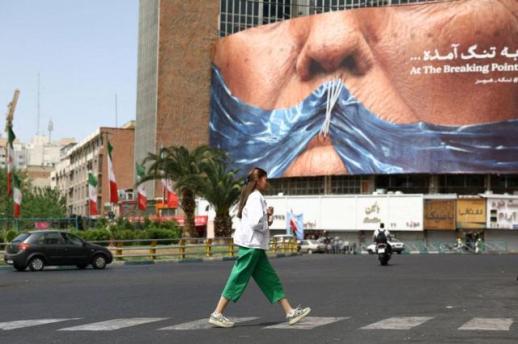 ASIA INSIGHT: Twelve weeks on, Middle East conflict still has no way out SEOUL, May 19 (AJP) - Now about 12 weeks into the conflict in the Middle East which began with joint U.S. and Israeli airstrikes against Iran in late February, there is still no end in sight. What some expected to be a short, contained confrontation has instead become a prolonged regional crisis with widening economic and political consequences. At the center of the prolonged standoff is a fundamental issue. Both sides say they want a deal, but they remain far apart on what that deal should look like. U.S. President Trump has blown hot and cold, threatening large-scale military action one moment and signaling openness to talks the next. He recently called off a planned strike after leaders from Qatar, Saudi Arabia, and the United Arab Emirates (UAE) urged restraint, warning of wider regional spillover. Iran, for its part, has reportedly put forward revised proposals through intermediaries, focusing on ending hostilities. However the U.S. has dismissed them as insufficient, demanding deeper concessions on Iran's nuclear program and its broader role in the region. Tehran, in turn, sees Washington's demands unrealistic and one-sided. While diplomacy stalls, the conflict continues to affect the wider world. Disruptions in and around the Strait of Hormuz, a key global shipping route, have unsettled energy markets and pushed oil prices sharply higher. That surge has fueled inflation fears and triggered a selloff in global bonds, with rising yields in the U.S., Japan, and other major economies. Low-level clashes have become more frequent and persistent. Drone attacks and maritime threats have not escalated into full-scale regional war, but they have not stopped either. Instead, they have created a pattern of sustained pressure that keeps the region on edge. Gulf states such as Qatar, Saudi Arabia and the UAE are trying to prevent further escalation, urging restraint while quietly pushing for negotiations. Their involvement reflects a broader concern that even a limited conflict is now affecting trade security, energy supplies, and long-term economic stability across the world. Despite ongoing diplomatic efforts, a breakthrough remains elusive as the two sides continue to see the conflict differently, leaving a deal distant for now. With the Middle East conflict dragging on, it has become more dangerous, with no clear way out. History reminds us that wars are far harder to end than to start. In a region where religious, geopolitical, and energy interests are deeply intertwined, the line between victory and defeat often blurs. Markets have already stopped asking when the war will end. The question now is how long the instability will last. 2026-05-19 15:27:40