

[Photograph by Yoo Dae-gil = dbeorlf123@ajunews.com]
Surging coal prices have pushed up fertilizer prices, prompting China to restrict exports. China is a key supplier of urea, sulphate and phosphate. South Korea's logistics industry feels the brunt of China's curbs on exports that sent prices soaring in the domestic urea market.
Out of about ten million vehicles installed with diesel engines in South Korea, about four million sedans, sport utility vehicles and trucks are subject to European emission standards and use a diesel exhaust fluid (DEF) made with 32.5 percent urea and 67.5 percent deionized water. DEF is consumed in selective catalytic reduction (SCR) that reduces the amount of nitrogen oxides (NOx), which are harmful pollutants, in diesel exhaust emissions.
The office of President Moon Jae-in formed a task force led by An Il-hwan, the senior presidential secretary for economic affairs, on November 5 to monitory the supply and demand of DEF and make comprehensive use of various channels such as diplomatic consultations with China and cooperation with the domestic logistics industry.
Prime Minister Kim Boo-kyum said in a parliament committee that the government would try and find ways to diversity imports and import urea from Middle Eastern countries. "I understand that (the government) is trying to find diversified import destinations in Middle Eastern and other countries," he said, adding Seoul has asked Beijing to speed up customs clearance on products stored in the pier for quarantine.

Copyright ⓒ Aju Press All rights reserved.
Related News
-
 LGES formalizes entry into low-cost EV batteries dominated by Chinese rivals
SEOUL -- In a bid to gain a competitive edge in a battery war especially with Chinese rivals, South Korean companies led by LG Energy Solution are finally working on the commercial production of low-cost electric vehicle batteries. It's not a skill but a matter of will and choice as South Korea's battery industry has accumulated sufficient technology. South Korean battery makers have tried to produce efficient and high-end batteries, such as NCM that contains nickel, cobalt and manganese. The proportion of nickel is high so that battery producers can save costs and extend the driving range. Cobalt, an expensive rare-earth element widely used in lithium-ion batteries, is vulnerable to sudden price fluctuations. Nickel is cheaper than cobalt. Meanwhile, Chinese companies have focused on lithium iron phosphate (LFP) batteries that use lithium iron phosphate as cathode material and a graphitic carbon electrode with a metallic backing as the anode. Cobalt-free LFP batteries offer low cost, low toxicity and long-term stability. The main drawback is lower energy density than that of lithium cobalt oxide. Due to the rapid spread of electric vehicles, South Korean companies think about diffusion brands. LG Energy Solution (LGES) was the first to consider commercializing LPF batteries. "Considering the advantages of LFP materials, we are developing them for mass production first in the ESS market, where space or weight is not limited and cost competitiveness is important," a senior LGES official said at a conference call held by LG Chem on October 25. LG Chem, the parent company of LGES, said it is developing a cobalt-free, low-cost material that can overcome the shortcomings of LFP batteries which have been adopted in low-end models for emerging markets. Top officials from SK On, the domestic rival of LGES, have also mentioned the possibility of developing LFP batteries. To take the upper hand in competition with China, South Korea disclosed an injection of some 40.6 trillion won ($35 billion) by 2030 into its battery industry, at an event attended by President Moon Jae-in, battery makers and partner companies on July 8.
-
 (FOCUS) Scientists advocate S. Korea's wise strategy to target niche space market
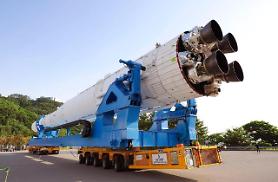
SEOUL -- To enhance global competitiveness, space scientists advocate a wise strategy to target niche markets at a time when reusable projectiles that can drastically reduce costs are emerging as a game-changer. As a latecomer in space competition, South Korea faces an important turning point in the development of space rockets, starting with the launch of a space rocket installed with home-grown liquid fuel engines. "We will have to work hard to secure the reliability and ensure the safety of Nuri," Jang Tae-Seong, a satellite researcher at the state-run Korea Advanced Institute of Science & Technology (KAIST), said at a forum which was held a week ahead of the scheduled launch on October 21 of the Korea Space Launch Vehicle-2 (KSLV-2), known as "Nuri" capable of deploying 1.5-ton satellites into 600 to 800 kilometers (497 miles) of orbit. If the first launch of Nuri, designed by the state-run Korea Aerospace Research Institute (KARI), is successful, South Korea would be the seventh country to develop a rocket capable of carrying more than one ton of payload after the United States, Russia, France, Japan, China and India, heralding a full-fledged start of South Korea's space program which followed almost 13 years of arduous work to develop original technologies with the initial help of Russian engineers. South Korea's space program has seen slow progress as advanced countries were reluctant to transfer core technologies. Three space rockets have been launched but two fired in 2009 and 2010 failed to reach the earth's targeted orbit. The third one using Russian technology put a satellite into orbit in 2013. Some 1.96 trillion won ($1.68 billion) has been invested in the space program that began in 2010 to secure independent space transport capabilities. The first launch of Nuri at the Naro Space Center in the southern coastal town of Goheung will carry a dummy satellite. The launch system is 47.2 meters long and weighs about 200 tons. The first stage uses a cluster of four 75-ton liquid engines. A 75-ton liquid engine was designed for the second stage and a seven-ton liquid engine for the third stage. "Even if Nuri succeeds in entering orbit, we cannot guarantee all subsequent successes. In order to secure reliability and technical stability, a repeated launch project is very important," Jang said, calling for efforts to secure the reliability and technical stability of homemade rockets and establish a business model targeting niche markets through weight-lightening and an increase in the power of engines. Lim Jong-bin, a researcher and policymaker at South Korea's national space policy research center, said that with Nuri's first launch, South Korea would secure "a symbol of national power," strategic technologies, and the entire process of independent rocket development. "In space development, projectiles, in particular, are not easy to challenge unless economic capabilities, as well as national science technology, are added." "Related technologies can be used for war, so technology transfer and sharing between countries are prohibited," said Lim from the Science and Technology Policy Institute (STEPI). Still, he said South Korea has a long way to go because Nuri is less competitive than foreign projectiles due to its small payload capacity and lack of reliability. The launch of Nuri underlines efforts by the Seoul government to push for a policy shift to foster a civilian-led space industry. From 2022 to 2027, the government would spend some 680 billion won to launch four Nuri rockets. The goal is to create a self-sustaining industrial ecosystem and cultivate innovative companies like Space X, a U.S. aerospace company. South Korea had no time to secure technologies related to a reusable launch system or large satellite capabilities, Lim said, adding a space industry ecosystem should be established to activate the development of technologies on small satellites by private space companies. "We should acquire technical capabilities in high-performance projectiles for space exploration, dramatically lower launch service costs and enhance competitiveness by linking a next program with the development of projectiles such as reusable projectiles." The mid-term goal of South Korea's space program is to develop solid-propellant boosters, put a lot of small low-orbit satellites into orbit and raise the localization rate of high-tech space components for satellites and launchers. Liquid-propellant rockets offer more efficient and controllable alternatives, but solid rockets are used in military armament or as light launch vehicles because of their simplicity and reliability. Rockets using solid fuel are more economical to place small satellites. Technology related to a solid propulsion engine and the launch of Nuri will be transferred to the private sector. "I believe that in liquid engine technology, we have caught up with up to 70 percent of developed countries," said Oh Seung-hyup, a KARI researcher in charge of developing a rocket propulsion system.
-
 (FOCUS) SK Group expands alternative food business thru partnership with foreign and domestic companies
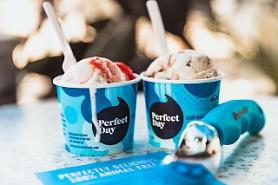
SEOUL -- Based on Chairman Chey Tae-won's strong interest and motivation, South Korea's third-largest conglomerate SK Group is pushing for the active expansion of its alternative food business through bold investments and strategic partnerships with foreign and domestic companies. The initial goal is to lead Asia's alternative food market with high potential. SK Inc., an investment-oriented holding company of SK Group, partnered with STIC Investments, a domestic venture capital, to invest $55 million in Perfect Day on top of its first investment estimated at $45 million in 2020 in the U.S. protein fermentation company which has developed processes of creating dairy proteins, including casein and whey, by fermentation in microbiota, specifically from Trichoderma fungi in bioreactors, instead of extraction from bovine milk. Chey has shown interest in alternative foods by posting pictures of Perfect Day products including ice cream on his personal Instagram account in August. "The best one is the vanilla ice cream made with fermented dairy protein," he said, adding it was difficult to conjure up the taste of vanilla with alternative dairy protein. In a separate deal published on October 1, SK Inc. forged a partnership with SPC Samlip, a bakery brand of South Korean confectionery and bakery giant SPC Group, to make joint investments and find business opportunities by introducing technologies from Perfect Day as well as Meatless Farm, a British company that produces vegan, plant-based meats which are made primarily from pea protein. "We will increase global business opportunities and strengthen our global position as an ESG alternative food investor by utilizing our unique strengths, global investment capabilities and various networks," SK Inc.'s green investment center head Kim Moo-hwan said in a statement. He said SK Inc. would tap Asia's alternative meat markets through collaboration with SPC Samlip and China's Joyvio Group, which is the largest producer of blueberries and kiwis. Environmental, social, and corporate governance (ESG) is a trendy corporate operation method that focuses on the use of green energy and environmentally-friendly management. Chey has called for the quick adoption of ESG to cope with climate change and ever-tightening regulations on greenhouse gas emissions. SK Inc. and Joyvio agreed in July to create an alternative food investment fund, invest in alternative protein manufacturing such as plant-based meals and protein fermentation, and push for cooperation with food tech companies such as vertical farming, which is the practice of growing crops in vertically stacked layers and often incorporates controlled-environment agriculture. In March 2020, SPC Samlip partnered with American food company JUST to distribute vegan products including JUST Egg, a plant-based scrambled egg alternative product made with mung bean protein, through its franchise. SK Group has spearheaded a push by domestic companies to expand the base of alternative food markets. The domestic alternative meat market is still small, but market researchers forecast rapid growth. According to data from the Korea International Trade Association(KITA), alternative meat would account for more than 30 percent of the global meat market by 2030 and 60 percent by 2040, as concerns over animal welfare and food security spur the global demand for meat alternatives. Many companies and researchers in South Korea and other countries are trying to establish a new paradigm for the mass production of plant-based or cultured meat by lowering costs through technological advancements. Potential factors of consumer acceptance are healthiness, safety, nutritional characteristics, sustainability, taste and lower prices. Plant-based meats imitate meat and are most commonly made from soy, peas, beans, mushrooms, mung beans, or wheat gluten. Cultured meat is produced by in vitro cell culture of animal cells. The production of cultured meat used to be expensive, but costs have been lowered through technological advancements. Biomass fermentation uses high-protein content and the rapid growth of microorganisms to efficiently make large amounts of protein-rich food. In 2021, there have been a series of investments by major South Korean companies to launch or expand their businesses in alternative food markets. SK Inc. invested about 29 billion won in Nature's Fynd that has developed an alternative protein source rich in nutrients using microorganisms and self-fermentation technology found in the Yellowstone National Park. In June, POSCO International, a trading arm of South Korea's steel group, agreed to support the development and global marketing of products from two domestic food tech companies, including Gikuin which produces a meat alternative made mainly from brown rice, oats and nuts, and HN Novatech that uses heme molecules extracted from seaweed and fish meat. The target market includes vegetarians, vegans, non-vegetarians seeking to reduce their meat consumption and people following religious dietary laws. A month later, Shinsegae Food affiliated with South Korea's retail group Shinsegae released an alternative meat brand starting with lunch meats, known as cold cuts, which are precooked or sliced and typically served in sandwiches or on a tray. Shinsegae enhanced the taste and flavor of alternative meat using soybean protein and vegetable oil and fat ingredients and implemented ham's unique elasticity and chewy texture using polysaccharides extracted from algae and fiber.