
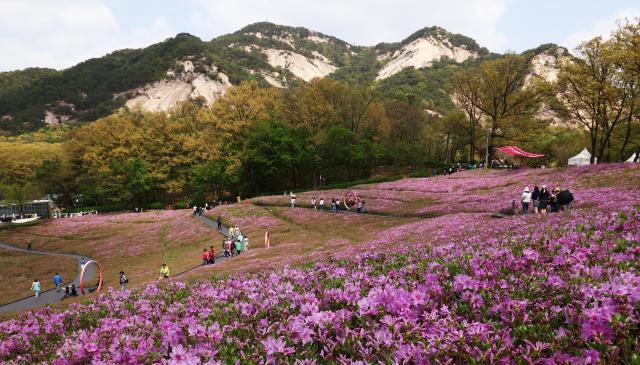
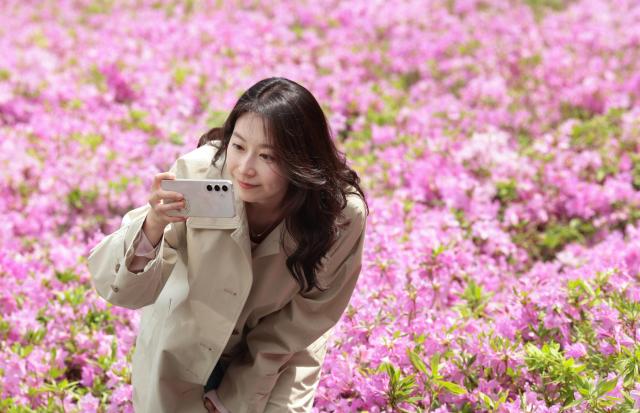
In Nowon-gu, Seoul, the slopes of Mount Bulam have erupted in a riot of pink as the azalea gardens reach their peak bloom. The expansive display offers a striking vista.
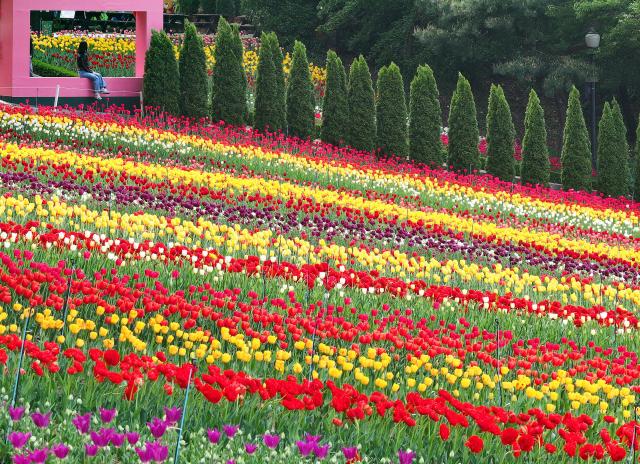
Farther south, in Daegu, the Tulip Garden at the E-World amusement park has become a magnet for flower enthusiasts.
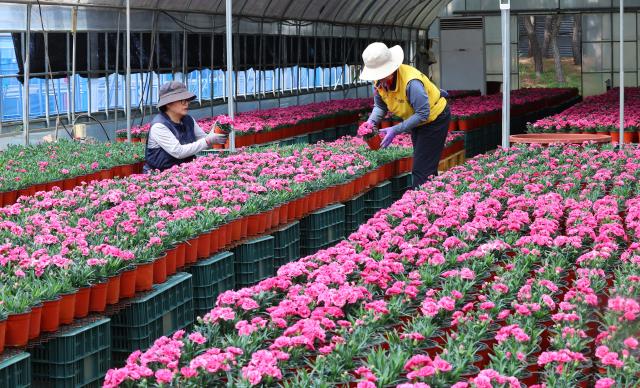
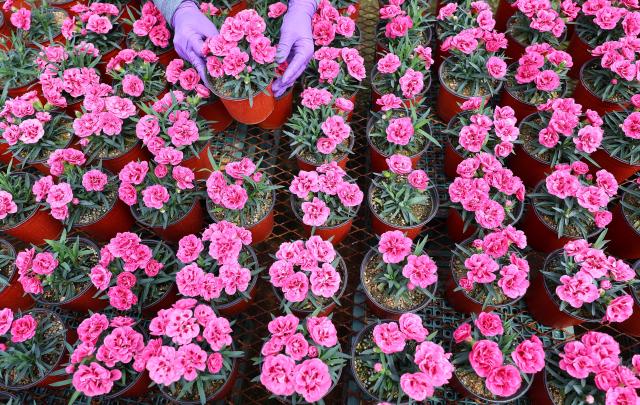
In Incheon, an innovative approach to horticulture is yielding a different kind of floral abundance. Carnations, destined for Parents' Day bouquets on May 8, are thriving in greenhouses powered by an unlikely energy source: the residual heat generated from waste incineration.

Copyright ⓒ Aju Press All rights reserved.
Related News
-
 Korean Air to launch daily flights to Newark next spring
Courtesy of Korean Air SEOUL, November 12 (AJP) - Korean Air will offer a new daily flight between Incheon and Newark, New Jersey, starting in May next year, the country's flagship carrier said on Thursday. The new route, operated by a Boeing 777-300ER, is slated to launch on May 22, with seven flights per week. Located in the New York metropolitan area, Newark Liberty International Airport is a convenient gateway to both New York and New Jersey. It also provides an alternative to John F. Kennedy International Airport for travelers heading to Manhattan and the wider New York metropolitan area. Korean Air said the new route aims to meet growing demand for business and leisure travel along the U.S. East Coast while giving passengers more options for traveling to the New York area.
-
 4th Aju Economy Veterans' Spring Literary Contest Highlights Meaning of Service
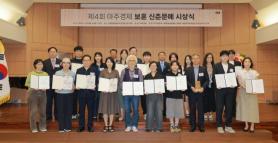
Winners and presenters pose for a commemorative photo at the 4th Aju Economy Veterans' Spring Literary Contest held at the Maehan Yoon Bong-gil Memorial Hall in Seocho-gu, Seoul, on June 30, 2026. "Through writing, I was able to reflect on the meaning of veterans' service, making it even more profound," said one of the awardees at the 4th Aju Economy Veterans' Spring Literary Contest held on June 30 at the Maehan Yoon Bong-gil Memorial Hall in Seoul. The winners unanimously expressed that the process of creating their works allowed them to revisit the lives of veterans and their families, serving as a reminder of the significance of their sacrifices. This year, the Minister's Award for the short story category went to Sung Baek-gwang for his piece, "The Light of an Old Medal." Sung remarked, "Through this work, I was able to look back at the noble lives of veterans and their families. I hope we never forget that our ordinary lives today are built on someone else's sacrifice." In the screenplay category, the Minister's Award was awarded to Lim Hyo-seon for "Grandma Who Dislikes Exercise." Lim stated, "I have always talked to my students about the importance of new challenges in the classroom. It was meaningful to practice that value through writing, and I will continue to strive to convey positive messages to our society." Lee Jeong-hyeon received the Minister's Award in the poetry category for "Unnamed." Lee expressed, "I wanted to capture in my poem the stories of all the unnamed martyrs who fought for independence without leaving their names behind. I would like to take this opportunity to express my gratitude to all the unsung heroes resting beneath the large national flag at our feet." Kim Yu-young was honored with the Minister's Award in the children's literature category for "100-Year School." Kim shared, "Both my father and my in-laws are veterans. Thanks to them, I have precious stories to write about our country and its history. I will do my best to create meaningful works that convey deep messages." The Minister's Award for the essay category went to Lee Kyung-hee for "The Day I Moved to the National Cemetery." Lee reflected, "My father was killed in the Vietnam War, and my mother is also interred at the national cemetery. I wrote this piece as if I were writing a letter to my father. I am incredibly happy and honored to receive such a significant award for my father's story. It feels like I have fulfilled a long-held wish." In the book report category, the Minister's Award was given to student Kim Yul-gok for "A World Where the Long-Stemmed Vegetable Does Not Look Like a Gun." Kim expressed gratitude, saying, "I captured the feelings of remorse and gratitude I experienced while reading the book. Thank you for resonating with my heart. I will remember that sacrifice for a long time."* This article has been translated by AI.
-
 Fourth Annual Aju Economic Veterans Spring Literary Contest Awards 18 Winners
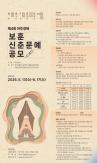
Poster for the Veterans Spring Literary Contest Aju Economic Newspaper announced the winners of the Fourth Annual Aju Economic Veterans Spring Literary Contest on June 24. The contest is hosted by Aju Economic Newspaper and sponsored by the Ministry of Veterans Affairs, the Korean Independence Association, the Dongnong Cultural Foundation, the Republic of Korea Army Association, and Auto Industry Co., Ltd. As the first veterans-focused literary contest in South Korea, the Aju Economic Veterans Spring Literary Contest aims to revive the noble legacies of those who dedicated themselves to independence, freedom, and national defense through literature, connecting their spirit to the present. The contest's themes include various narratives reflecting the values of veterans, such as the Provisional Government of the Republic of Korea, anti-Japanese independence movements, volunteer army activities, student independence movements, and the spirit of patriotism and love for the nation. This year, the award system underwent significant reform to enhance the contest's prestige. The previously singular Grand Prize awarded by the Minister of Veterans Affairs has been expanded to recognize the best works in six categories. A total of 1,000 entries were submitted, with 18 works ultimately selected. Each Minister's Award comes with a prize of 2 million won. The Minister's Award for the short story category went to Seong Baek-gwang for "The Light of the Old Medal." This story depicts a record keeper at a veterans' hall who realizes that veterans are not merely victims but "people who have handed down tomorrow" when meeting the family of a national hero. It illustrates that honoring veterans involves remembering not only their sacrifices but also their pride and lives. Seong Baek-gwang expressed, "I hope we do not forget that our ordinary today is built on someone else's sacrifice." The Minister's Award for the screenplay category was awarded to Lim Hyo-seon for "The Grandmother Who Hates Exercise," while the poetry category's award went to Lee Jeong-hyeon for "Unnamed." "The Grandmother Who Hates Exercise" tells the story of college student Min-ho living with his 88-year-old grandmother, reflecting on the weight of life as a descendant of an independence activist and the sacrifices and loneliness faced by families of national heroes. Judges noted, "The work stands out for portraying the lives of veterans and their families through a modern family drama." Regarding "Unnamed," judges commented, "It effectively conveys the theme of veterans through restrained language, with fresh and unique expressions in each stanza, showcasing exceptional skill in connecting the segments." Lim Hyo-seon remarked, "I have always emphasized the importance of new challenges to my students in the university classroom, and I am even more moved to realize that I could practice that value through writing." Lee Jeong-hyeon stated, "I would like to take this opportunity to express my gratitude to all the unnamed heroes who rest beneath the large Taegeukgi at our feet." The Minister's Award for the children's literature category went to Kim Yu-young for "100-Year School." Set in a century-old school that produced many independence activists, it humorously depicts a rapper hopeful who time travels to 1919, exploring the past. The Minister's Award for the essay category was awarded to Lee Kyung-hee for "The Day I Moved to the National Cemetery," a letter to her father resting in the cemetery that reflects on the lives and deaths of Vietnam War veterans. The Minister's Award for the book report category went to student Kim Yul-gok for "In a World Where the Long-Handled Spoon Does Not Look Like a Gun." This piece, inspired by the book "My Grandfather Was a 15-Year-Old Boy Soldier," contemplates the sacrifices and wounds hidden behind the names of national heroes and expresses gratitude for current peace and safety. The Grand Prize for the short story category (Korean Independence Association Award) was awarded to Jin Hwan-joo for "Happy Birthday, Anarchist in the Corner," while the Excellence Award went to Kim Ah-won for "The One Who Cries Instead." In the screenplay category, the Grand Prize (Korean Independence Association Award) went to Lee So-ri for "To Your Name," and the Excellence Award went to Seo Yoon-joo for "One Beautiful Word for Each Star." In the poetry category, the Grand Prize (Dongnong Cultural Foundation Director's Award) was awarded to Jo Sook-ja for "The Ring of My Father from the Grave," while the Excellence Award went to Heo Kyung-ho for "Compass." In the children's literature category, the Grand Prize (Dongnong Cultural Foundation Director's Award) went to Kim Yeon-soo for "Running Train," and the Excellence Award went to Lee Kwang-ho for "Doctor Ahn Jung-geun and Chiba Toshichi." In the essay category, the Grand Prize (Republic of Korea Army Association President's Award) went to Seong Hyun-gyeong for "Ode for Forgotten Names," while the Excellence Award went to Kim Young-bong for "A Familiar Fight." In the book report category, the Grand Prize (Aju Economic President's Award) went to student Kim Ga-bin for "The Name I Could Not Call for Attendance," and the Excellence Award went to student Kim Yoon-ho for "The Fire of Choi Pechika." The awards ceremony will take place on June 30 at the Maeheon Yun Bong-gil Memorial Hall in Seocho-gu, Seoul. View the winning works* This article has been translated by AI.