

SEOUL, December 02 (AJP) - South Korea’s inflationary pressure strengthened in November, with daily living costs hovering near 3 percent as a sharply weaker won pushed up fuel and import prices while discouraging overseas travel and spending, government data showed Tuesday.
According to the consumer price index (CPI) released by the Ministry of Data and Statistics, headline inflation rose 2.4 percent from a year earlier, matching October’s on-year gain.
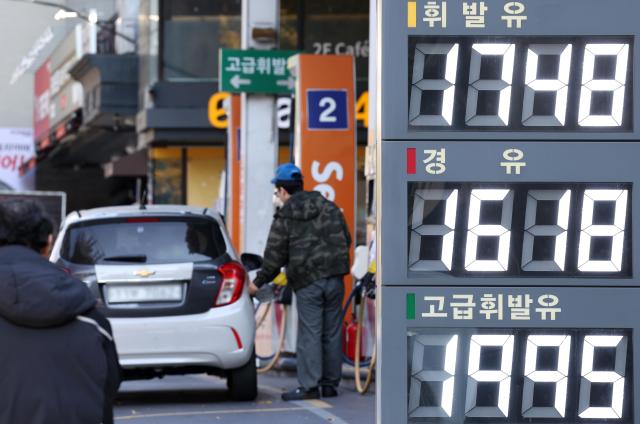
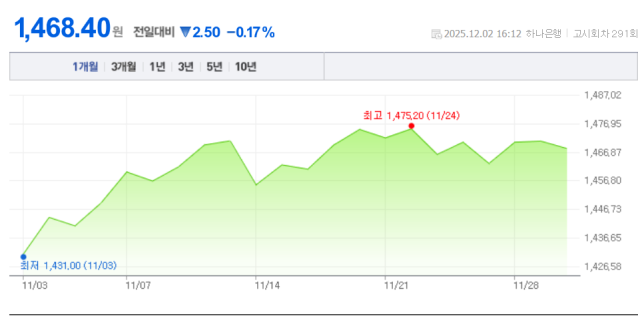
Fuel prices jumped 5.9 percent on year and 3.5 percent on month, reflecting the dollar-won exchange rate lingering at crisis-level territory. The dollar climbed as high as 1,475.2 won last month — nearly 7 percent higher than two months earlier. Diesel prices rose 10.4 percent and gasoline gained 5.3 percent.
Although Dubai crude fell about 4.5 percent — from $66.2 per barrel in late October to $63.2 in late November — domestic petroleum prices nevertheless increased to 1,718.1 won per liter from 1,663.2 won a month earlier due to the weaker won and the gradual phase-out of fuel-tax cuts.
Processed food prices rose 3.3 percent on higher import-input costs, while prices of agricultural, livestock and fishery goods surged 5.6 percent on poor weather conditions.
Core inflation, which excludes food and energy, eased to 2.0 percent from 2.2 percent in October as service-sector prices softened on weakening demand.
Housing rents — including jeonse lump-sum leases and monthly rentals — continued their upward trajectory, rising 0.9 percent on year.
The Cost of Living Index (CLI), which tracks 144 frequently purchased items, accelerated to a 2.9 percent on-year increase from 2.5 percent in October.
Expected inflation for the next 12 months remained in the mid-2 percent range.
Following the release, the Bank of Korea said it was monitoring price trends “with vigilance,” noting that overall inflation has stayed in the mid-2 percent range for a second consecutive month while daily living costs have spiked.
In the bond market, the 3-year Treasury yield closed the early Tuesday session 2.0 basis points lower at 3.025 percent, while the 10-year yield slipped 1.4 basis points to 3.373 percent.
The central bank kept its policy rate unchanged at 2.5 percent at its final meeting of the year on Nov. 27, citing a policy bind created by foreign-exchange volatility and housing-market vulnerabilities.

Copyright ⓒ Aju Press All rights reserved.
