SEOUL, January 02 (AJP) - South Korea’s economy would grow just 1.4 percent this year if the information technology sector were excluded, the country’s central bank chief said Friday, warning that uneven recovery across industries could leave households feeling worse off than headline growth figures suggest.
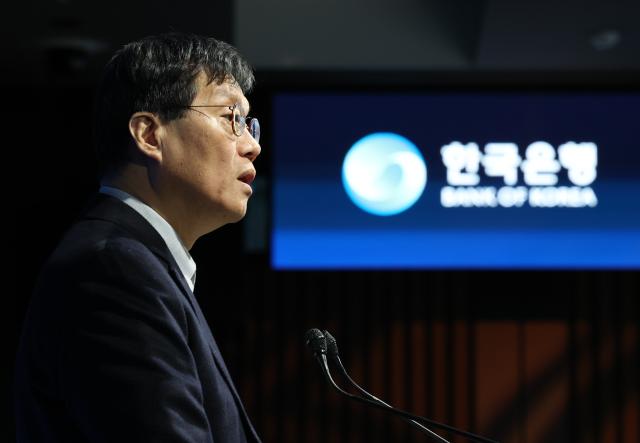
Bank of Korea Governor Rhee Chang-yong said in a New Year’s message that overall economic growth is projected at 1.8 percent this year, up from 1 percent last year and close to the economy’s potential growth rate. However, he cautioned that uncertainty remains high on both the upside and downside.
Rhee said the outlook will hinge on factors including the global trade environment, the semiconductor cycle and the strength of the recovery in domestic demand.
Describing the current rebound as “hardly sustainable or complete,” Rhee urged continued structural transformation to prevent economic expansion from becoming repeatedly concentrated in a single sector. He stressed the need to foster new industries to broaden the growth base.
The governor also highlighted lingering uncertainty over an investment agreement with the United States, saying it is difficult to conclude the issue has been fully resolved as details on investment targets and implementation methods still require coordination.
Addressing concerns that annual investment flows of about $20 billion to the United States could weaken the Korean won, Rhee said the funds would not flow out in a fixed or mechanical manner each year. He added that the BOK, together with the government, would not agree to any arrangement that undermines stability in the foreign-exchange market.
On inflation, which has recently risen to the low-to-mid 2 percent range, Rhee warned that persistent weakness in the won could reignite inflationary pressure. He noted that cumulative price increases since the pandemic have significantly raised living costs, disproportionately burdening lower-income households.
Rhee said stabilizing inflation cannot be achieved through monetary policy alone. He called for parallel structural reforms aimed at lowering overall price levels, including improving distribution systems and expanding import liberalization for goods that remain expensive by international standards.
Copyright ⓒ Aju Press All rights reserved.