

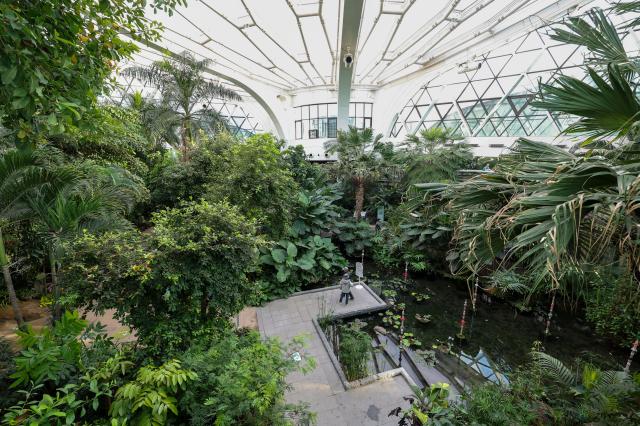
Located in Gangseo-gu, Seoul Botanic Park stands next to Magoknaru Station, where Subway Line 9 and the Airport Railroad intersect. The surrounding Magok district, once known as one of Seoul’s last agricultural areas, has been redeveloped into a large-scale botanic park combining gardens and open green space. During winter, visitor movement concentrates around the themed greenhouse, as activity in outdoor areas naturally declines.
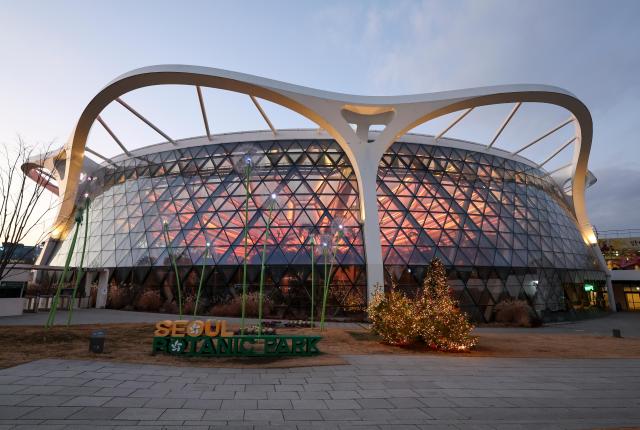
The exhibition greenhouse introduces plants and plant cultures from 12 cities worldwide, arranged by climate zone. Designed in a concave, dish-like form, the structure allows open sightlines and filtered light, creating a space that feels both enclosed and expansive. The facility also serves as a base for plant conservation, species preservation and research, while supporting public programs related to urban gardening and education.
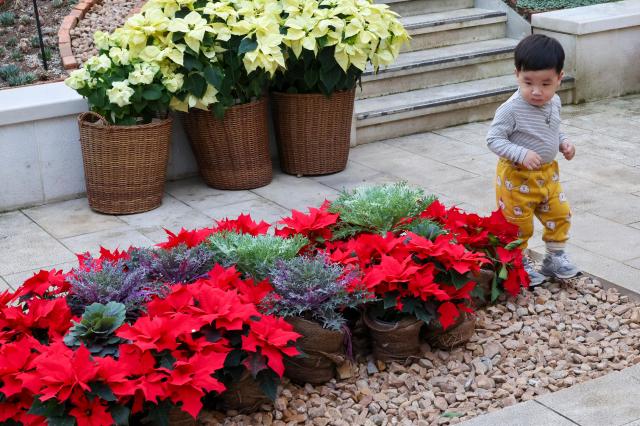
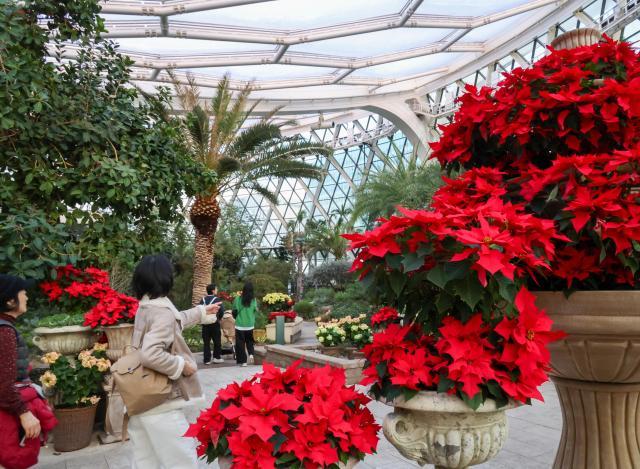
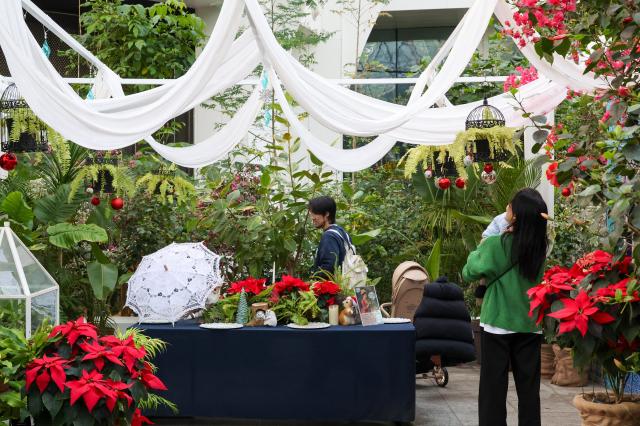
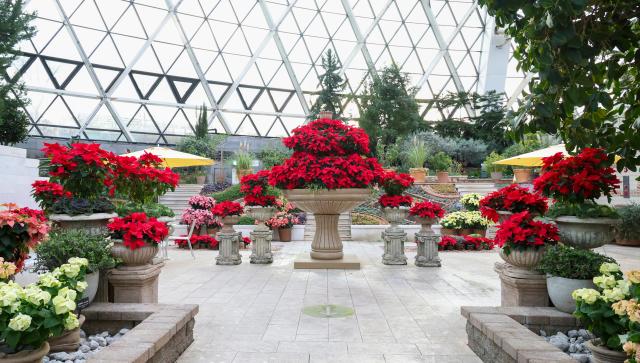
Seasonal displays shift with the colder months. Orchids and poinsettias form the core of the winter exhibition, presented under the theme Winter Garden. Around 40 orchid species and nine poinsettia varieties developed in Korea are on view through Jan. 25. Tropical orchids rarely seen domestically are shown alongside locally bred cultivars, highlighting both diversity and ongoing research.
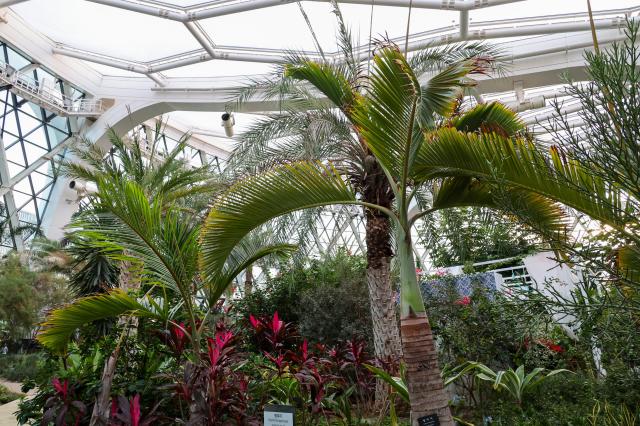
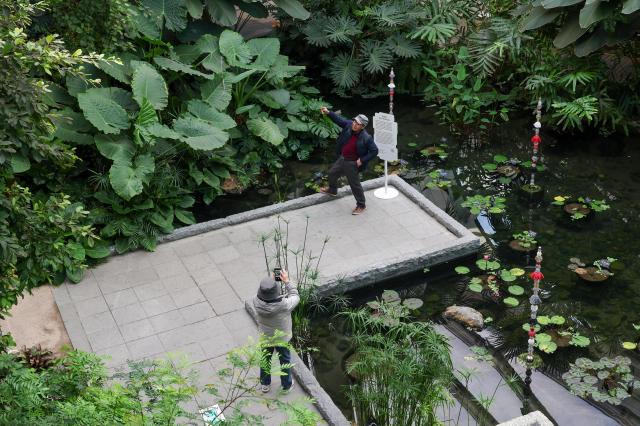 Seoul Botanic Park in Gangseo District, Seoul. AJP Yoo Na-hyun
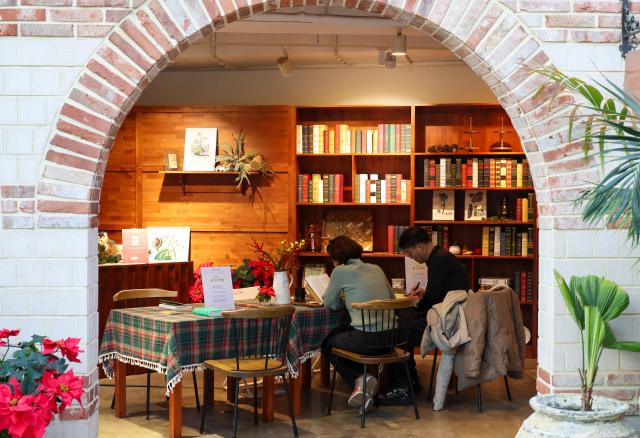
Even in midwinter, the greenhouse continues to draw a steady stream of visitors. Residents pause to observe and record, families move unhurriedly through the space, and professionals in garden culture study the displays. Within the city, the greenhouse serves not only as a refuge from the cold, but as a place where nature is observed, documented and sustained throughout the winter season.

Copyright ⓒ Aju Press All rights reserved.
