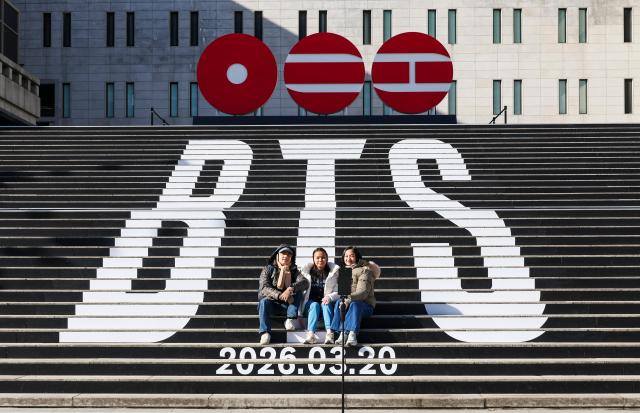
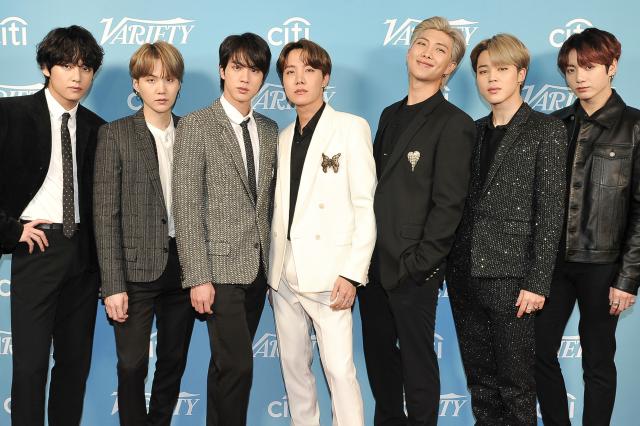
BTS is a global phenomenon. Yet its stature cannot be measured by sales figures, chart rankings, or stadium records alone. The group’s true significance lies in its origin story: seven unknown young men, without elite credentials, inherited privilege, or a glamorous starting line, rising to the top through discipline, creative labor, and mutual trust. That narrative itself became culture.
For young people around the world, BTS offered a quiet but powerful lesson: it is not where you come from, but the direction you choose, that shapes the future. For parents, the group represented rare popular content that felt ethically and educationally trustworthy. Above all, BTS’s lyrics consistently pointed beyond present wounds toward dignity, resilience, and hope.
This is why BTS became more than a music group. It became the face of K-Culture. Its fandom, ARMY, evolved not as a consumer bloc but as a global civic community bound by shared values. At this point, transformation is no longer optional. Without a credible next chapter, BTS cannot fully persuade its global audience. And without that trust, neither the moral credibility of K-Culture nor the deeper promise of K-Spirituality can be completed. Culture that loses ethical trust loses direction before it loses speed.
The recent controversy surrounding Bang Si-hyuk is, first and foremost, a matter for legal judgment. This column does not presume guilt, nor does it attempt to substitute for judicial process. Its purpose is more limited—and more fundamental: to clarify the standards society must demand where cultural power and capital intersect.
The supposed dilemma—hesitating to enforce the law for the sake of K-Pop, or hesitating to protect culture for the sake of the law—is a false one. K-Pop does not need to cry, and the law must not either. The law must apply equally to all, and culture cannot be an exception. At the same time, the presumption of innocence must be fully respected. The only way to honor both principles is timely, voluntary, and transparent action.
Global cultural industries offer a clear lesson. After internal misconduct scandals and governance failures, Disney restored trust through independent investigations and public structural reforms. Britain’s BBC likewise pursued accountability and institutional change alongside legal proceedings. As cultural influence becomes a global asset, the standards of law and ethics do not soften; they become stricter.
What is required of Bang Si-hyuk now is not a lawyer’s defensive strategy, but a cultural leader’s self-reckoning.
First, independent of any investigation, there must be an immediate and public commitment to governance reform and strengthened internal controls—not vague declarations, but a concrete roadmap with timelines, benchmarks, and external oversight.
Second, there must be a long-term decision to return a portion of accumulated success to the world’s most vulnerable children—those deprived of education and healing by war, poverty, and disaster. This should take the form not of symbolic donations, but of a professionally governed foundation with an independent board and transparent audits, supporting education, recovery, and access to culture.
Such actions would not serve as absolution. They would represent an expansion of responsibility—a moment when a cultural ecosystem proves that the values it celebrates in art can be embodied in leadership. BTS has long sung about hope, dignity, and solidarity.
The leader who built that ecosystem is now called to demonstrate those values through action. As the management thinker Peter Drucker once observed, leadership is defined by the courage not to evade responsibility. This is precisely what global ARMY is asking for: let the courts decide the legal questions, but show moral direction without delay.
More importantly, this moment marks a crossroads for both K-Culture and K-Spirituality. If K-Culture is Korea’s global language of emotion and competitiveness, K-Spirituality is its ethical depth. Rooted in the ideal of Hongik Ingan—to benefit humanity and harmonize the world—this tradition is not confined to any single faith. When combined with Christian love, Buddhist compassion, Confucian benevolence, and Taoist respect for nature, K-Culture can grow beyond entertainment into a universal human culture. That ethical depth is what gives cultural influence durability.
Time is limited. The world moves quickly, and trust responds to speed. Hesitation is read as silence, and silence erases meaning. If decisive action is taken now, it will not be remembered as crisis management. It will be remembered as the moment the next chapter of BTS was opened—and as a signal that K-Culture has matured into a civilization-level culture grounded in ethics as well as artistry.
A renewed BTS can persuade ARMY. ARMY can persuade the world.
And at that horizon, K-Culture and K-Spirituality can finally stand complete—together.
Now is the time for that decision.
*The author is the President of Global Economic and Financial Research Institute (GEFRI)
Copyright ⓒ Aju Press All rights reserved.