

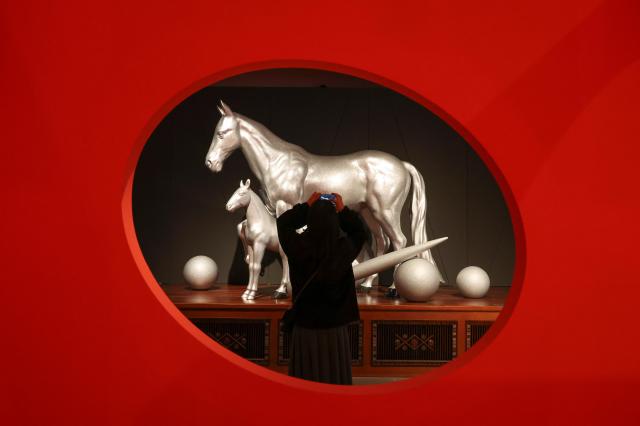
SEOUL, January 13 (AJP) - An exhibition titled “Year of the Horse, 2026: Galloping into Eternity,” planned by the Cultural Heritage Administration, opened on Jan. 9 at The Heritage of Shinsegae Department Store’s main branch in central Seoul, marking the Year of the Horse in 2026. The exhibition explores the cultural and historical significance of horses from ancient times to the present, examining how they have coexisted with humans and shaped life and society.

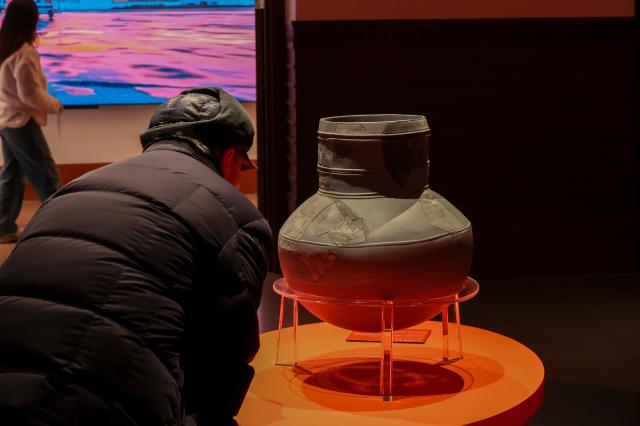
The exhibition is co-hosted by the Cultural Heritage Administration, the National Research Institute of Cultural Heritage and the Gyeongju National Research Institute of Cultural Heritage. It brings together a wide range of artifacts and works, including ancient clay figurines, horse armor, decorative crafts, photographs, sculptures and artificial intelligence (AI) videos, illustrating how horses have symbolized mobility, survival, authority, belief and hope throughout history. The exhibition runs from Jan. 9 to Jan. 25.
The exhibition consists of a prologue, four thematic sections and an epilogue. The prologue presents an AI-generated video of galloping horses, visually conveying the enduring presence of horses across time and space.

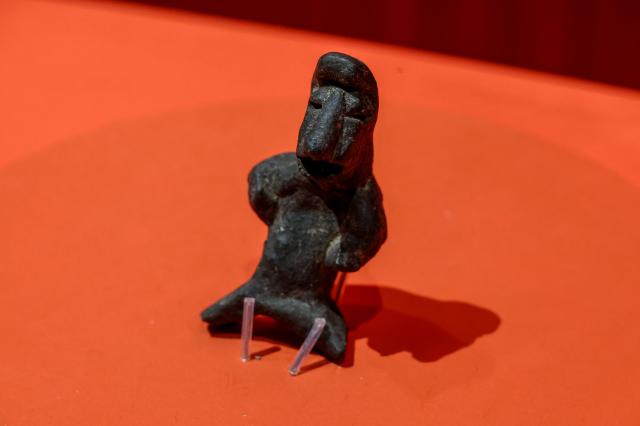
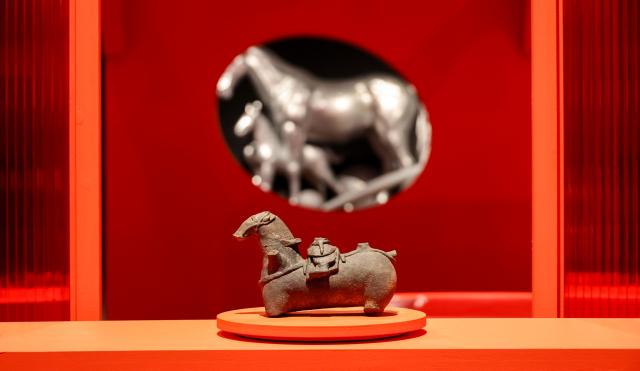
Section 1, “The Horse, Holding Hope,” explores the symbolic meanings of horses through Silla-era clay figurines and pottery. The clay figurines, crafted with expressive faces and dynamic postures, reflect the lives and aspirations of people of the time. Also on display is a long-necked jar engraved with a procession of mounted figures, illustrating how horses were perceived as symbols of movement, protection and authority.
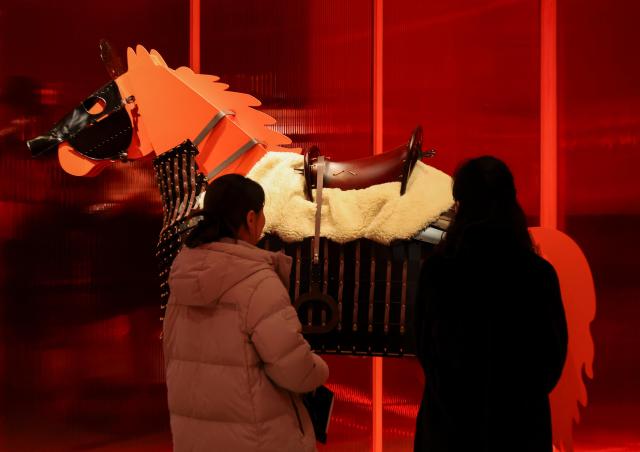
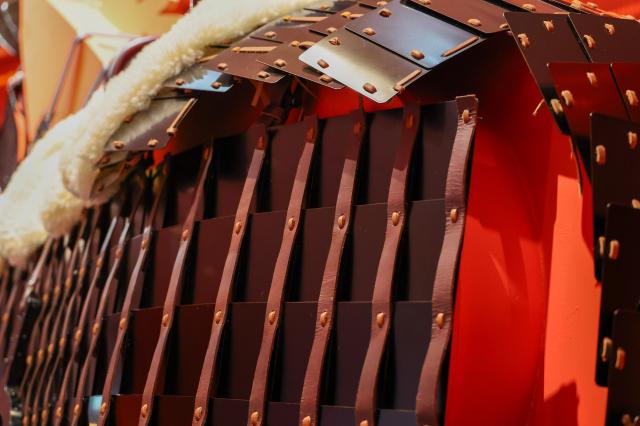
Section 2, “The Horse, Forged in Strength,” focuses on the role of horses on the battlefield, centered on a reproduction of Gaya-era horse armor. The armor was constructed by linking iron plates into a flexible structure, divided into sections protecting the horse’s forelegs, saddle area, hind legs and head. The design highlights how mobility and protection were balanced, underscoring the strategic importance of horses in warfare.
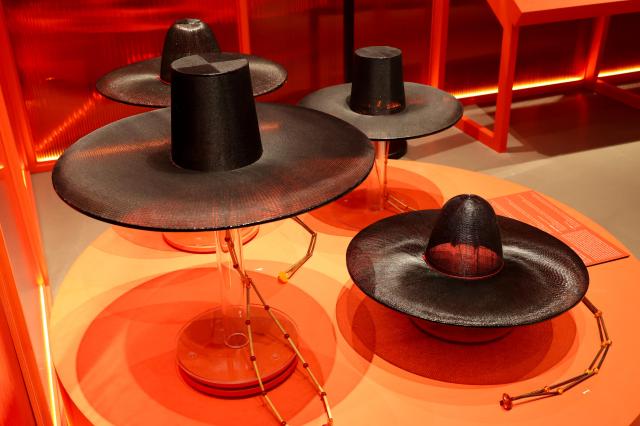
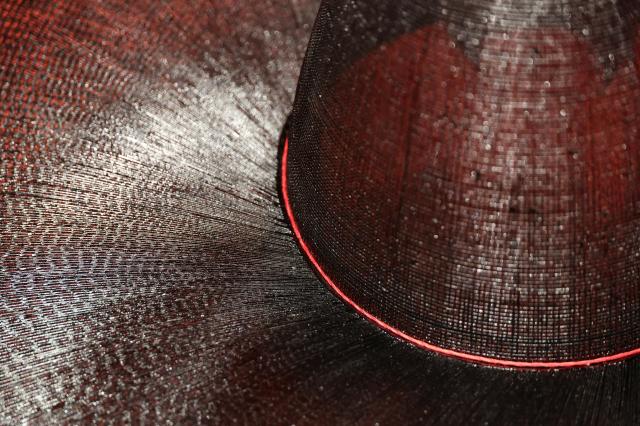
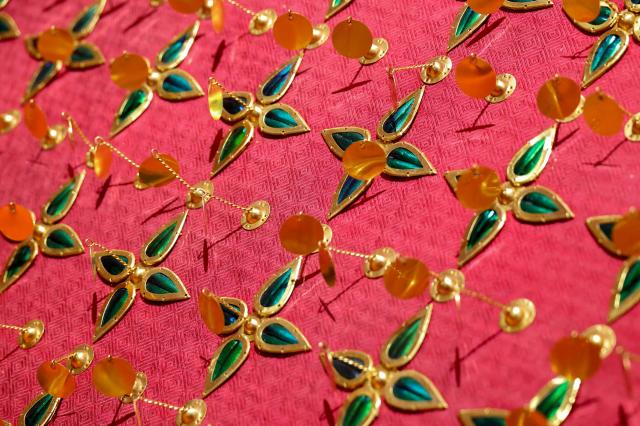
Section 3, “The Horse, Attired with Dignity,” presents decorative crafts including an ornate horse ornament excavated from Tomb No. 44 in the Cheonmachong cluster in Gyeongju. Horse ornaments were used to adorn horses and symbolized both the animal’s stature and the status of its owner. Intricate decorations and luxurious materials, such as jewel beetle wings, reveal the elevated status and aesthetic value of horses in ancient society.
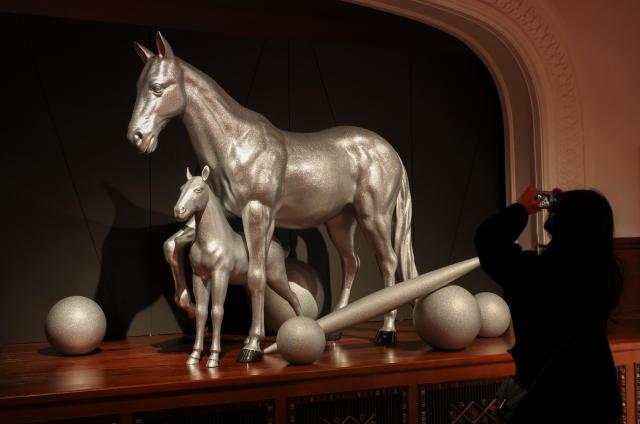
Section 4, “The Horse, Companion for the Future,” features works by contemporary sculptor Jake Lee, depicting the evolving relationship between humans and horses in modern and future contexts. Sculptures of a mare and her foal convey themes of care, connection and coexistence, symbolizing the continuity of the human-horse bond.
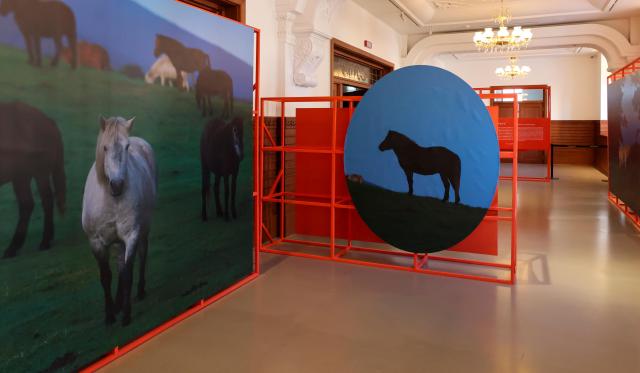
The epilogue showcases photographs of Jeju horses taken by National Geographic photographers, portraying the enduring coexistence of horses, humans and nature. The exhibition offers a comprehensive overview of the historical and cultural significance of horses from the past to the present, framed within the symbolism of the Year of the Horse.

Copyright ⓒ Aju Press All rights reserved.
