

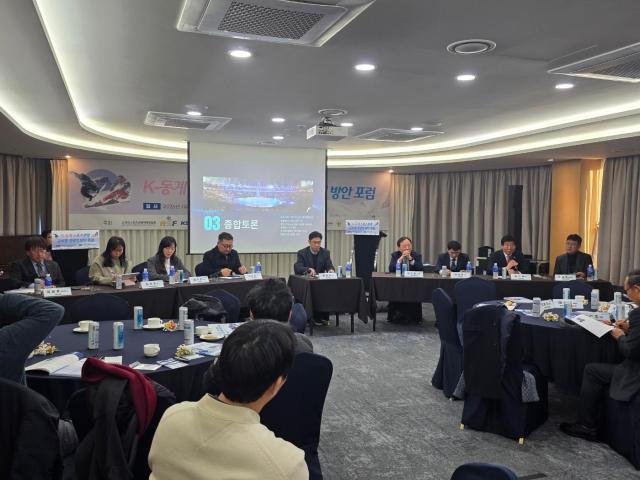
Discussions centered on how to use key Olympic facilities — including Pyeongchang Alpensia and the Jeongseon Alpine Ski Center — as sustainable assets embedded in local communities and industry, rather than limiting debate to whether they should be dismantled. Environmental issues were treated as matters to manage and consider, but the focus remained on practical strategies to keep the legacy in active use.
The forum was co-hosted by the Korea Sports Tourism Marketing Association, the Korea Sports Industry Association and the Asian Ski Federation. Kim Nak Gon, head of a residents' committee in Sukam-ri, Jeongseon, attended along with about 40 Jeongseon residents, who shared local views on how the facilities should be used.
Rep. Jin Jong Oh of the People Power Party said in congratulatory remarks that world-class venues such as the Jeongseon Alpine Ski Center should not be easily given up and should be considered national assets. He said institutions and policies should support their use so they can contribute to tourism, local economies and jobs.
Kim Jin Sun, who served as the first chairman of the Pyeongchang Winter Olympics organizing committee and is a former Gangwon governor, said environmental considerations are a given, but the more important choice is how to carry the facilities forward with the region. He said Olympic legacy sites are public assets whose value should be increased through management and use, not dismantling.
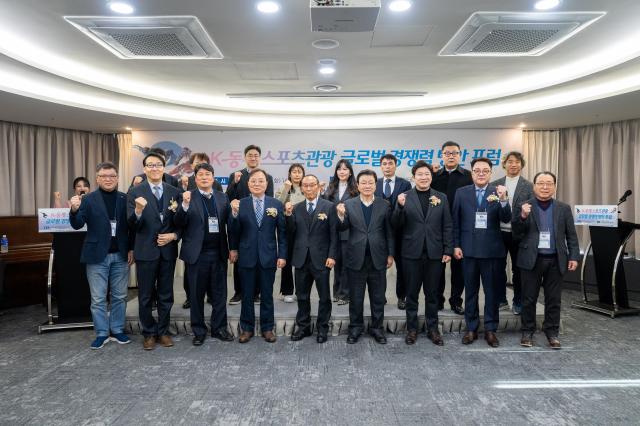
He added that Olympic venues, including the Jeongseon Alpine Ski Center, have strong potential to link international competitions, national team training and visitor experiences.
Kim Tae Dong, a researcher at the Gangwon Research Institute, said the Jeongseon Alpine Ski Center is the only facility in South Korea that meets international standards for an Olympic downhill course, calling it irreplaceable sports infrastructure. He said it should be developed into a key hub for winter sports tourism through systematic management and phased-use strategies, rather than short-term cost calculations.
He said a combined-use model linking training, competitions and experiential tourism could also help expand longer-stay tourism in Jeongseon and across the Gangwon region.
Seok Kang Hun, a professor at the Korea National University of Transportation, said major overseas Winter Olympics host countries use venues for multiple functions rather than a single purpose. He said sustainability is secured when international events, athlete development and programs for general tourists operate together.
Han Seung Jin, a professor at Eulji University, said the Olympic legacy debate is not about whether to leave facilities behind, but how they will be used. He said sustainability requires designing repeatable uses along with an operating body and a funding model.
* This article has been translated by AI.
Copyright ⓒ Aju Press All rights reserved.