

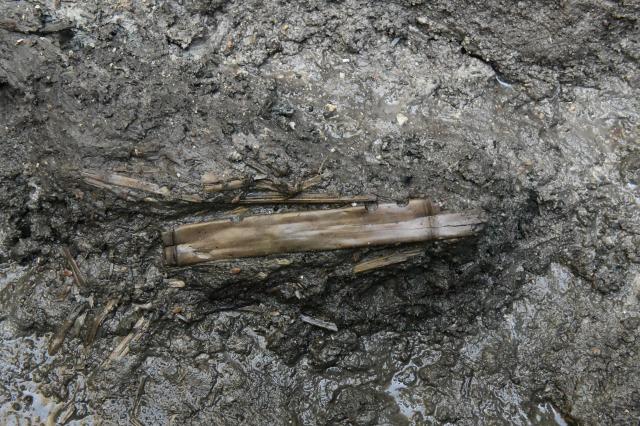
A 7th-century transverse wind instrument believed to be a Baekje “hoengjeok” (side-blown flute) has been unearthed at the Gwanbuk-ri site in Buyeo, South Korea, officials said. Researchers called it the first confirmed physical wind instrument from the Three Kingdoms period, a find they said could provide a key clue for reconstructing Baekje-era music.
The Korea Heritage Service’s National Research Institute of Cultural Heritage and its Buyeo research center on Wednesday 공개했다 the artifacts recovered during the site’s 16th excavation campaign.
The institute has excavated the Gwanbuk-ri area since 1982 to identify the remains of the royal palace from the Sabi period. The area is regarded as a Sabi palace site based on discoveries including large hall buildings, waterways, roads and extensive building platforms.
The two-year, 16th excavation produced 329 wooden tablets and one hoengjeok, the institute said.
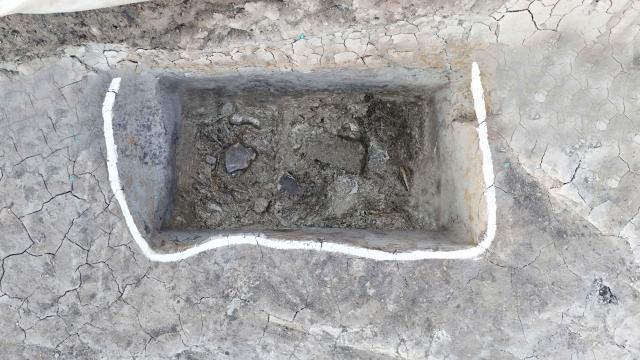
The flute was found in a rectangular pit near a 7th-century building site identified as a Baekje “jodang,” or state council hall, officials said. The pit measured about 2 meters (6.6 feet) wide, 1 meter (3.3 feet) long and 2 meters (6.6 feet) deep.
Made of bamboo, the instrument had four holes in a line and was found flattened, with parts missing. Analysis of organic material from inside the pit detected human parasite eggs, leading researchers to conclude the pit was likely part of a toilet facility attached to the council hall.
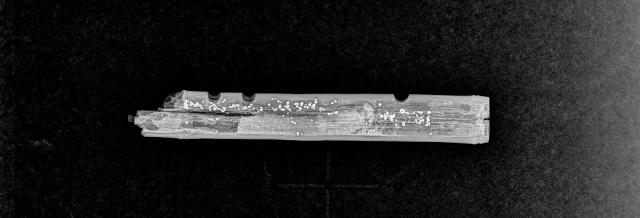
Researchers said the bamboo shows deliberately made holes, and X-ray analysis indicated one end was sealed while the other had a hole for blowing. Based on those features, they said it appears to be a side-blown flute rather than a vertical wind instrument like those depicted on the Baekje gilt-bronze incense burner known as the Geumdong Daehyangno.
Because the instrument was recovered from a core area of the Sabi Baekje palace, the institute said it is expected to be important for research on Baekje court music and instruments, and for evidence-based reconstruction of Baekje sound and performance.
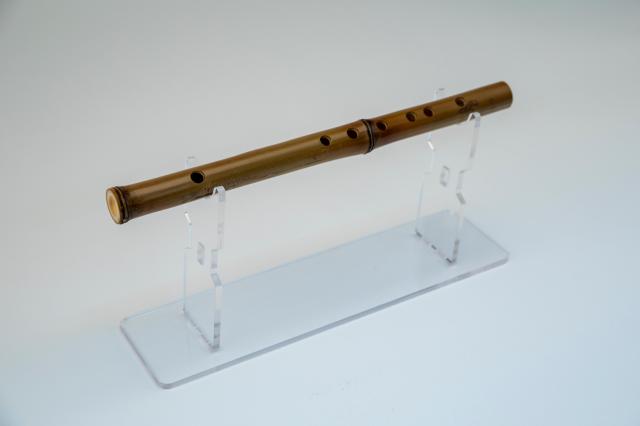
Comparative study with examples from China and Japan found the hoengjeok is similar to today’s sogeum, a small transverse flute, the institute said. It called the discovery the first identification of a Baekje hoengjeok and the first and only case of a physical wind instrument found from the Three Kingdoms period (7th century).
The wooden tablets were described as the largest number confirmed at a single site in South Korea and as some of the earliest materials from Baekje’s Sabi period. Many were concentrated in waterways from the early stage of the capital’s move to Sabi, officials said.
Some tablets include sexagenary year notations that help date their production. The institute said “Gyeongsin year” corresponds to 540 and “Gyhae year” to 543, shortly after Baekje moved its capital from Gongju (Ungjin) to Buyeo (Sabi) in 538.
Other finds include wooden tablets used as state administrative documents: personnel records, financial ledgers, and tablets listing official ranks and posts, along with many “sakseol” fragments. Researchers said the material indicates the area was linked to Baekje’s central administrative offices known as the 22 busa.
Among the sakseol fragments were not only personnel documents but also ledger tablets tied to state finances that record monthly grain. The institute also said many tablets show the reorganization of the capital’s central administrative districts — the five “bu” — and a local administrative system of bang, gun and seong.
Tablets bearing terms such as “Ipdong,” “Insimcho,” “Hyeongokgae,” and the character “畑,” believed to have been created in Japan, were cited as evidence of Baekje’s advanced culture and active exchanges across East Asia.
The institute said the newly released results are significant because they document how Baekje ran the state through written administration about 1,500 years ago and provide physical evidence that could aid reconstruction of the period’s musical culture and sound.
* This article has been translated by AI.
Copyright ⓒ Aju Press All rights reserved.