

South Korea’s botulinum toxin market has effectively hit saturation as prices have collapsed, squeezing profitability and pushing companies to focus on exports. As firms pivoted overseas, exports of Korean-made toxin reached a record high, signaling the industry’s center of gravity has shifted from domestic sales to global markets.
Industry data showed that in the third quarter of 2025, exports of Korean botulinum toxin totaled $114.59 million (about 1.655 trillion won), the highest on record. With limited room for domestic growth, the sector has structurally moved toward an export-driven model.
The main driver is a price structure that has become difficult to sustain. The number of sellers, including global companies, has risen to about 18, intensifying competition. Average selling prices for a 100-unit product have fallen from about 40,000 to 50,000 won to the low 10,000-won range. With more choices, repeated price cuts have entrenched a dynamic in which margins shrink as sales rise.
Demand growth at home is also constrained. South Korea has one of the world’s highest procedure rates per capita, but its small population limits market expansion. With the United States, Europe and China accounting for about 80% of the global toxin market, companies see overseas share as essential for sustainable growth.
The United States is viewed as the biggest battleground. The U.S. botulinum toxin market is estimated at 6 trillion to 7 trillion won, and higher prices translate directly into stronger profitability. Allergan products currently hold the largest share, benefiting from an early lead.
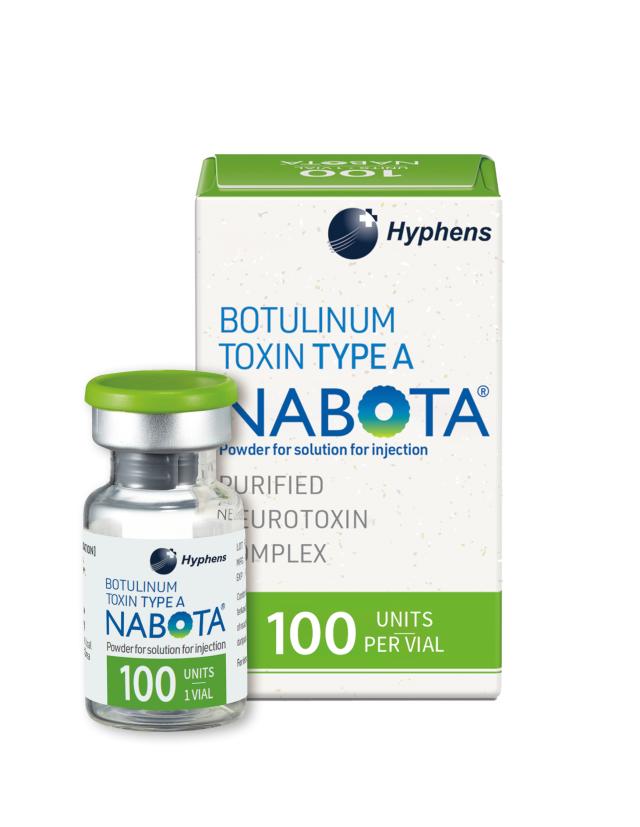
Daewoong Pharmaceutical said it became the first company in Asia to win U.S. Food and Drug Administration approval for a botulinum toxin in 2019. It launched its product, Nabota, in the U.S. under the brand name Jeuveau and ranked No. 2 in U.S. aesthetic toxin market share in the first half of last year. Nabota has partnerships in more than 80 countries.
China is also expanding quickly as middle-class purchasing power rises and demand grows for higher-quality products. China’s botulinum toxin market was about 1.9 trillion won as of 2024, about 10 times the size of South Korea’s. In the third quarter of last year, China was the top destination for Korean toxin exports. Because regulatory review is stringent, relatively few companies have approvals. In 2020, Hugel’s Letybo became the first Korean product to enter China, and in January this year, Huons’ Hutox received approval. Chong Kun Dang Bio has also completed a Phase 3 trial aimed at winning approval from Chinese health authorities.
Companies are also widening pipelines in emerging markets such as the Middle East, Latin America and Southeast Asia, which are seen as having long-term growth potential as incomes rise and access to lower-priced products improves. Daewoong Pharmaceutical recently signed an export deal for Nabota with Mexican distribution partner M8. Medytox affiliate NewMeco obtained approval for “Newlux” in El Salvador.
Korean companies are seen as strong at offering products that balance quality and price. “Overseas, competition is not just about price but about value based on quality,” a pharmaceutical industry official said, adding that competitiveness has been confirmed even at higher price points than in South Korea.
As exports rise, manufacturers are expanding capacity. Hugel said it has built a system capable of producing more than 13 million vials a year by operating a third plant. Daewoong Pharmaceutical is also building a third plant to expand Nabota output, investing more than 100 billion won; once completed, it will be able to produce up to 18 million vials.
Fortune Business Insights forecasts the global botulinum toxin market will grow to $24 billion (about 34 trillion won) by 2034. Growth is expected to continue as aesthetic procedures become more common and uses expand to areas such as migraine and pain treatment. An industry official said potential demand is still rising, citing more male patients and a broader recommended age range, and added that growth could accelerate as the global consumer base expands.
* This article has been translated by AI.
Copyright ⓒ Aju Press All rights reserved.