SEOUL, March 10 (AJP) - The widening Middle East conflict is beginning to bite into South Korea’s industrial supply chains, with the semiconductor sector facing growing concern over disruptions to helium shipments — a critical gas used in advanced chip manufacturing.
The de facto disruption of shipping routes through the Persian Gulf has hit South Korea particularly hard given the country’s heavy reliance on Middle Eastern energy and industrial materials that feed its export-driven manufacturing base, including the strategically vital semiconductor industry.
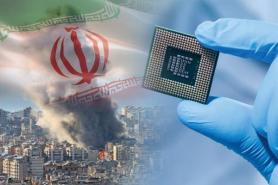
Industry attention has turned especially to Qatar, a major global supplier of helium, after Iranian retaliatory strikes spread across Gulf states following coordinated U.S. and Israeli attacks on Iran.
Helium, a noble gas with an extremely low boiling point, is indispensable in semiconductor fabrication. It is widely used in lithography and plasma etching processes to maintain stable vacuum environments and cool high-temperature equipment during wafer processing, where microscopic circuit patterns are etched to form transistors and interconnects.
Any interruption in supply therefore risks creating a bottleneck in the production of advanced chips.
According to a Korea International Trade Association (KITA) report, Qatar accounts for roughly 64 percent of South Korea’s helium imports, highlighting the sector’s exposure to geopolitical shocks in the Gulf region.
Other major suppliers include the United States and Russia, while the United Arab Emirates — another Gulf producer that has also come under attack — ranks fourth in Korea’s import mix, according to trade data compiled by Volza.
Helium is typically transported in liquid form, which allows large volumes to be shipped efficiently before being vaporized upon arrival for industrial use.
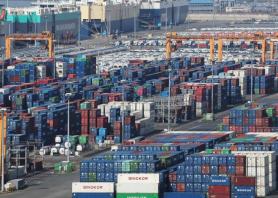
Shipping disruptions are already pushing up transport costs. The Shanghai Containerized Freight Index (SCFI) for Middle East routes jumped 72.3 percent week-on-week, according to the Shanghai Shipping Exchange, as vessels increasingly divert around the Cape of Good Hope to avoid the conflict zone.
Such detours add two to three weeks to delivery times, raising the risk that chipmakers’ stockpiles could be drawn down faster than expected.
“Temporary shortages are likely because alternative suppliers currently lack the capacity to immediately offset Qatar’s dominant share,” said Koo Gi-bo, a professor of global commerce at Soongsil University. “South Korea will need to rely on existing reserves while expanding imports from other regions.”
Industry sources say Samsung Electronics and SK hynix typically maintain helium inventories sufficient for two to three months of operations.
Both companies have already begun securing additional supplies from the United States and Australia, though rerouting shipments comes with sharply higher logistics costs.
Yet analysts note that South Korea’s position at the center of the global semiconductor ecosystem could work to its advantage in securing alternative supplies.
“The United States has a strategic interest in ensuring helium shipments to South Korea remain stable,” Koo said. “Without Korean high-bandwidth memory (HBM) chips, U.S. companies cannot manufacture advanced AI accelerators. Any disruption to Korean fabs would ripple across the global AI industry.”
As fighting in the Middle East threatens vital shipping lanes, the episode is once again exposing a structural vulnerability in South Korea’s export economy — its dependence on imported energy and specialized industrial gases that underpin the world’s semiconductor supply chain.

Copyright ⓒ Aju Press All rights reserved.