SEOUL, Mar 10 (AJP) — South Korea’s economy is increasingly lagging behind technology-driven regional peers such as Japan and Taiwan, weighed down by a structurally weak currency and fading industrial competitiveness — pressures that could deepen if the Middle East conflict drags on.
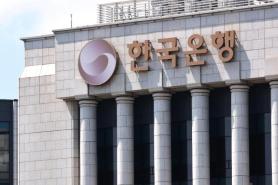
According to the Bank of Korea (BOK) on Tuesday, South Korea’s GDP per capita stood at about $35,800 in 2025, largely unchanged from recent years.
Per capita gross national income (GNI) reached 52.46 million won ($36,855), rising 4.6 percent in won terms but only 0.3 percent in U.S. dollar terms, reflecting the drag from currency depreciation.
By contrast, Taiwan and Japan posted stronger gains. Both countries — which had trailed South Korea in per capita income over the past three years — reported higher provisional figures for 2025, with Taiwan at $40,585 and Japan around $38,000, surpassing South Korea’s GNI range of $36,000 to $37,000.

For Seoul, the reversal against Taiwan is particularly symbolic. South Korea first overtook Taiwan in 2003, when its per capita GNI reached $12,000 compared with Taiwan’s $11,000, and maintained the lead for more than two decades. That advantage has now effectively disappeared.
Weak won erodes income gains
The South Korean won entered 2026 on fragile footing after ending 2025 at 1,421.9 per dollar, a 2.1 percent depreciation from the previous year’s close of 1,392.5.
At its weakest intraday level last year, the currency touched 1,487.6 won per dollar, surrendering nearly 6.8 percent of its value compared with the previous year.

The slide has been notable because it occurred even while the U.S. Dollar Index remained below the 100 level for extended periods, suggesting the won weakened despite a relatively soft global dollar.
In contrast, the New Taiwan dollar strengthened by about 2 to 3 percent against the greenback during the same period.
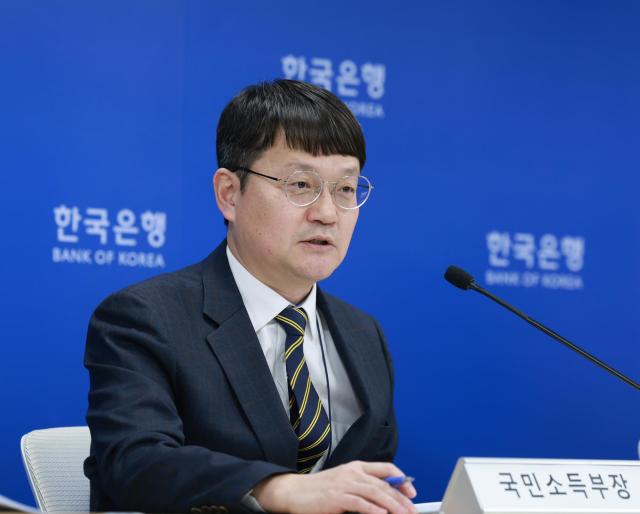
“Assuming no exchange-rate impact, South Korea’s GDP per capita could exceed $40,000 as early as 2027,” said Kim Hwa-yong, head of the BOK’s National Income Department, underscoring how strongly currency movements influence real income levels.
The downward pressure intensified earlier this year as geopolitical tensions triggered capital outflows. The won briefly touched the 1,500 level in overnight trading on March 4, following the escalation of the U.S.-Iran conflict.
The currency later rebounded to below 1,470 per dollar on Tuesday as oil prices stabilized after U.S. President Donald Trump signaled that the conflict could end soon.
Taiwan’s chip boom leaves Korea trailing
The BOK on Tuesday confirmed that South Korea’s GDP growth slowed to 1 percent in 2025, matching the central bank’s earlier projection but falling short of 1.5–1.6 percent estimates from institutions such as the International Monetary Fund (IMF) and the Korea Development Institute (KDI).
Taiwan, by contrast, posted a striking 8.63 percent growth rate, far above the roughly 7 percent consensus, while Japan recorded 1.1 percent growth, surpassing South Korea for the first time in 27 years.
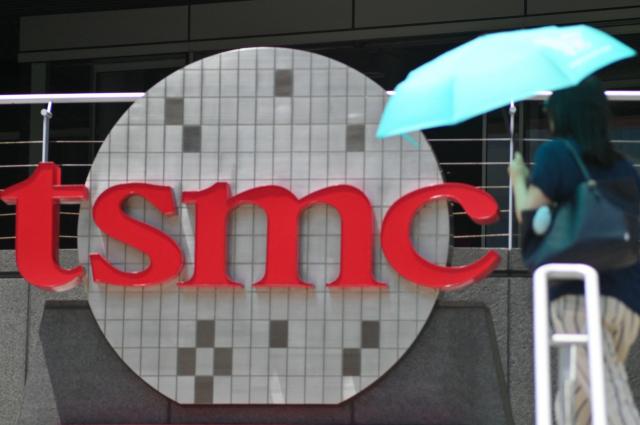
Taiwan’s surge reflects its dominant position in the global semiconductor supply chain. With TSMC controlling much of the world’s advanced chip manufacturing, the island has captured a disproportionate share of growth generated by the artificial intelligence boom.
South Korea also benefited from strong demand for AI-related chips through Samsung Electronics and SK hynix, but the broader economy struggled to keep pace.
According to BOK data, the semiconductor sector contributed 0.9 percentage points of the economy’s 1 percent growth in the fourth quarter, effectively accounting for nearly all of the expansion.
Outside semiconductors, export momentum weakened. Industries that traditionally anchored Korean manufacturing — automobiles, shipbuilding and defense — lost steam in the second half of the year.
Sectors facing intense competition from China, including secondary batteries, steel and petrochemicals, also recorded declining exports.
Japan, meanwhile, saw improvements in both capital investment and exports. Facility investment rose 4 percent in 2025, while exports — historically a weaker pillar of the Japanese economy — also grew 4 percent.
South Korea’s investment cycle told a different story. Facility investment stagnated in the second half, resulting in zero growth for the year. Automobile exports also showed no annual growth, while steel and petrochemical shipments declined, contributing to an overall 2 percent drop in exports.
Hormuz disruption adds new risks
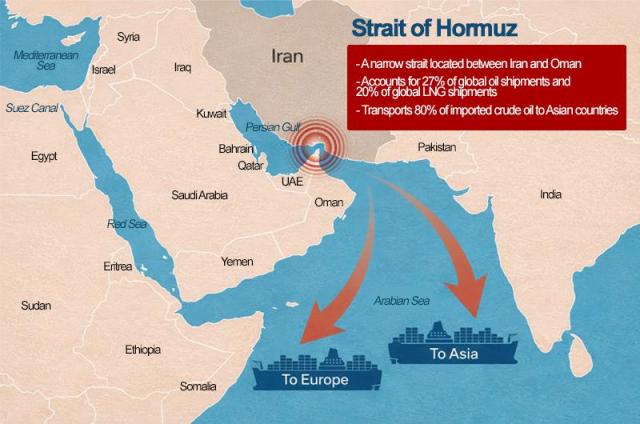
The Middle East conflict is now adding a fresh layer of uncertainty to the outlook.
Following the Feb. 28 strikes, Iran’s Islamic Revolutionary Guard Corps (IRGC) effectively imposed a blockade on the Strait of Hormuz, according to South Korea’s Defense Intelligence Agency (DIA). Maritime traffic through the strait — which averaged about 98 vessels per day in late February — has reportedly plunged to as few as one ship daily.
South Korea is among the economies most exposed to such disruption.
Data from the Korea National Oil Corporation (KNOC) show that about 70 percent of South Korea’s crude oil imports come from five Middle Eastern countries — Saudi Arabia, the UAE, Kuwait, Qatar and Iraq — all of which rely on the Hormuz passage.
“Major Asian economies such as China, India, Japan and South Korea could be particularly affected, as over 80 percent of oil and LNG shipments through the strait are destined for Asia,” the Center for Strategic and International Studies (CSIS) said in a recent analysis.
Oil markets have already reacted sharply.
WTI crude, which closed at $67 on Feb. 27, surged to $108.5 by March 8 before retreating below $90 on Tuesday after Trump suggested the conflict could end soon and G7 nations signaled possible strategic reserve releases.
Even after the pullback, prices remain roughly 30 percent above recent lows.
The BOK, which had recently raised its 2026 growth forecast from 1.8 percent to 2 percent, may now face pressure to revise that outlook.
A Citigroup report on March 3 estimated that if international oil prices average $82 or higher this year, South Korea’s GDP growth could fall by 0.45 percentage points to around 1.5 percent.
At the same time, consumer inflation could rise by about 1.1 percentage points to 3.2 percent, raising the risk of stagflation, according to the Hyundai Research Institute (HRI).
“We expect domestic growth and inflation to be negatively affected,” Kim of the BOK said during a press briefing Tuesday. “The ultimate economic impact will largely depend on whether the conflict becomes prolonged.”

Copyright ⓒ Aju Press All rights reserved.