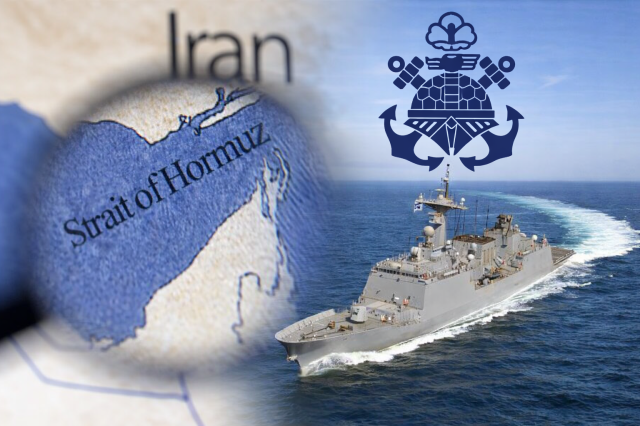
South Korea and other countries asked by Washington to help protect merchant vessels from Iranian attacks in the strategic waterway are quietly weighing the request, while officials in Seoul stress that no formal decision has been made.
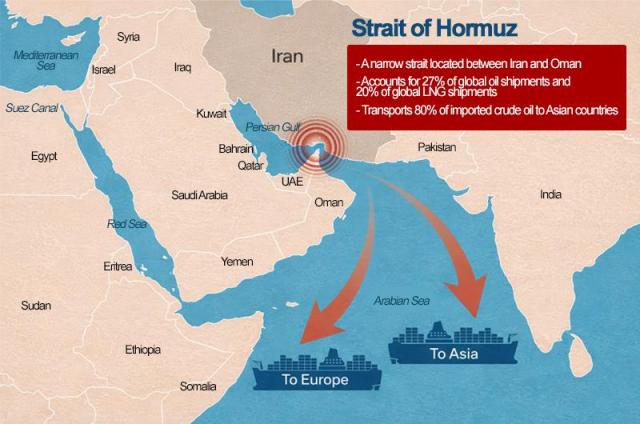
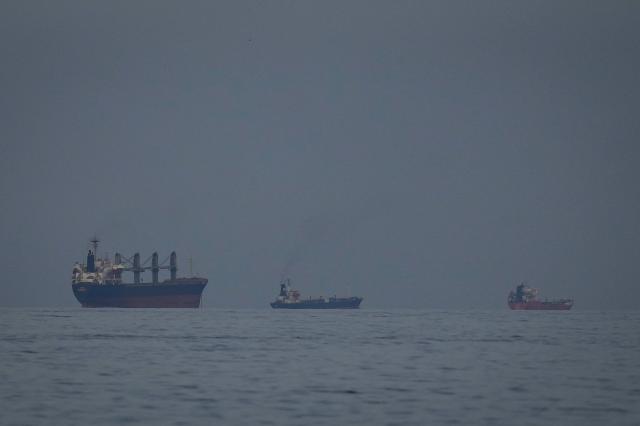
As the conflict between the United States and Iran has intensified, Iran has begun laying naval mines in the waterway after U.S. strikes degraded much of its conventional military capability, effectively halting civilian shipping.
Trump has argued that countries heavily dependent on Middle Eastern energy should take responsibility for securing the route.
“We have already destroyed 100 percent of Iran’s military capability, but it’s easy for them to send a drone or two, drop a mine, or deliver a close-range missile somewhere along this waterway,” Trump said, emphasizing the need for naval escort operations.
He claimed the United States itself does not rely heavily on the route for energy supplies and urged countries that do to help protect it, with his tone shifting within a day from “hopefully” urging allies to participate to saying “I’m demanding” that they join and adding “we will remember” if they do.
Governments identified as potential members of an escort coalition are weighing their responses as pressure from Washington grows more direct.
For South Korea, the naval unit most suited to such a role is the Cheonghae Unit, an anti-piracy force deployed in the Gulf of Aden near Somalia.
Formed in March 2009, the unit is the South Korean Navy’s first permanently deployed overseas combat unit. Its name comes from Cheonghae-jin, the maritime base established by the Unified Silla naval commander Jang Bogo.
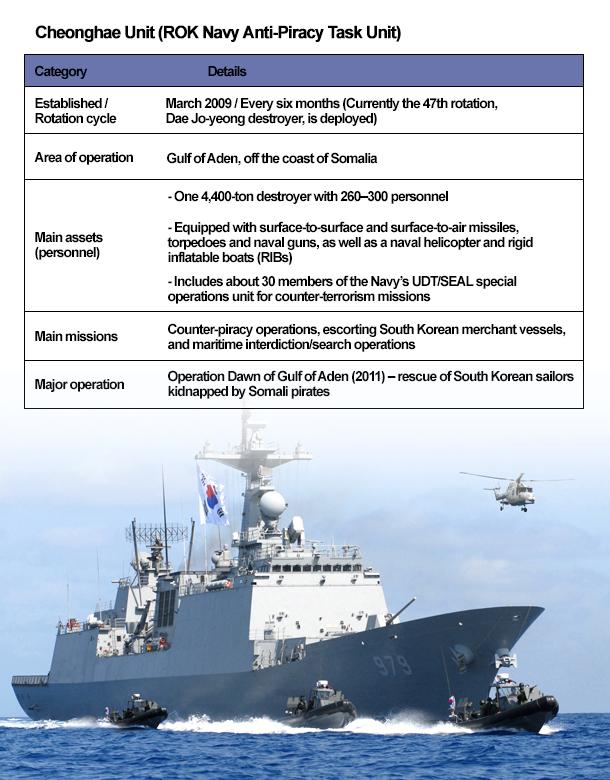
Since its establishment, the Cheonghae Unit has maintained a continuous presence in the Gulf of Aden on a rotational basis. Each deployment typically includes a 4,400-ton destroyer, a maritime operations helicopter and a 30-member UDT/SEAL boarding team, with roughly 300 personnel in total.
The destroyer is equipped with anti-ship missiles, a 127-millimeter main gun, surface-to-air missiles, anti-submarine torpedoes and a close-in weapon system.
Through operations such as the rescue of hijacked vessels in the “Dawn of the Gulf of Aden” mission and the escort of hundreds of merchant ships, the unit has become a symbol of the Korean Navy’s blue-water operations.
The Cheonghae Unit operates under the direct control of South Korea’s Joint Chiefs of Staff, allowing the navy to maintain a permanent operational presence in distant waters.
Its deployment is based on an overseas troop dispatch mandate that requires annual approval from the National Assembly. The mandate designates the Gulf of Aden off Somalia as the primary area of operations and defines the mission as counter-piracy, escort duties and protection of Korean nationals.
However, it also includes a clause allowing operations in “other waters designated for the protection of our nationals in emergency situations.”
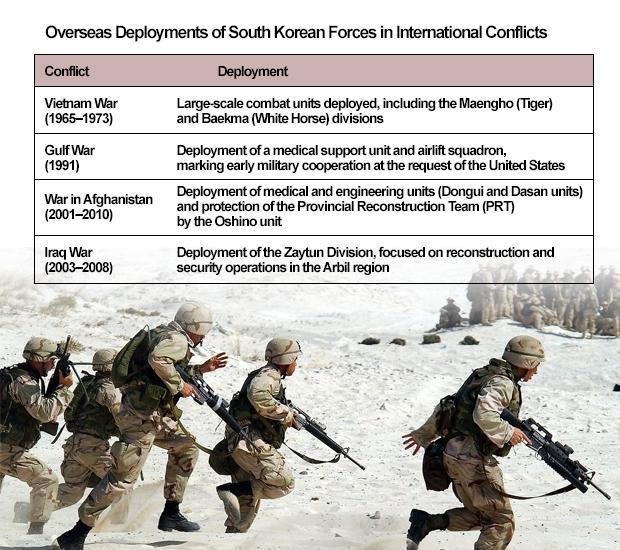
At the time, Seoul avoided formally joining the U.S.-led International Maritime Security Construct and instead carried out an independent mission focused on protecting Korean vessels.
Defense experts say any redeployment to Hormuz now would likely require renewed review by the National Assembly because the situation has evolved into an active armed conflict.
Six years ago the unit operated largely on its own in a limited mission. Any new deployment would take place during an ongoing war and potentially as part of a multinational naval operation.
Military analysts also note that the operational environment in the Strait of Hormuz differs significantly from the anti-piracy missions the Cheonghae Unit typically performs.
“The biggest threats to tankers in the Strait of Hormuz are Iran’s land-based anti-ship missiles and drones,” said Jeong Kyung-woon, a research fellow at the Korea Association of Military Studies.
“If those land-based threats are not neutralized, the risks will remain even if naval forces escort tankers,” he said.
Iran’s remaining naval capabilities include small attack craft and mine-laying operations, while missiles and drones launched from coastal areas and nearby islands pose additional threats.
China’s state-run Global Times criticized the idea, saying it resembled “someone who set the fire now asking the whole world to help put it out.”
Japan has also signaled caution. Prime Minister Sanae Takaichi said on Monday that Tokyo is considering possible responses within the limits of domestic law. Its defense minister said the government wasn't considering the option of sending its self defense forces to the Middle East. Australia's transport minister also made a similar remark.
The South Korean Navy maintained a reserved stance.
“The U.S. president has made certain remarks, but those need to be translated into concrete requests before we can offer any real opinion,” a Navy official in Seoul said.
“We need to see exactly what is being asked before discussing whether it is feasible.”

Copyright ⓒ Aju Press All rights reserved.