

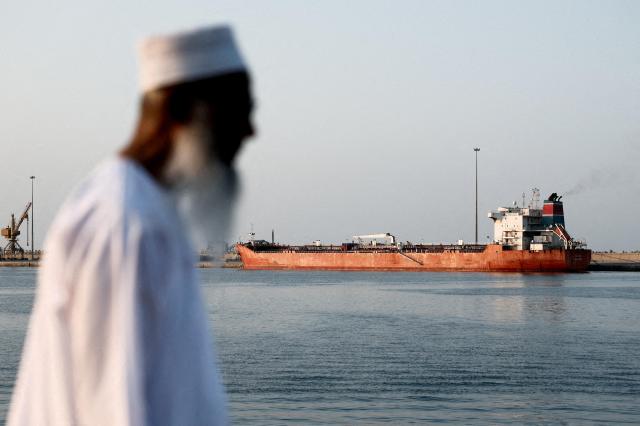
The proposal, approved by Iran’s parliament, comes as Tehran tightens its grip on the chokepoint, through which roughly 20 percent of global oil supply normally flows. Since the outbreak of conflict, vessel traffic has plunged by as much as 90 percent, while access for Western-linked ships has been selectively restricted.
Ships are increasingly required to submit detailed cargo and ownership data to intermediaries linked to the Islamic Revolutionary Guard Corps before being allowed safe passage, with some reportedly paying fees in Chinese yuan — underscoring how control is already being exercised in practice.
The impact is rippling far beyond the Gulf. Oil prices have surged, while energy-importing economies in Asia — including South Korea and Japan — face renewed supply risks as one of their most vital maritime lifelines comes under strain.
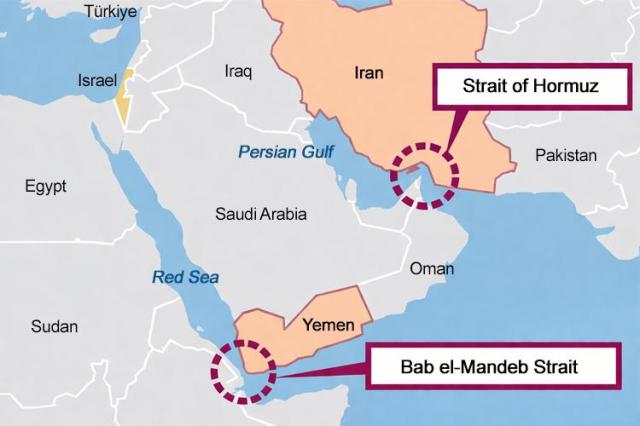
Legal scholars say Iran’s proposed toll regime collides directly with established international law governing maritime passage.
“Under current international law, a coastal state may not lawfully impose a general toll simply for ships’ passage through an international strait used for international navigation,” said Shahla Ali, a law professor at the University of Hong Kong.
She noted that the United Nations Convention on the Law of the Sea guarantees “transit passage” — the right of continuous and unimpeded movement — and that any charges must be tied to specific services and must not “effectively deny or unreasonably burden” passage.
Similarly, James D. Fry, also a law professor at the University of Hong Kong, said imposing unilateral transit fees would “go against [the] freedom of navigation” protected under customary international law.
“There is no precedent that might allow for an interpretation of UNCLOS to permit such a transit fee,” Fry said.
But the issue is quickly moving beyond legal doctrine.
Iran’s growing “de facto control” over the strait — screening vessels, dictating passage conditions and shaping traffic flows — is raising a more fundamental question: whether physical dominance over a chokepoint can begin to override long-standing legal norms.
“If, in fact, Iran can exercise control over the Strait of Hormuz to the point that all others are excluded, it might be difficult to say that Iran lacks sovereignty,” Fry said, while cautioning that any such shift would depend on how the international community responds.

The toll push is unfolding against a backdrop of escalating military tensions involving Iran, the United States and Israel, further complicating the legal and strategic landscape.
Washington has defended its strikes as necessary to counter threats from Iran’s missile and nuclear programs, while Tehran has accused the U.S. and Israel of committing “internationally wrongful acts,” including what it described as state-sponsored assassination attempts.
The competing claims underscore a broader erosion of international norms, with legal arguments increasingly shaped by geopolitical leverage.
For now, legal experts remain skeptical that Iran’s toll plan can be justified under existing frameworks. But they also acknowledge that international law is not static.
“The law is not static,” Fry said. “But any evolution will depend on state practice — and on whether the international community accepts or resists what Iran is doing.”
That leaves Hormuz emerging as more than a regional flashpoint. It is becoming a test case for whether global trade routes remain governed by law — or by control.
If economic leverage and military presence can redefine access to strategic waterways, the implications will extend far beyond the Gulf, potentially reshaping the rules that underpin global commerce.
For Asia’s energy-dependent economies, the stakes are immediate. What happens in Hormuz may determine not only the flow of oil, but whether the architecture of international maritime order can withstand an era increasingly defined by power over principle.

Copyright ⓒ Aju Press All rights reserved.
