

SEOUL, March 31 (AJP) -South Korea is pushing ahead with an aggressive fiscal response to cushion the economic shock from the Middle East war, unveiling a 26.2 trillion won ($19.4 billion) supplementary budget aimed at stabilizing energy prices, supporting households and shielding key industries — despite the risk of stoking inflationary pressure with the won hovering at 2009 crisis-era lows.
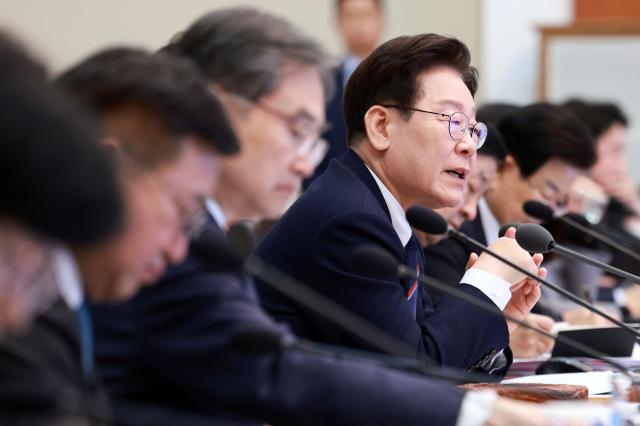
The emergency package, approved at a Cabinet meeting chaired by President Lee Jae Myung, is framed as a “war-time” budget to counter a triple shock of surging oil prices, a weakening currency and rising inflation.
Lee is set to seek bipartisan backing for the plan through a National Assembly address on Thursday, while signaling a willingness to invoke emergency fiscal powers under the Constitution for a “preemptive and proactive” response to the deepening energy crisis stemming from the widening Gulf conflict.
The emergency fiscal authority, stipulated under Article 76 of the Constitution, allows the president to issue measures with the force of law in times of severe economic or national crisis when legislative delays are untenable. It has been used only once in modern history — in 1993, when then-president Kim Young-sam enforced the financial real-name system.
At the core of the package is direct cash support and energy subsidies designed to sustain consumption and prevent a sharper downturn. About 4.8 trillion won will be distributed to roughly 35.8 million people — around 70 percent of the population — with payments ranging from 100,000 to 600,000 won depending on income and region. The funds will be issued in spending-linked forms such as local currency or card credits.
Another 5 trillion won has been earmarked to cap fuel costs and ease transport expenses, including support for a temporary oil price ceiling and expanded public transport rebates. Additional measures target energy-vulnerable households and fuel-intensive sectors such as agriculture and fisheries.
The government said the budget is structured around three pillars — responding to high energy costs, stabilizing livelihoods and minimizing industrial damage while securing supply chains. Targeted programs include 1.9 trillion won for youth employment and startups, alongside funding for renewable energy transition, export financing and critical raw material imports.
Unlike past stimulus efforts, the package will not rely on additional debt issuance but instead be financed by stronger-than-expected tax revenues, buoyed by semiconductor exports and stock market gains. Fiscal indicators are expected to remain broadly stable, with the managed fiscal deficit projected at 3.8 percent of GDP, slightly lower than the original budget.
The backdrop remains increasingly fragile. Escalating conflict involving Iran and disruptions to Gulf shipping routes have pushed global oil prices above $100 per barrel, amplifying input costs for an economy heavily dependent on imported energy.
The government estimates the supplementary budget will lift growth by about 0.2 percentage point this year — a modest buffer as global institutions including the OECD have already downgraded Korea’s outlook amid weakening external demand and mounting geopolitical risks.
Still, the policy comes with trade-offs. While authorities argue the stimulus will not significantly fuel inflation given subdued domestic demand and the absence of new bond issuance, some economists warn that injecting liquidity amid energy-driven price pressures could complicate inflation management.
Political friction is also building. The opposition is widely expected to protest to the broad cash payouts as a pre-election measure ahead of local polls scheduled for June 4, arguing the package leans too heavily on short-term consumption support.
For now, the administration is signaling urgency over orthodoxy since Lee has indicated he may resort to emergency fiscal authority if political gridlock delays implementation — underscoring the government’s determination to act swiftly as external shocks threaten to spill deeper into growth, prices and financial markets.
Copyright ⓒ Aju Press All rights reserved.
