

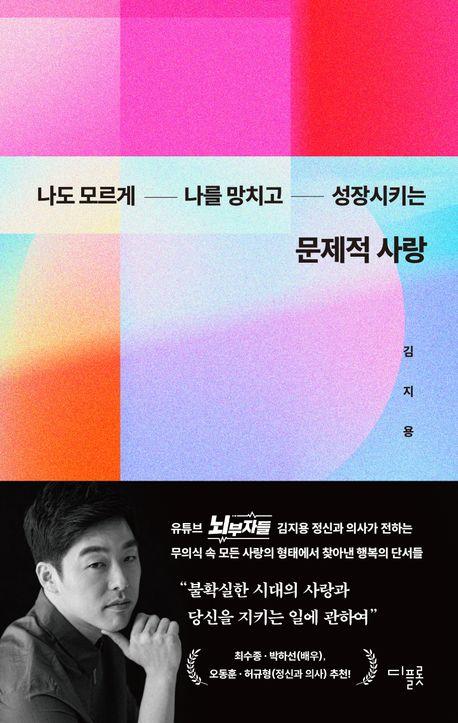
Problematic Love That Unknowingly Ruins You and Helps You Grow=By Kim Ji-yong, Dplot.
If you find yourself searching YouTube for tarot readings like “Does that person still think about me?” or listening to romance “frequencies” promising “They’ll text in eight minutes,” this book argues it may be time to look inward instead.
For readers who avoid dating out of fear of heartbreak — or who cannot leave relationships that repeat the same wounds — the author urges them to stop blaming fate, a fixed destiny or past love and to examine their own unconscious patterns.
Kim, a psychiatrist, draws on cases from his clinic involving people struggling with love and dating. He describes the counseling process as using a “T-hammer” to bring up what lies beneath the surface, analyzing patterns ranging from people who cannot start relationships to those who cannot deepen them, those who cycle through frequent breakups, and those who repeatedly end up in unequal power dynamics.
Citing Sigmund Freud’s line that “in a married couple’s bedroom there are six people,” Kim writes that early attachment to parents can shape adult romance. One example is a woman in her early 30s — with striking looks and a stable job — who has never dated; raised by a tyrannical father, she unconsciously built a wall around herself with the rule that any man “like Dad” was unacceptable. Other cases include L, who cannot stand loneliness; W, who wants to be loved exclusively; and G, who is “too nice,” inviting readers to recognize themselves in past or current relationships.
Kim also warns readers to break free from the “gaslighting” of the idea that “your true other half is out there.” He argues that warmth in love comes not from destiny but from reasoned self-reflection, honest conversation with a partner and growth that expands each person’s sense of self. If that kind of love feels unfamiliar, he writes, start now.
He recommends the book to prospective parents and those raising young children, saying the attachment types described can help readers assess their own tendencies and consider whether they may be passing on insecure attachment.
“‘Life is not something you explore and then live; it is something you live while exploring.’ Yang Gui-ja,
Life is not time spent searching for a fixed answer. There is no correct answer to begin with. It is unpredictably complex, and every moment is contradictory. By living through those contradictions and paradoxes, we gain unexpected insight and grow. That was true for me, and for everyone I have met. (Omitted) Near the end of
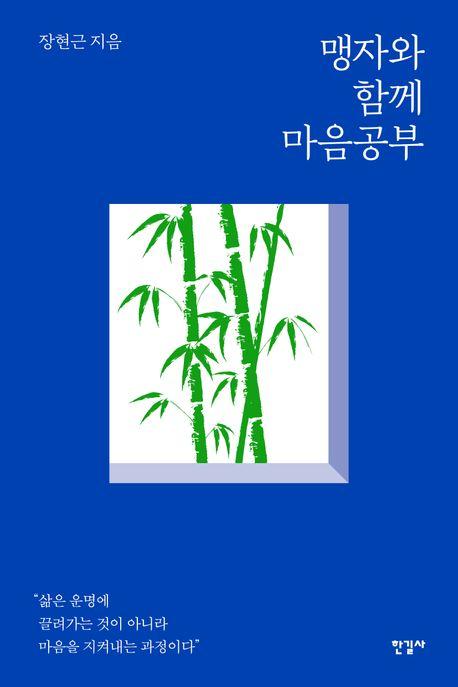
Mind Study With Mencius=By Jang Hyun-geun, Hangilsa.
Jang, a professor in the Department of Chinese Studies at Yongin University and an adjunct professor at Jilin University in China, explains that Mencius’ concept of “budongsim” — an unshakable mind — is not about suppressing emotion. He describes it as internalizing principles that do not collapse under pressure, arguing that people waver because of outside influences despite an inherently good nature. Based on Mencius’ answer to how to remain steady, Jang lays out 22 everyday principles.
They include holding to one’s intent and center without meddling in small matters; not lingering too long at the door of someone who has closed off conversation; keeping principles while judging what is most important and urgent; and setting rules to rely on when judgment blurs or emotions take over. For readers who feel shaken day after day, the book offers a standard for self-review.
“Mencius was different. Rather than simply following fate, he opened the possibility of ‘seeing’ fate differently through self-cultivation and effort. He accepts that some fate cannot be helped, but also recognizes that some things are not fixed, and he sought ways to find happiness and joy on that side. He offered the path of seeking the nature within people — benevolence, righteousness, propriety and wisdom — as a ‘useful’ solution. What is useful in life is not money or power but cultivation of the mind. Happiness gained through character cultivation is more important in life than a fate that brings fortune.” (p. 273)
* This article has been translated by AI.
Copyright ⓒ Aju Press All rights reserved.