

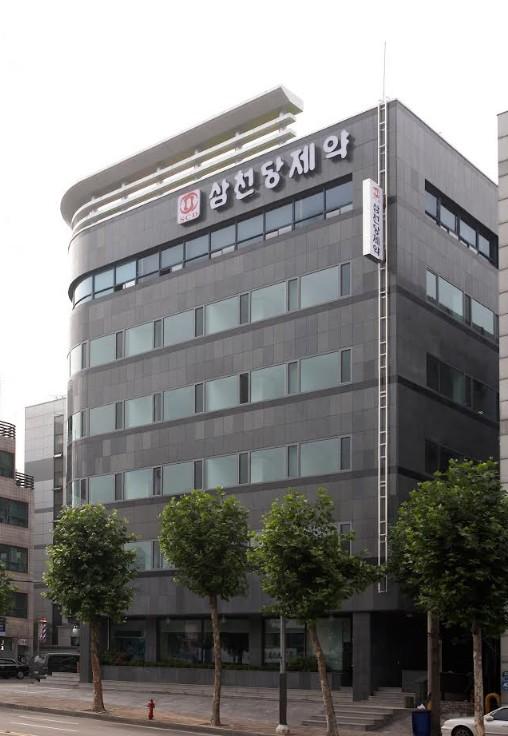
[Photo=Samchundang Pharm]
Negative issues surrounding Samchundang Pharm have continued to spread, including controversy over a planned block deal by its controlling shareholder and questions about the substance of its technology and the structure of related agreements. The company moved quickly to contain the fallout, withdrawing the block-deal plan and outlining the competitiveness of its oral formulation platform, S-Pass, and its global partnership structure. But investors have said the company has not provided enough indicators or data to resolve doubts, including a lack of disclosed evidence supporting its core technology. With a dispute now also emerging over patent ownership, industry officials warn the issue could extend beyond one company and undermine confidence in South Korea’s broader pharmaceutical sector.
According to the industry on April 8, Samchundang Pharm — once the top company by market capitalization on the KOSDAQ — is facing allegations of stock manipulation and criticism that the scope of patents tied to the S-Pass platform is unclear. Questions have grown as the company has not sufficiently disclosed pharmacokinetic, or PK, data, which is commonly viewed as a key benchmark for demonstrating drug effects.
A separate dispute has also surfaced over ownership of a key patent. A media outlet reported the previous day that Summit Biotech, a Taiwanese company, filed the patent application for S-Pass, Samchundang Pharm’s drug-delivery platform. The report also argued it was unusual for an overseas company with no equity relationship to hold a core-technology patent.
Samchundang Pharm rejected that claim, saying that while it does not hold an equity stake in Summit Biotech, ownership “belongs entirely” to Samchundang Pharm based on a comprehensive research-services contract under which it paid all research and development costs.
As the controversy deepens, the pharmaceutical and biotech industry has increasingly viewed the situation as more than a single-company risk. In recent years, technology-export deals and platform-based companies have surged, and industry officials say there have been repeated cases of firms seeking to secure market trust without releasing core data.
A pharmaceutical company official cited past cases, saying Alteogen — once No. 1 on the KOSDAQ — previously saw its share price plunge when its technology-export scale fell short of market expectations, and SillaJen was once pushed to the brink of delisting after a Phase 3 liver cancer trial failed. The official said the domestic market is vulnerable to confidence shocks that can quickly freeze investment sentiment across the sector.
Some have also pointed to spillover into sector funds. As of April 7, the TIGER KOSDAQ150 Biotech exchange-traded fund posted a roughly 15% loss over the past week, fueling concerns that sentiment toward the domestic biotech industry is already weakening.
Samchundang Pharm shares extended their slide. According to the Korea Exchange, the stock closed at 485,000 won on the day, down 6.55% from 519,000 won the previous session. A so-called “imperial stock” that had been eyeing the 1.2 million won level as of late last month has fallen to less than half that level in a short period.
* This article has been translated by AI.
Copyright ⓒ Aju Press All rights reserved.