

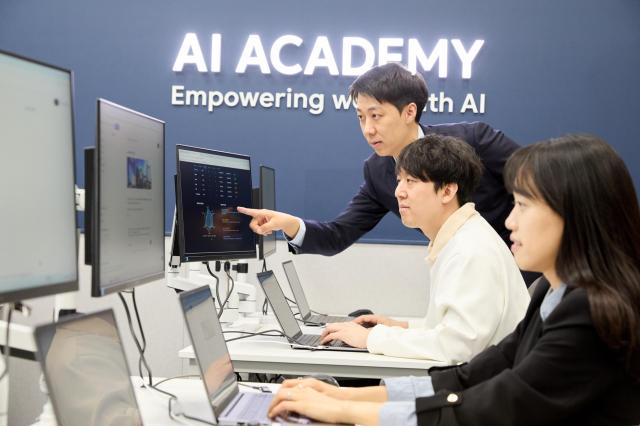
Samsung Bioepis said April 8 it has launched artificial intelligence training for all employees to strengthen global competitiveness in the AI era. The company said the program is aimed at maximizing workplace efficiency and marks its first companywide AI training effort.
Samsung Bioepis built a dedicated training space, the “AI Academy,” at its headquarters in Songdo, Incheon, to allow employees to study year-round. Through July, employees will complete at least seven hours of AI theory and hands-on training at the in-house facility, including use of the latest generative AI, job-specific AI model design and work automation initiatives.
The company said it also plans to form a task force led by its AI unit to develop customized “AI agents” for each division and team.

Medytox said April 8 it has selected actor Lee Min-jung as the official ambassador for LactiPLAN, a probiotic marketed for reducing body fat.
The company said it chose Lee because her energetic and trustworthy image aligns with LactiPLAN’s brand identity, which emphasizes a scientifically designed approach to healthy dieting.
Medytox said it will release TV and outdoor ads featuring Lee in stages. It also plans a digital campaign across its official YouTube, Instagram and Facebook channels built around the message, “A healthy diet starts with a plan.”
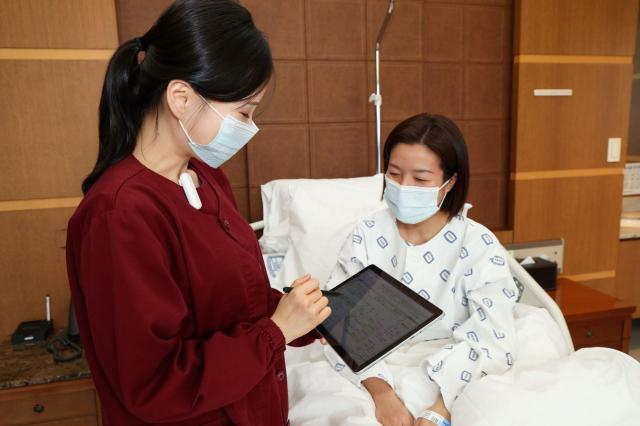
The Catholic University of Korea’s Seoul St. Mary’s Hospital said April 8 it has declared 2026 “the first year of nursing innovation led by AI” and will apply a range of smart nursing services in clinical settings. The hospital said the project focuses on accelerating digital transformation in nursing to improve efficiency, record accuracy and the patient experience.
Its nursing department has operated an AI-based voice electronic nursing record system, known as Voice ENR, across all wards since February. The hospital said it built the infrastructure in phases over about 11 months while running on-site tests.
With testing completed, the hospital said it has finalized a package that includes dedicated devices with Voice ENR and pin microphones designed for voice recognition that block surrounding noise. It said one device is issued to each ward nurse, enabling immediate recording and review at the bedside.
The hospital also said it has set up an operating model that uses devices and tablet PCs depending on the task. For work that requires frequent movement — such as medication administration, transfusions and tests — nurses use the more portable Voice ENR device. For tasks that require visual checks and detailed input — such as admission counseling and rounds — they use tablet PCs.
Seoul St. Mary’s Hospital said it will continue linking additional systems so the approach can serve as a core tool for nursing work.
A research team led by Kim Hyun-sung at the Spine and Joint Research Institute of Jaseng Hospital of Korean Medicine has identified Yukgongdan’s protective effects on hippocampal nerve cells and its mechanism of action, the hospital said April 8. The findings were published in the SCI(E)-indexed international journal Biology (IF=3.5).
The hospital said scientific research explaining how Yukgongdan acts on hippocampal nerve cells has been limited. The team isolated nerve cells from rats and used high-resolution imaging to track changes after administering Yukgongdan, identifying its effects and mechanism.
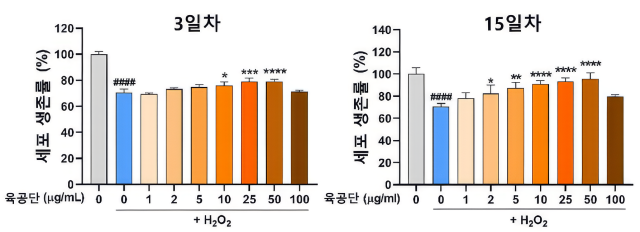
The study found Yukgongdan increased survival of damaged hippocampal nerve cells and reduced cell death. The protective effect was stable under both short-term (three-day) immature culture conditions and long-term (15-day) mature culture conditions, the hospital said. It also reported that Yukgongdan suppressed tau protein modification, cited as a key cause of dementia, and reduced accumulation of amyloid-beta protein, which can cause toxicity between cells.
The hospital said ERK levels, associated with excessive stress responses that can accelerate brain damage, decreased after Yukgongdan intake, while expression of the Nrf2 protein, which plays a key role in antioxidant defense, recovered.
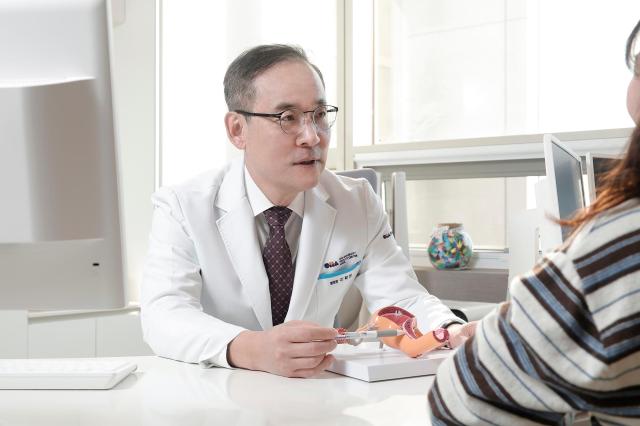
CHA University’s CHA Fertility Center said April 8 it has confirmed successive pregnancy successes at Jamsil CHA Hospital and Ilsan CHA Hospital using CAPA-IVM, a hormone-injection-free approach, for patients who have difficulty creating embryos through standard in vitro fertilization.
CAPA-IVM is a form of in vitro maturation treatment using immature eggs.
At Jamsil CHA Hospital, the center applied CAPA-IVM to a 32-year-old patient identified as A who had difficulty conceiving naturally due to polycystic ovary syndrome. After improving the uterine environment through a hysteroscopic procedure, the patient underwent frozen embryo transfer (T-ET) in January 2025, became pregnant and delivered a healthy baby boy in September that year.
At Ilsan CHA Hospital, the center said it confirmed its first pregnancy success after using CAPA-IVM for a patient who did not respond to hormone treatment and had difficulty obtaining mature eggs.
The hospital said the results are significant because pregnancy outcomes were confirmed through CAPA-IVM in patient groups where existing infertility treatment had been difficult, including patients with PCOS and those who could not secure mature eggs despite repeated hormone stimulation treatments.