

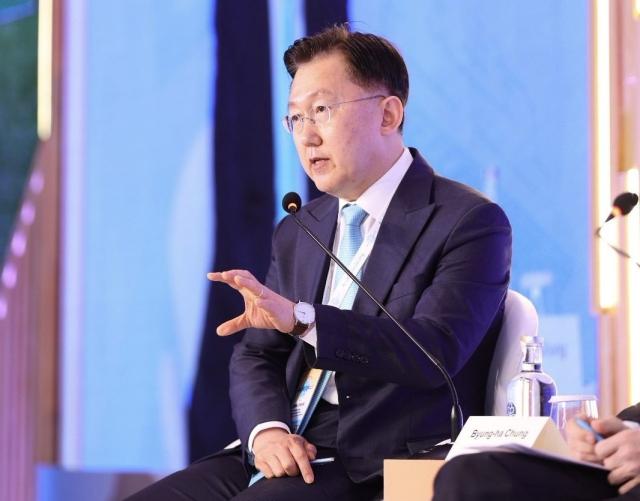
SEOUL, April 13 (AJP) - Special envoy Chung Byung-ha arrived in Tehran on Monday to negotiate the release of 26 South Korean tankers and 173 crew members currently stranded in the Strait of Hormuz. The diplomatic surge follows a direct order from Foreign Minister Cho Hyun as Seoul attempts to bypass the paralysis of international mediation to protect the maritime corridor that provides 70 percent of the crude oil imports of the nation.
The arrival of the envoy marks a strategic pivot for Seoul, which has traditionally relied on Washington to secure the Persian Gulf. By launching this high-stakes bilateral channel, South Korea is effectively signaling that it can no longer wait for a global consensus that has evaporated following the collapse of multilateral peace efforts over the weekend.
The regional crisis escalated on February 28 when a coalition led by the United States and Israel launched massive strikes against the nuclear and naval infrastructure of Iran. While a fragile ceasefire briefly paused the violence, the Islamabad Talks between Washington and Tehran failed on Sunday after 21 hours of deadlock. The breakdown centered on demands from Tehran for control over the strait and the unfreezing of billions in assets, which the United States flatly rejected, leading to the current effective blockade of the waterway.
Chung is scheduled to hold discussions with Foreign Minister Seyed Abbas Araghchi and other senior leaders to establish a safe passage for Korean-linked vessels. These ships, primarily ultra-large crude carriers and liquefied natural gas tankers, are currently frozen in place as insurers and shipping companies treat the passage as a total war zone.
This diplomatic initiative draws on a deep, decades-long reservoir of bilateral goodwill that has persisted despite the geopolitical friction of the last decade. The relationship is famously symbolized by the 1977 agreement to rename streets in each capital, resulting in the prominent Teheran-ro in the Gangnam district of Seoul and Seoul Street in Tehran. These landmarks represent a history of economic and cultural exchange that both nations have sought to preserve even as international sanctions complicated official trade.
Throughout the era of heightened sanctions, Seoul maintained a functional relationship with Tehran under the surface, often serving as a quiet intermediary for humanitarian concerns. During the height of the COVID-19 pandemic, the South Korean government prioritized the delivery of medical equipment and test kits to Iran, utilizing a specialized humanitarian channel to bypass financial restrictions. This history of cooperation provides the current envoy with a unique level of access that other Western-aligned diplomats currently lack.
The visit by the special envoy took place while desperation in Seoul is driven by a dwindling energy clock, with internal reports suggesting that strategic petroleum reserves have fallen to critical levels. The economic security of the country is at stake as long as these vessels remain trapped behind an Iranian naval screen that requires individual coordination for safe passage.
In a parallel move, the government has appointed Lee Kyung-chul as the new Special Representative for Middle East Peace to address the broader geopolitical fallout. Lee, a veteran of United Nations Security Council affairs, will focus on long-term stability and the resolution of the Palestinian conflict to prevent the current war from expanding into a permanent regional conflagration.
The return of the envoy remains unscheduled as the ministry monitors the progress of the talks and the evolving military posture of the Iranian Revolutionary Guard Corps. Seoul continues to coordinate with the European Union and regional partners to ensure that any breakthrough for its own vessels does not further destabilize the fragile security of the strait.
Copyright ⓒ Aju Press All rights reserved.
