

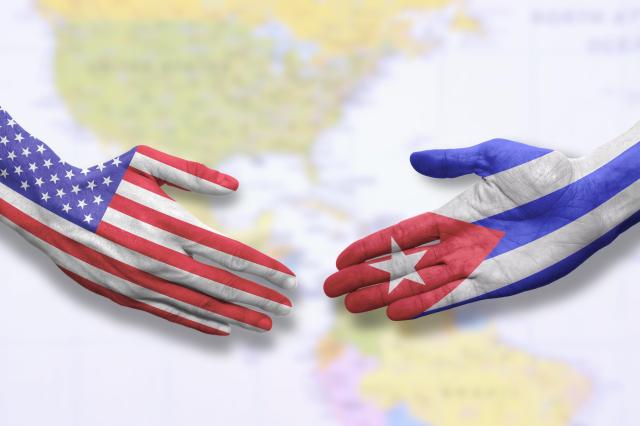
The United States and Cuba, long at odds over sweeping U.S. economic sanctions including restrictions on energy shipments, held bilateral talks in Havana earlier this month, according to reports.
Reuters reported that a U.S. State Department official confirmed the meeting took place April 10 in the Cuban capital. It was the first visit to Cuba by a U.S. delegation since 2016.
The official said the delegation again stressed that Cuba’s economy is rapidly deteriorating and that there is little time left to carry out key U.S.-backed reforms before conditions worsen beyond repair.
The official added that President Trump is committed to pursuing a diplomatic solution if possible, but would not allow Cuba’s leadership to ignore U.S. concerns and let the country become a serious security threat.
The U.S. side was reported to have proposed allowing Starlink satellite internet, compensation for U.S. individuals and companies whose assets were seized after the 1959 revolution, the release of political prisoners and expanded political freedoms. The delegation also raised concerns about growing influence by foreign powers in Cuba.
Alejandro Garcia del Toro, deputy director for U.S. affairs at Cuba’s Foreign Ministry, said the U.S. delegation included officials at the assistant secretary level, while Cuba was represented by vice ministers.
Garcia del Toro said there were no deadlines or threats and that the talks were conducted in an overall respectful atmosphere. He said Cuba’s top priority was lifting what he called the U.S. energy blockade. He described the measure as unjustifiable economic punishment of the Cuban people and “a kind of global intimidation” of countries that, under free-trade principles, have the right to export fuel to Cuba.
Reuters said the meeting signaled the two countries could still reach a diplomatic agreement, even after President Trump suggested possible military action against Cuba following the capture of Venezuela’s Nicolas Maduro in January.
Since taking office, Trump has repeatedly spoken of the need for regime change in Cuba and has pursued a hard-line policy, including an oil blockade. On March 28, he again suggested the possible use of force, saying, “Anyway, Cuba is next,” after Venezuela and Iran.
Cuban President Miguel Diaz-Canel said April 16 that the country must prepare for the possibility of a U.S. military invasion, adding, “If it cannot be avoided, we will repel it.”