

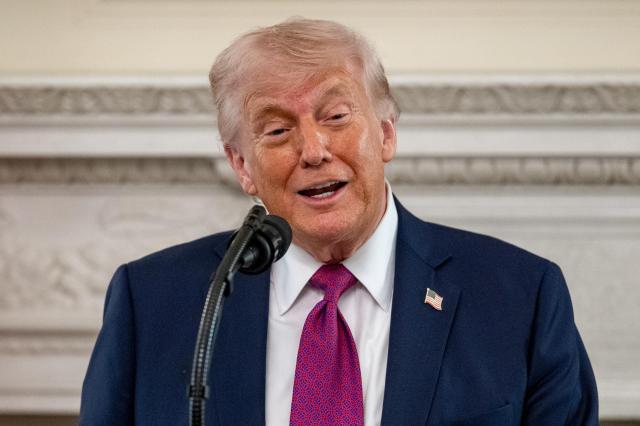
Trump said on April 21 (local time) on Truth Social that he had been asked to halt attacks on Iran “until Iran’s leadership and negotiating team can come up with a unified proposal,” citing what he called serious divisions within the Iranian government and requests from Pakistan’s Army Chief Gen. Asim Munir and Prime Minister Shehbaz Sharif.
He added that he would extend the ceasefire “until the proposal is submitted and the discussion (bilateral negotiations) is concluded one way or the other.” He also said the maritime blockade and military readiness posture would remain in place.
The announcement came as the original “two-week ceasefire” was nearing its end. Trump had first pushed back the deadline, originally set to end on April 21, by one day to “Wednesday (April 22) evening, Washington time,” and then extended it again.
The latest move follows a series of pauses. After issuing an ultimatum on March 21 that Iran’s power plants would be devastated unless the Strait of Hormuz was opened within 48 hours, Trump delayed attacks for five days, citing ongoing negotiations. That was followed by an additional 10-day delay and then the two-week ceasefire. Including the latest extension, the U.S. has now postponed attacks four times, the report said.
Because Trump tied the extension to talks ending, without a fixed deadline, the measure was widely seen as close to an open-ended ceasefire, with the possibility of a longer truce if negotiations continue.
Iran, however, said it would not accept the U.S. announcement. Iran’s state broadcaster reported that Iran would not recognize the U.S. extension and would act according to its national interests. It said the ceasefire period with the United States ends at 3:30 a.m. local time on April 22 (midnight GMT on April 22; 9 a.m. April 22 in South Korea).
The semiofficial Tasnim news agency reported that as long as the U.S. maritime blockade continues, Iran will at minimum not open the Strait of Hormuz, and that Iran’s military said it could lift the blockade by force if necessary.
Ebrahim Zolfaghari, a spokesman for the Khatam al-Anbiya Central Headquarters, which commands Iran’s armed forces, warned via Tasnim that the military has long maintained “100% combat readiness.” He said that if there is any attack or action against Iran, it would immediately strike preselected targets with force and “once again show a clear response” to the United States and Israel.
The United States and Iran held a first round of ceasefire talks in Islamabad, Pakistan, on April 11-12, but ended without results, the report said. A second round was scheduled for April 22, but it collapsed after the Iranian delegation, led by Parliament Speaker Mohammad Bagher Ghalibaf, decided at the last minute not to attend. The decision was conveyed to the U.S. side through mediator Pakistan, the report said. As a result, a planned visit to Pakistan by Vice President JD Vance, who was to lead the U.S. delegation, was canceled.
* This article has been translated by AI.
Copyright ⓒ Aju Press All rights reserved.