

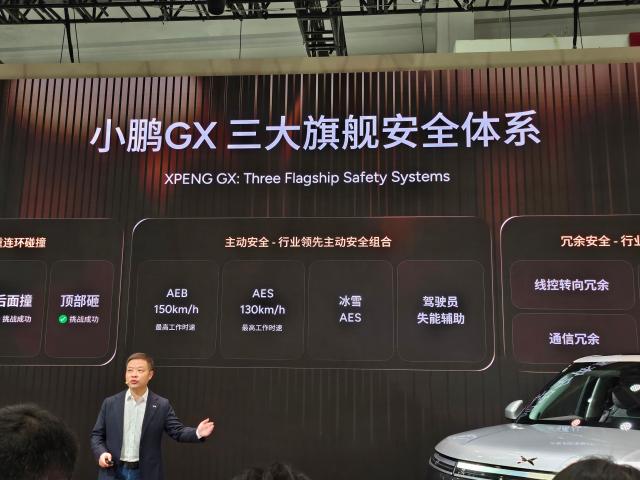
“We’re the ‘king of the alleyways.’ Our next throne will be in humanoid robots and flying cars,” said He Xiaopeng, chairman of XPeng Motors.
At the 2026 Beijing International Motor Show (Auto China 2026) on April 24 at the Capital International Exhibition Center in Beijing’s Shunyi district, crowds of more than 200 reporters packed the booth of XPeng, often called China’s Tesla, to see the world debut of its new SUV, the GX.
XPeng said the GX uses four in-house AI chips and a second-generation VLA (Vision-Language-Action) system to deliver Level 4 autonomous driving that can recognize and judge situations on its own. “Autonomous driving is no longer just for early adopters,” He said. “We’re moving into everyday life, from apartment underground parking lots to crowded shopping centers.”
When He played video of the second-generation VLA system, the audience reacted loudly as the vehicle navigated a chaotic night market and narrow alleys clogged with illegally parked cars. The video also showed the car reading building signs and “entrance/exit” markings to make decisions. In one scene, a kitten lay in the road; the vehicle hesitated, then edged into the next lane to avoid it.
He said advanced autonomous driving is becoming a must-have feature that drives purchases. He said XPeng aims to create new demand and “break through” weak domestic consumption by emphasizing safety, including for mothers in their 60s and older. He added that a second version of the second-generation VLA system, which learns by recognizing voice across the full driving route rather than relying on memory-based approaches, will be unveiled in May, opening an era of “mass-market autonomous driving.”
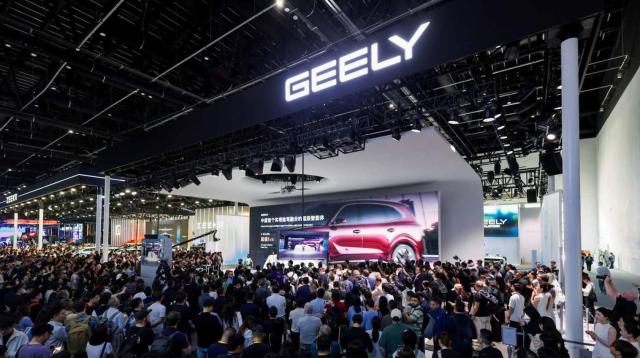
At Auto China 2026, which runs through May 3, Chinese automakers rolled out a wave of AI-enabled new energy vehicles, presenting them as a way to counter a sharp domestic slowdown. The show, themed “Future of Intelligence,” drew global brands including Hyundai Motor as well as Mercedes-Benz, BMW and Volkswagen Group, alongside local players such as BYD Group, Geely Auto Group, Chery Automobile Group, Xiaomi, XPeng and Nio. Organizers said more than 100 automakers and more than 1,000 parts suppliers took part.
A representative of Li Auto said China’s NEV strategy is shifting from rapid expansion to higher-quality growth, intensifying competition among local companies. With AI integrated into vehicles, the person said, autonomous driving and infotainment are improving, along with charging and operating systems. The representative said a 1,500-kilometer driving range has become standard and that a 2,500-kilometer era is approaching.
According to the China Association of Automobile Manufacturers, China’s auto sales in the first quarter totaled 6.3 million vehicles, down 6% from a year earlier. Exports rose 50%, but domestic sales fell 16%, after China ended NEV tax incentives late last year. As a result, local brands are rapidly shifting from a low-priced, domestic-focused EV market to an export-driven NEV market, a trend also reflected in their more aggressive push into South Korea.
Geely Auto Group, which plans to enter the South Korean market in the first half of this year, built one of the show’s largest booths. Under the concept of “embodied intelligence,” it presented NEV strategy models from Zeekr, Lynk & Co and Galaxy, along with a bipedal robot called “Eva,” smart city initiatives and a methanol ecosystem strategy.
A key attraction was the “EVA Cab,” described as China’s first robotaxi-only prototype. Geely said the vehicle applies a “quantum-level” AI architecture and is the industry’s first Level 4 robotaxi prototype to complete mass-production preparation. After a year of pilot operations in cities including Hangzhou and Suzhou, it is set for a full launch starting in 2027. On the show floor, the EVA Cab featured a wide-opening sliding door and a cabin layout with facing seats.
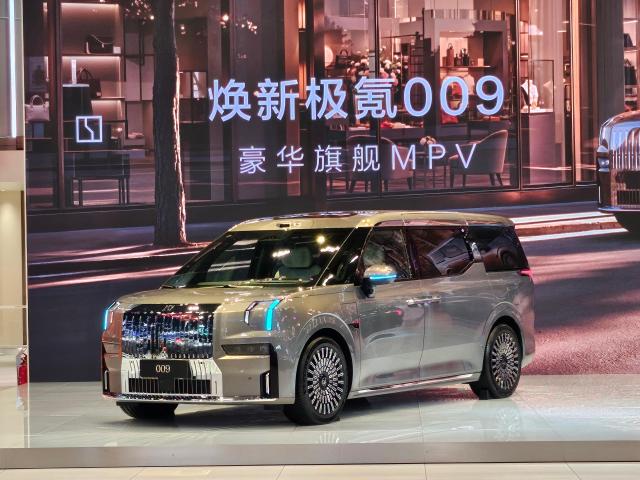
Zeekr and Lynk & Co also introduced models they said use AI to improve range, charging time, fuel efficiency and driver safety. Zeekr strengthened its luxury lineup with the new 009, 8X and 9X. The 8X uses a 900-volt high-voltage system and a three-motor electric drivetrain, delivering a peak output of 1,030 kW and a 0-100 kph time in the 2.96-second range, which the company billed as the world’s fastest hybrid SUV.
Lynk & Co’s electric sport sedans 10+ and 10, set for release in May, use a 900-volt system and a 95 kWh “golden battery,” which the company said enables ultra-fast charging equivalent to 2 kilometers of driving per second. A Geely Auto Group official said the AI ecosystem technologies unveiled at the show will help the company evolve from an automaker into a global intelligent mobility company.
![[Photo by reporter Han Ji-yeon]](https://image.ajunews.com/content/image/2026/04/26/20260426110146218371.jpg)
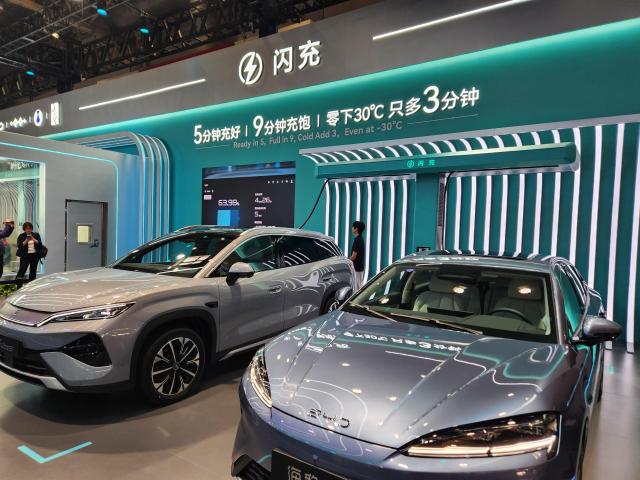
BYD, along with its sub-brands and Denza, Yangwang and Formula Bao, highlighted its ambition to lead China’s NEV strategy. BYD drew attention with a display that placed the Denza Z9 GT and Formula Bao’s Tai 3 inside a freezer so visitors could gauge charging performance in extreme cold. The freezer dropped to minus 35 degrees Celsius, leaving frost on the vehicles, but BYD said its second-generation Blade Battery still charged from 10% to 70% in under five minutes, underscoring its focus on energy efficiency as well as high specifications and stronger autonomous-driving features.
Amid the surge by Chinese brands, Hyundai Motor showcased its electric vehicle, the Ioniq V. The Ioniq V is the production model of the previously unveiled concept car “Venus” and the first China-focused model under Hyundai’s Ioniq brand. Hyundai said it will add an SUV model around the first half of next year and introduce 20 new models by 2030. Jang Jae-hoon, vice chairman of Hyundai Motor Group, told reporters at the company’s booth, “We will learn and grow a lot in China,” adding, “It is the toughest market, but we will rise again in China and create success.”
* This article has been translated by AI.
Copyright ⓒ Aju Press All rights reserved.