

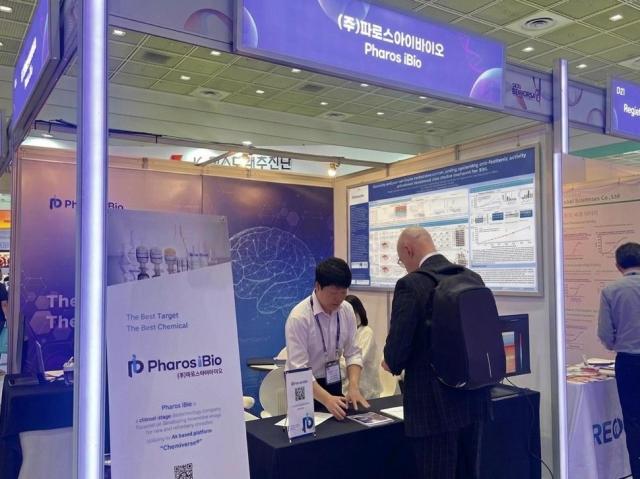
Pharos iBio, an artificial intelligence-based drug development company, said Tuesday it is taking part in BIO KOREA 2026 at COEX in Seoul through April 30, where it will present research technologies and key results based on AI and quantum computing.
Now in its 21st year, BIO KOREA is a major South Korean health care event that shares the latest trends in the biohealth industry and promotes cooperation among global companies and research institutions. About 270 companies from 20 countries are participating, including Johnson & Johnson and Amgen.
Pharos iBio said it will operate a dedicated booth to introduce its AI drug discovery platform, Chemiverse®, and its main pipeline programs, and to hold partnership talks with global counterparts.
At a session titled “Paradigm shifts in drug development amid the spread of AI and quantum computing technologies” on Tuesday, Chief Scientific Officer Chae Jong-cheol will join as a panelist to discuss strategies to improve efficiency in AI-based drug development and ways to raise the success rate of identifying drug candidates, the company said.
The company said Chae, a quantum computing specialist leading upgrades to Chemiverse, will also share insights on the productivity and economic value of AI-applied research and development.
Pharos iBio’s key pipeline includes lasmotinib for acute myeloid leukemia, PHI-501 for hard-to-treat solid tumors, and PHI-601, a next-generation menin inhibitor.
Lasmotinib targets FLT3 mutations. The company said global Phase 1 trials confirmed safety and efficacy, and it is preparing to enter global Phase 2. It added that the drug has shown potential to boost anticancer effects when combined with a menin inhibitor, drawing attention as a next-generation AML treatment approach.
PHI-501 is being developed as an oral solid-tumor treatment that simultaneously inhibits BRAF and DDR1/2 signaling. PHI-601 is a next-generation menin inhibitor aimed at the high-value oncology drug market.
The menin inhibitor market is a high-value area attracting global drugmakers. U.S. market research firm Strategic Market Research projects it will grow from about $500 million in 2024 to about $900 million in 2030.
“BIO KOREA is a place to see global technology trends and research directions,” said Kim Gyu-tae, head of business development at Pharos iBio. “Through this participation, we will expand open innovation opportunities and strengthen global partnerships.”
* This article has been translated by AI.
Copyright ⓒ Aju Press All rights reserved.