

Rep. Kwak Sang-eon of the Democratic Party has long been known by a single label: the son-in-law of late President Roh Moo-hyun. In an interview, he did not dodge the weight of that association. “I lived as Kwak Sang-eon, but the world often saw me as President Roh’s son-in-law,” he said.
Kwak said that experience taught him, firsthand, what political power owes the public and left him with compassion for other people’s lives.
But in the interview, Kwak presented himself as more than “Roh’s family.” A first-term lawmaker representing Seoul’s Jongno district, he spoke at length about balancing growth and distribution, the roles of markets and the state, industrial strategy in the age of artificial intelligence, the outflow of talent and political conduct. His tone was measured, emphasizing institutions and trust over slogans.
The word he returned to most was “institutions.” Asked what matters most for national competitiveness in the AI era, he said: “If I have to pick one, it’s institutions.” Technology and talent matter, he said, but without fair and transparent rules, technology will not be used well and people will leave. For him, institutions are the foundation of trust that lets companies invest, young people work and researchers take risks.
Kwak called AI a foundational industry that could shape South Korea’s next 10 years — and even the next 100. Still, he warned against treating AI as an all-purpose solution. AI, he said, is not a stand-alone sector but a base technology that supports other industries and matters only if it strengthens the conditions of everyday life. He also said the country should not tolerate monopolies, information distortion or other market failures as AI expands.
Asked about his political ambitions, he said he would “turn possibility into the present.” He added: “Not with loose and provocative actions or language, but with restrained language,” and said he would make political choices with an undistorted view rather than a one-sided perspective.
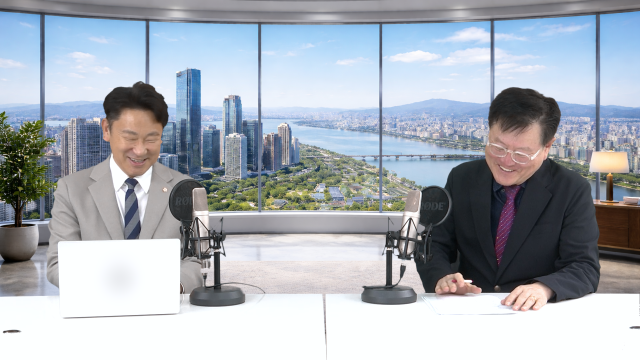
The following are excerpts from a Q&A with Kwak.
- South Korea faces overlapping crises in politics, the economy and diplomacy. What kind of leadership is needed?
“South Korea’s crises are countless — economic, diplomatic and social — and they are intertwined,” he said, citing slowing growth, rising prices and exchange rates, real estate and household debt, as well as trade, supply chains and technology competition. He also pointed to low birthrates and an aging population.
He said leaders must set direction by listening to experts, judging what serves the national interest and protects people’s lives, and explaining what can and cannot be compromised before making decisions. “That’s how trust builds,” he said, adding that speed alone does not make a decision good or bad; what matters is a process the public can accept.
- How do you view the balance between growth and distribution?
“Growth and distribution are not contradictory or a choice,” he said. “There is no country with only distribution, and no country with only growth. Distribution without growth cannot be sustained, and growth without distribution collapses a country, so it cannot be sustained.”
He said the issue is whether the gains from growth concentrate among a few and how those gains are shared — through social investment and safety nets such as education, housing and health care, or through simple transfers. “I see growth as distribution in practice, and distribution as driving growth,” he said, arguing that the method of distribution can raise or slow growth.
“Less regulation is better, but necessary regulation must be done”
- Where do you stand on government intervention in markets?
Kwak said the answer depends on the industry and the degree of public interest. Government cannot do everything, he said, and its basic role is to create conditions for companies to compete and individuals to be protected — a free and fair market with rational regulation. “Basically, less regulation is better,” he said, but added that does not mean regulation should be avoided.
He said the state should intervene when markets fail or when actions undermine community order, warning that leaving markets alone can entrench the strong. In areas where market failure is expected or severe, or where public interest is high, he said, government involvement should be greater.
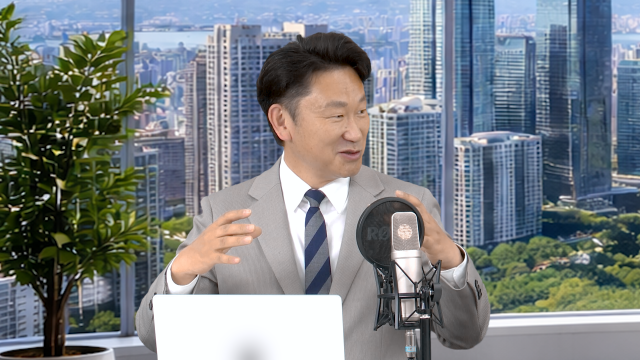
- Should the state take a leading role in AI industrial policy?
He said some fields require national decisions despite uncertainty, and that South Korea is at a point where it must decide whether its industrial future will be reorganized around AI or remain centered on existing industries. In that moment, he said, the state should lead by building an industrial base and training talent. If South Korea’s investment share lags other countries, he said, it should be adjusted, including the amount invested.
He cautioned that public spending must be scrutinized in advance and verified afterward, stressing the need for trust in budget execution. But he warned that in the AI era, falling behind by a day can become a month, and a month can become years. “The state should not be a spectator,” he said.
- Of technology, institutions and talent, what comes first?
“If I have to choose one, I choose institutions,” he said. Fair institutions create opportunity and transparent institutions enable investment, he said, while trusted institutions allow companies to invest and researchers to keep working. If institutions collapse, he said, technology will concentrate among a few and talent will lose the ability and motivation to continue.
He also rejected a narrow definition of talent as a handful of elites. National competitiveness, he said, is the capacity of society as a whole, cultivated through education — a view he said is closely tied to institutions.
- Some say thousands of KAIST-trained people work in Silicon Valley. Is that also an institutional issue?
He said people move their lives for reasons tied to different systems. Whether they can use their abilities, gather the rewards and use those rewards for themselves and their communities depends on the institutional foundation, he said.
- What strategic industry must South Korea choose for the next decade?
Kwak said politics must create conditions for people to survive and improve those conditions through institutions. To identify a core industry, he said, policymakers should consider which sector can expand jobs broadly, raise productivity and secure technological sovereignty.
He said modern society is driven by technological innovation and talent development, and that South Korea should choose an industry with broad spillover effects that spreads technology and knowledge widely. “At present, that industry has to be AI,” he said, calling it a foundation that can drive growth across other sectors. He said the country must train AI talent and find ways to integrate AI across industry.
He again warned against technological determinism, saying AI is a means, not an end. If there were no other industries, he said, AI would be useless. He said he hopes AI helps strengthen the basics of life — clothing, food and shelter — so that it serves people.
- The United States and China are investing heavily in AI, but South Korea is criticized for weaker investment. What should be done?
He said the state should lead more in areas with high public interest because building foundations is required. If South Korea lags other countries in investment share or volume, he said, it should adjust both.
But he said AI’s rise will also bring market failures such as monopolies. Even now, he said, while many AI programs exist, public use is concentrated in a few, creating risks of information distortion and unfair trade. In such cases, he said, the state should intervene strongly to correct the market. “We must not leave market failure unattended,” he said.
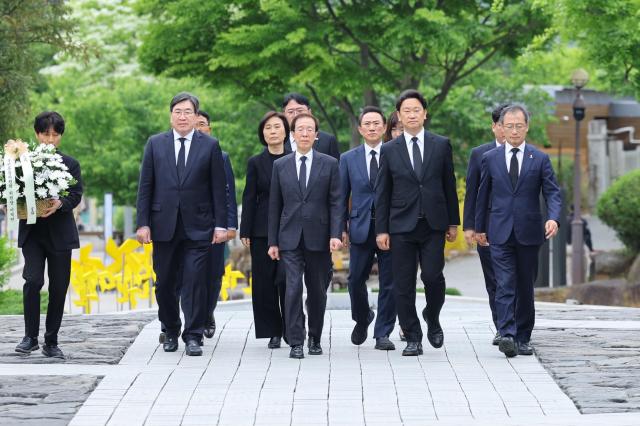
- What do you see as your strengths and weaknesses as a politician?
He called it a difficult question and said others could judge better. Still, he said his strength is that he has learned through experience what political power should do for the state and the public.
Though new to the National Assembly, he said he has been in political news coverage for more than 20 years because of his relationship to Roh. He said he shared both praise and criticism directed at Roh, and said he was subjected to long-term surveillance by the National Intelligence Service. Through that, he said, he came to understand how power treats people and developed compassion for others.
“A 10-year electricity-rate lawsuit — I didn’t avoid the work given to me”
Kwak said he worked as a lawyer for about 20 years before entering politics and pursued public-interest cases for long periods. He said he handled an electricity-rate case for nearly 10 years without compensation, paying out of pocket. He said he tends not to avoid work assigned to him and tries to put the community’s interest ahead of his own, even if it brings criticism or misunderstanding.
- You are being watched as a next-generation leader. What path do you want to take?
He called the description excessive but said he would try to become such a leader by turning possibility into reality. He said he would do so with restrained language and an undistorted perspective, and that he would serve the public.
Recalling something he wrote years ago, he said people may think the world belongs to them at birth, but in fact nothing is truly theirs; roles and authority are entrusted. He said politicians must recognize that authority is delegated responsibility, not personal property, and that leaders should give people hope and act in line with it.
[Rep. Kwak Sang-eon]
Kwak is a 22nd National Assembly lawmaker representing Seoul’s Jongno district. A member of the Democratic Party, he serves on the Special Committee on Budget and Accounts and the Climate, Energy, Environment and Labor Committee. Born in Seoul in 1971, he graduated from Seoul National University with a degree in international economics, passed the bar exam and worked as a lawyer. Before entering politics, he became known for long-running public-interest litigation, including a lawsuit over the progressive household electricity-rate system.
In the interview, he described Roh’s name not as a political halo but as a responsibility and burden. He said his core political language now centers on institutions and trust: balancing growth and distribution, respecting markets while preventing monopolies and market failures, and treating AI as a strategic foundation while demanding credible oversight of public spending.
* This article has been translated by AI.
Copyright ⓒ Aju Press All rights reserved.