

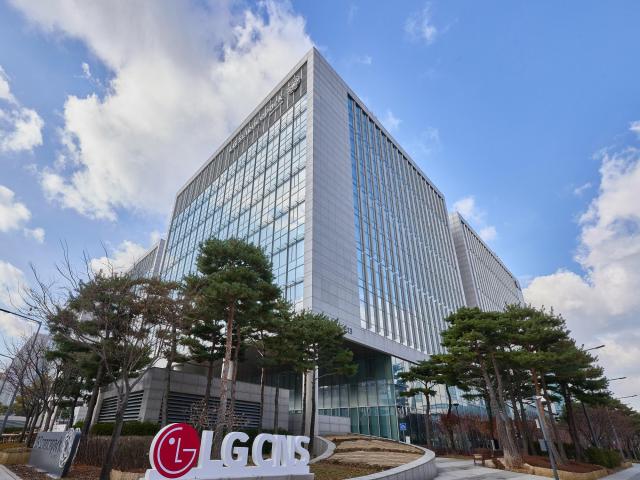
LG CNS said it is accelerating an AI-centered transformation across its businesses — including data centers, finance, manufacturing and digital assets — as it steps up efforts to expand in South Korea and overseas.
On its first-quarter conference call on Wednesday, the company said the data center market will remain undersupplied as demand for AI and cloud services grows. It cited constraints on power supply and permitting, saying demand is likely to continue to outstrip supply.
In finance, LG CNS said the cycle of rebuilding core systems is resuming and that customers increasingly view AI adoption as essential. It said it plans to strengthen its “AX” competitiveness by using AI technology as legacy systems are converted to Java-based platforms.
For overseas growth, LG CNS said it is expanding around U.S. factory automation and the secondary battery sector, and will broaden its footprint through local partnerships and a global delivery system.
According to South Korea’s Financial Supervisory Service electronic disclosure system, LG CNS posted first-quarter revenue of 1.315 trillion won and operating profit of 94.2 billion won. Revenue rose 8.6% from a year earlier and operating profit increased 19.4%.
What is the outlook for LG CNS’ data center business?
-LG CNS said new investment is moving quickly in South Korea, mainly around sites with secured power infrastructure, but supply shortages persist as AI and cloud demand rises. It said power procurement and permitting limits are expected to keep the market in a demand-heavy structure for the time being.
In overseas markets, especially Asia-Pacific, major cloud service providers are aggressively expanding data center investment to secure leadership in AI, it said. As GPU upgrade cycles shorten, the ability to rapidly build hyperscale data centers of more than 200 megawatts has emerged as a key competitive edge.
It added that container-based modular data centers are spreading for high-density operations and AI optimization, with build times trending about 12 months shorter.
What is the strategy for winning next-generation financial projects?
-LG CNS said it is maintaining a leading market share by securing major references across finance, including commercial banks and internet-only banks, and has recently begun NH NongHyup Bank’s next-generation project.
With core-system rebuilds resuming, it said customers are treating AI adoption as a must-have strategy, and the company is applying solutions co-developed with global advanced firms across project phases.
It said it plans to use its AI technology to raise productivity and quality as C-language legacy systems are converted to Java, strengthening competitiveness in the AX market.
What is the overseas market plan?
-LG CNS said it expects to begin a food factory automation project in Texas in the second quarter and is expanding business with the group’s secondary battery manufacturers.
It said it aims to secure price and quality competitiveness with its in-house “mobile shuttle” solution, build references among Korean companies expanding overseas, and then broaden to local customers.
The company said it is hiring overseas staff and dispatching headquarters experts, while building cooperation with North American and Chinese systems integration firms. In finance, it said it is shifting from simple SI work to a solutions-centered model and is developing global delivery hubs such as Vietnam and Indonesia into centers of excellence. It also said it is expanding partnerships, including recruiting local experts in places such as Singapore and establishing a joint venture with Indonesia’s Sinar Mas Group.
What is the outlook for manufacturing AX and data center profitability?
-LG CNS said the manufacturing AX market is showing structural growth regardless of the business cycle, driven by global reshoring, an expansion of high-mix, low-volume production, and responses to ESG and carbon regulations.
It said the market is evolving beyond basic automation toward AX·RX·VX models that combine AI, robotics and digital twins, with applications expanding to AI-based quality inspection, predictive maintenance and humanoids.
For data center colocation, it said there is a “ramp-up” period between contract signing and customer equipment move-in, but surging AI demand has pushed utilization and ramp-up speed above initial expectations.
What is the digital asset outlook and the Palantir cooperation plan?
-LG CNS said a significant share of digital asset revenue in 2025–2026 is expected to come from bank-led CBDC projects. It added that starting in the second quarter, revenue tied to a national treasury subsidy project based on the “Project Hangang” platform will be reflected in earnest.
It said stablecoins are still in a legal and institutional preparation phase, with consulting-focused work under way, and that it expects follow-on orders for build projects. It added that global research institutions forecast the related market will grow more than 30% annually on average.
LG CNS said cooperation with Palantir is meaningful for expanding the domestic market and training talent. It said some LG Group affiliates have completed proofs of concept and moved to actual adoption, with further expansion under discussion.
What is the strategy for physical AI and robotics?
-LG CNS said it is pursuing physical AI-based robotics projects with group affiliates to drive innovation across the value chain, from production to R&D and logistics.
It said North American plants are applying the mobile shuttle, and it is reviewing the use of humanoids for hazardous-material handling processes. It added that demonstrations are under way for logistics transport and dismantling work using autonomous mobile robots, as well as autonomous driving technology for tight spaces.
The company said it is combining the group’s foundation model development capabilities with on-site operational know-how to build an industry-specific robot foundation model and advance robot-based automation.
* This article has been translated by AI.
Copyright ⓒ Aju Press All rights reserved.