

A Ukrainian international student named Lina was selected as “Chunhyang Mi” at the 96th Chunhyang Pageant held at Gwanghallu Garden in Namwon, North Jeolla Province. The news quickly drew mixed reactions, from “Chunhyang has gone global” to discomfort such as, “Chunhyang is a foreigner?” The moment may seem easy to brush off, but it points to a larger question.
Chunhyang is not simply a label for choosing someone attractive. She is a figure from a Joseon-era story, defined by standards of her own: a person who protects love across social barriers and does not yield to power. Put simply, she is someone who keeps a promise to the end. For that reason, Chunhyang has long been understood as a distinctly Korean symbol.
Now a foreigner has stepped into that role. The scene feels unfamiliar largely because it does not match the “face of Chunhyang” many people have carried in their minds.
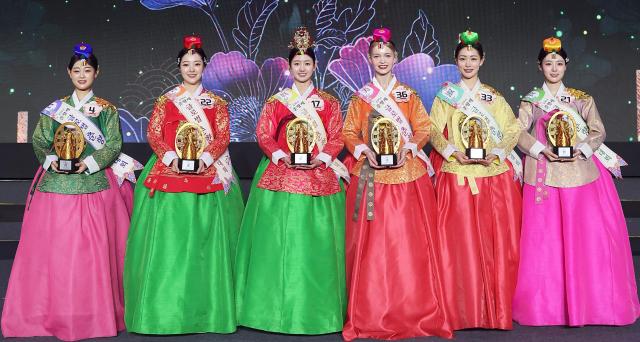
Looking closer, the question shifts: Does Chunhyang’s appearance matter most, or does her meaning?
In today’s South Korea, the issue is no longer abstract. The number of foreign residents has surpassed 2.7 million, and seeing foreigners on the street is no longer unusual. People live side by side at schools, workplaces and cafes. South Korea is no longer a country where only Koreans live.
In that setting, tradition is bound to change. The issue is not change itself, but how it happens. Opening everything without limits can be risky, while shutting it out completely is unrealistic.
The core question is what to change and what to preserve.
This foreign winner is less a sign that tradition has collapsed than a sign that tradition is beginning to meet new interpretations. Even with the same Chunhyang, perspectives can differ. Koreans may think of “chastity” and “loyalty,” while foreigners may see “the courage to keep a promise” or “someone who stands by her own choice.”
It is difficult to call that interpretation wrong. Tradition is not fixed once and for all; it is read differently over time. Still, discomfort is understandable because Chunhyang is not just a character but a symbol built from history and culture. Some people worry: “Are we changing this too easily?”
A possible answer is simple: open the surface, protect the core.
Allowing foreign participation reflects the times. But the meaning carried by the name Chunhyang should not be diluted. The stage can become more global, but the standards should not be treated lightly.
Another challenge follows. Many people say the key is to see “how well someone understands the Chunhyang spirit.” Yet it is not easy for a foreigner to grasp the deeper meaning of a Korean classic in a short time.
That suggests a shift in emphasis: not who memorized better, but who interpreted better.
People can respond differently to the same Chunhyang, and recognizing that difference may be more natural today. Tradition tends to last longer when it allows varied readings rather than forcing a single answer.
There is also a risk. As foreign participation grows and the pageant becomes a global event, it can turn into spectacle. Performances may become flashier and production more provocative, raising the possibility that tradition will be consumed lightly.
Completely avoiding that may be impossible, because globalization and commercial appeal often move together. The task is not to block the trend but to manage it. One approach would be to globalize staging and promotion while making evaluation standards and meaning more rigorous — widening the outside while clarifying the center.
Ultimately, the episode underscores one point: Chunhyang has not changed as much as South Korea has.
That change is likely to accelerate. Foreign inflows may continue to rise, and cultures may mix more. Scenes where tradition and reality collide may appear more often.
What matters, the column argues, is not repeatedly judging “right or wrong,” but resetting standards each time — asking how far society can open and what it must protect to the end.
This “Ukrainian Chunhyang,” it concludes, is not a simple event but a sign that South Korean society is moving into a new stage — and that the shift has already begun.
One question remains: How much change are we prepared for, and what will we preserve no matter what?
* This article has been translated by AI.
Copyright ⓒ Aju Press All rights reserved.