

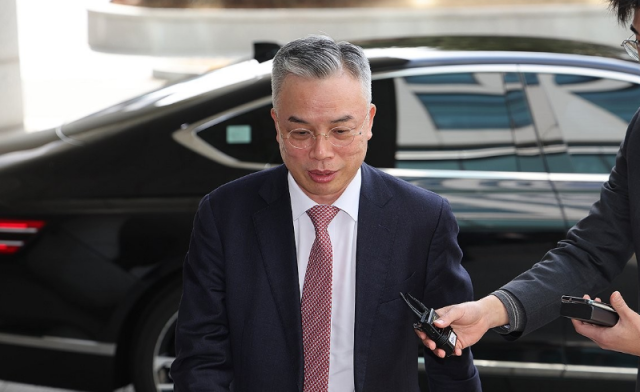
The second comprehensive special counsel team, led by Special Counsel Kwon Chang-young and tasked with allegations not resolved by the three earlier special counsels, is nearing the end of its initial investigation period without clear results. The probe has increasingly focused on identifying the military command chain behind the deployment of martial law troops, but observers say the structure of the case has slowed progress.
According to legal officials on Saturday, the team marked its 68th day since launch. Including a 20-day preparation period, it has used most of its 90-day overall activity window and has passed the midpoint of the maximum 170-day investigation period. The team is reportedly considering seeking a first 30-day extension ahead of the basic deadline of May 25.
The special counsel has broadened the scope of its investigation, including booking Yoon Suk Yeol and former Defense Minister Kim Yong-hyun, but it has not produced visible outcomes such as arrest-warrant requests or indictments.
So far, the first phase has been defined by narrowing targets while expanding fronts. Of 17 allegations left by the three earlier special counsels, the team is investigating about seven or eight, including the Deutsche Motors stock manipulation case, the relocation of the presidential residence and alleged favoritism tied to the Yangpyeong expressway project.
It has also added lines of inquiry not covered in earlier probes, including allegations of presidential office involvement in the Ssangbangwool remittances-to-North-Korea case. A central track is tracing the chain of orders for the martial law troop deployment, including Joint Chiefs of Staff Chairman Kim Myung-soo.
Investigators view the command-chain issue as a structural case rather than a single, discrete offense. They must establish who ordered troop movements and through what channels, as well as whether reports and approvals were made, the purpose of the operation and its legal basis. Because it requires confirming the broader command system, the probe is considered time-consuming and difficult.
The investigation has also been complicated by friction with the Supreme Prosecutors' Office. The special counsel demanded internal audit materials related to the Dec. 3 emergency martial law, but the Supreme Prosecutors' Office effectively refused, saying the team should obtain them through a search-and-seizure warrant. The special counsel viewed the refusal as obstruction and asked the Justice Ministry to begin disciplinary proceedings against acting Prosecutor General Koo Ja-hyeon and former Inspection Bureau chief Kim Seong-dong.
The requested materials are described as the full set of internal audit and inquiry records produced as the prosecutors' inspection unit reviewed allegations tied to the emergency martial law, including statements from those questioned, review reports and the basis for any "no suspicion" conclusions. The special counsel says it needs the records to recheck the validity of prosecutorial judgments, while the Supreme Prosecutors' Office argues confidential audit materials are not subject to voluntary submission. The Kim Keon-hee special counsel team, led by Special Counsel Min Joong-ki, previously sought similar records, was refused and later obtained them through a search warrant, according to the report.
With the two sides in open conflict, critics say a lack of interagency cooperation has emerged as a variable from the early stage of the probe.
The special counsel expanded its scope again on April 27, naming a case transferred from the Seoul High Prosecutors Office human rights violation review task force as the "presidential office intervention in the Suwon District Prosecutors Office investigation" case.
In addition, the team booked Kim Yong-hyun on charges of rebellion under the Military Criminal Act in connection with the Dec. 3 emergency martial law and began questioning. It is also reviewing whether to apply the same charge to Yoon.
Even so, questioning of key suspects has not moved quickly. Yoon did not appear for a first summons on April 30, citing trial schedules, and the special counsel is coordinating another date. Kim also failed to appear, citing a scheduling conflict, and was told to report again.
The team is also conducting follow-up investigations into unresolved allegations. In connection with the "Noh Sang-won notebook," it applied a charge of organizing a criminal group and has summoned related figures in succession.
The special counsel faces internal controversy and staffing constraints. Concerns about a conflict of interest involving Special Counsel Assistant Kwon Young-bin, who handled the Ssangbangwool case, led to a change in assignment, raising worries about delays. Special Counsel Assistant Kim Ji-mi also drew criticism over political neutrality after appearing on YouTube.
Staffing remains tight. Although the comprehensive special counsel has the broadest mandate, its quota for seconded prosecutors is 15, and only 13 have joined so far. If indictments are filed, some prosecutors would have to be assigned to maintain prosecutions in court, further reducing investigative capacity. Analysts say that reality may make the team cautious about coercive steps such as seeking arrest warrants.
Meanwhile, North Jeolla Gov. Kim Kwan-young, who was accused in a complaint of aiding an insurrection, denied the allegations after being questioned by the special counsel, saying, "There was no closure of the government complex, and I never aided an insurrection."
* This article has been translated by AI.
Copyright ⓒ Aju Press All rights reserved.