

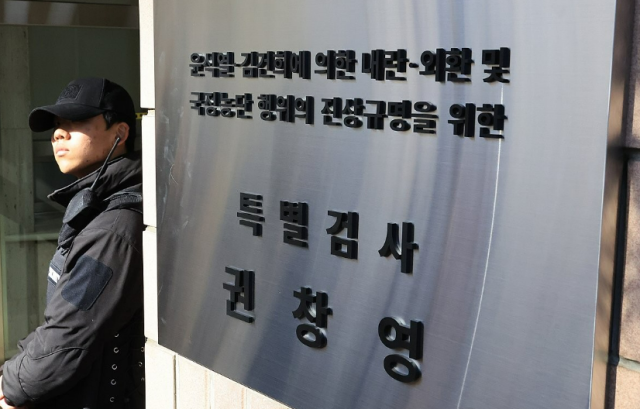
A lawyer-turned special investigator who joined the second comprehensive special counsel team led by Special Counsel Kwon Chang-young has drawn criticism after posting online that work at the office would help build investigative experience and sharpen expertise in criminal cases.
On May 3, social media users circulated a post by the investigator, identified only as A, showing photos including an office nameplate bearing the investigator’s name, a stamped suspect statement record and a picture of A holding an appointment letter alongside Kwon.
In the post, A wrote, “I’ve always stood on the suspect’s side, but for the first time in my life I’ve entered an investigative agency,” adding that gaining experience “from an investigator’s perspective” would “maximize” expertise in criminal cases.
A also wrote that questioning a suspect as an investigator was “really hard,” saying it felt “about five times” harder than attending an interview as defense counsel.
The post drew backlash as the comprehensive special counsel faces criticism for failing to produce clear results even as its first investigation deadline on the 25th approaches, while also grappling with staffing shortages.
After the controversy, A’s post was deleted. A special counsel official said the team plans to discuss internally as early as the 4th whether the post was appropriate.
Kim Chi-heon, the assistant special counsel serving as spokesperson, said in a notice that no official position has been set on the masked statement record being posted to social media and that the matter will be reviewed internally.
The team has previously faced controversy, including Assistant Special Counsel Kim Ji-mi, who serves as public affairs officer, appearing on the progressive-leaning YouTube channel “Kim Eo-jun’s Humility Is Hard, News Factory,” and questions over Assistant Special Counsel Kwon Young-bin’s past work as a lawyer for a key reference witness.
Some critics say the episode reflects a growing perception that participation in special counsel investigations is being treated less as a public duty and more as a way to build personal credentials. They warn that if the office is seen as a tool for resume-building, it could undermine the special counsel’s fairness and authority.
* This article has been translated by AI.
Copyright ⓒ Aju Press All rights reserved.