

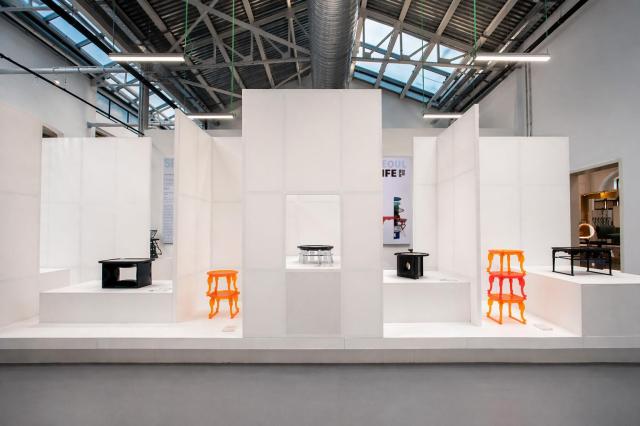
Exhibition view of “SEOUL LIFE 2026 MILAN: Heritage Reimagined, Soban” [Photo: Seoul Design Foundation]
“I couldn’t believe how much history and meaning could be held in one small table. I was instantly drawn in."
Italian designer and artist Marco Oggian said he was captivated by the Korean traditional object known as a “soban,” a small, portable dining table. Seeing it for the first time, he said, he thought of it as “a very human object.” “It’s simple, intimate and deeply connected to everyday life,” he said. “At the same time, it carries a strong cultural identity.”
Korea’s traditional soban is being presented in 17 new forms at Milan Design Week, one of the world’s largest design events. The Seoul Design Foundation is staging the exhibition “SEOUL LIFE 2026 MILAN: Heritage Reimagined, Soban” at the ADI Design Museum in Italy. The show aims to introduce the beauty and identity of K-design through the soban.
Seventeen designers and teams from Korea and abroad have reinterpreted the soban in their own visual languages, combining traditional Korean craft techniques with contemporary tools such as 3D printing and artificial intelligence-based design. Visitors can view the works’ varied shapes and colors in one place.
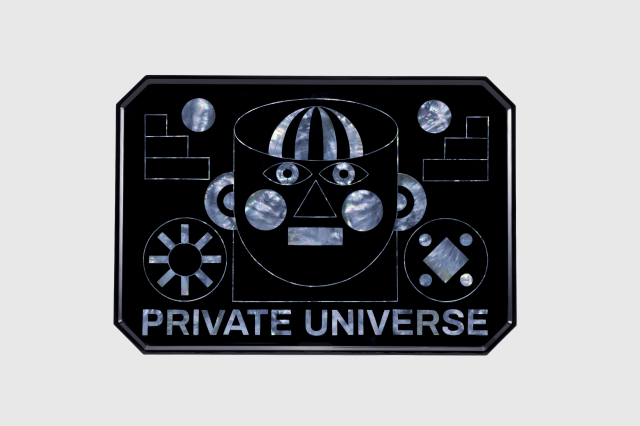
Marco Oggian, “PRIVATE UNIVERSE” [Photo: Seoul Design Foundation]
Oggian’s work, “PRIVATE UNIVERSE,” expands the soban into a motif of a face, the universe and the world.
“The face represents identity, the universe scale and mystery, and the world the space we share,” he said. “By expressing the face geometrically, I wanted to talk about individuality. At the same time, I wanted to show how a small everyday object can connect us to something universal.”
Some visitors said they saw a contemporary sensibility in the pieces. A botanical designer from London, in her 40s, said the modern treatment of the soban and its harmony with hanji, traditional Korean paper, stood out. An Italian industrial designer, also in her 40s, said the soban goes beyond a simple small table, naturally combining balance, function and portability into a refined design object.
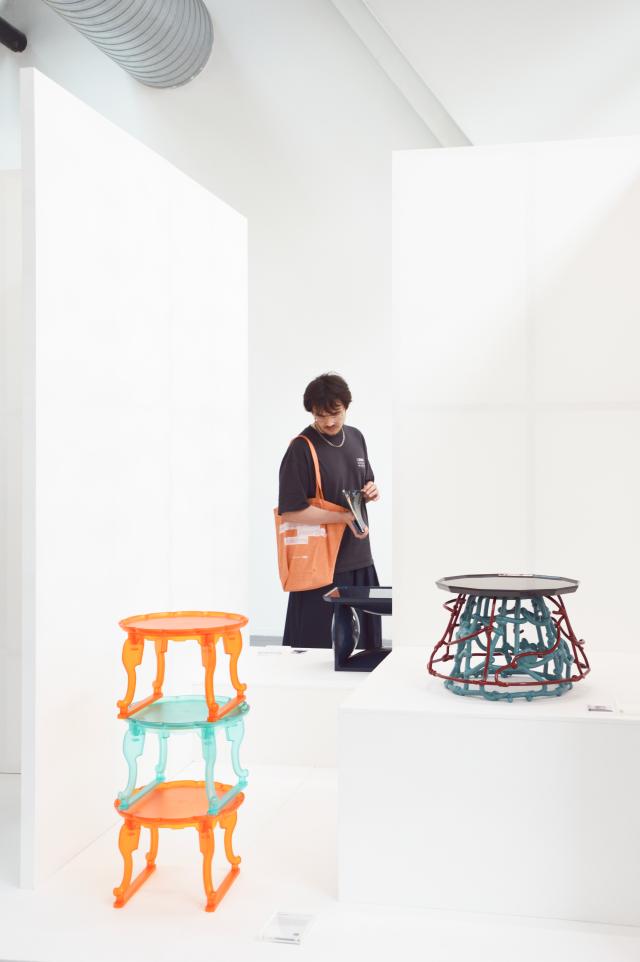
Exhibition view [Photo: Seoul Design Foundation]
Technology amplifies tradition’s identity: “Emotional and of the present”
Oggian, unfamiliar with Korea’s solo dining-table culture, said he tried to understand the spirit behind the object rather than copy tradition as-is. “The biggest challenge was finding a form that respects the original function and symbolism, while expressing it in my own visual language,” he said.
He said he wanted viewers to recognize the work as a soban while accepting it as a contemporary object. “I hoped it would feel rooted in tradition, but also open, bold and alive,” he said, adding that it was important to expand into new design territory without losing the soban’s cultural essence. “What was most interesting was confirming that technology doesn’t replace an object’s identity — it can amplify it,” he said.
He said he wanted viewers to recognize the work as a soban while accepting it as a contemporary object. “I hoped it would feel rooted in tradition, but also open, bold and alive,” he said, adding that it was important to expand into new design territory without losing the soban’s cultural essence. “What was most interesting was confirming that technology doesn’t replace an object’s identity — it can amplify it,” he said.
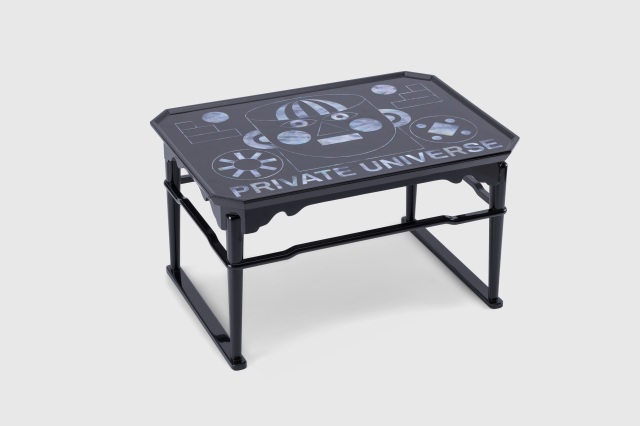
Marco Oggian, “PRIVATE UNIVERSE” [Photo: Seoul Design Foundation]
Known for strong visual elements such as geometric forms, Oggian said he newly discovered the value of restraint and discipline in Korean aesthetics. Through that process, he said he learned that “tradition isn’t fixed or far away — it can be playful, emotional and of the present.”
He described Korean aesthetics as “precise and meaningful, without unnecessary decoration,” calling it a source of inspiration. He added that working with lacquer and mother-of-pearl inlay showed him traditional materials can be realized in a contemporary way when handled with care and imagination.
Discovering lacquer and mother-of-pearl inlay: outstanding craftsmanship
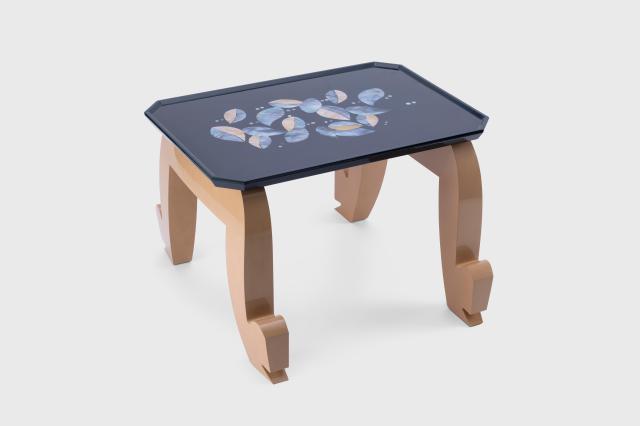
Anna Gili, “MIAWO” [Photo: Seoul Design Foundation]
Italian designer Anna Gili, known for collaborations with Cassina and Alessi, presented a soban titled “MIAWO” that evokes a cat. She interpreted the soban as “a kind companion that shares everyday life.”
Linking the familiar traditional table to a pet cat, she said, brought a sense of vitality to the object and condensed warmth associated with family and friendship into a small table.
“In ancient Egypt, cats were mysterious animals and protectors of the home — specifically Egyptian temples,” she said. “In Western culture, which has origins in Southwest Asia, cats also became companion animals and guardians of the home. Cats have a protective instinct toward people.”
Gili said she was deeply impressed by the beauty of Korean lacquer and mother-of-pearl inlay. “The finished result felt like magic,” she said. “The quality of the materials, and the craftsmanship, are outstanding. It’s breathtaking. It made me want to explore the techniques and materials more deeply.”
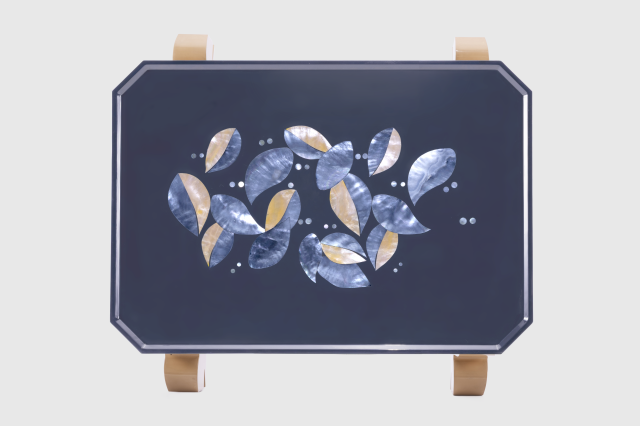
Anna Gili, “MIAWO” [Photo: Seoul Design Foundation]
Gili said she plans to present more works using lacquer and mother-of-pearl inlay, and to expand her experience and knowledge by trying different materials and combinations.
Referring to mother-of-pearl techniques in the Brianza area near Milan, she said she hopes the meeting of Korean and Italian cultures will continue. Citing what she called “Korean artisan crafts with 2,000 years of history,” she said she hopes the two countries can explore new possibilities by combining cultures, techniques and material production methods through design. She added that collaborating with highly skilled artisans who work with traditional techniques is always a special experience that adds a distinctive sensibility to a piece.
She also argued that projects combining tradition and technology, like this exhibition, should expand to help preserve humanism. “We have to maintain humanism in architecture and design,” she said. “Today, as much research is done online and in virtual environments, people often choose interests based on algorithmic data aimed at financial efficiency or maximizing sales. Before the internet, information was limited, but choices were made based on deep experience accumulated in real life. It was a different kind of experience than scanning Excel spreadsheets or online materials.”
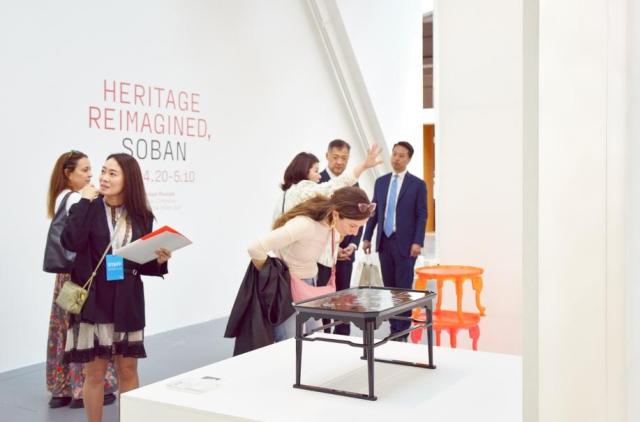
Exhibition view [Photo: Seoul Design Foundation]
She said technology’s value is ultimately realized when it meets human touch and care.
“Traditional objects can be renewed by combining with constantly evolving technology and diverse ways of thinking,” she said. “By doing so, tradition will continue to grow and develop for thousands of years.”
The exhibition is hosted and organized by the Seoul Metropolitan Government and the Seoul Design Foundation, with cooperation from the ADI Design Museum. It runs through May 10 at the ADI Design Museum in Italy.
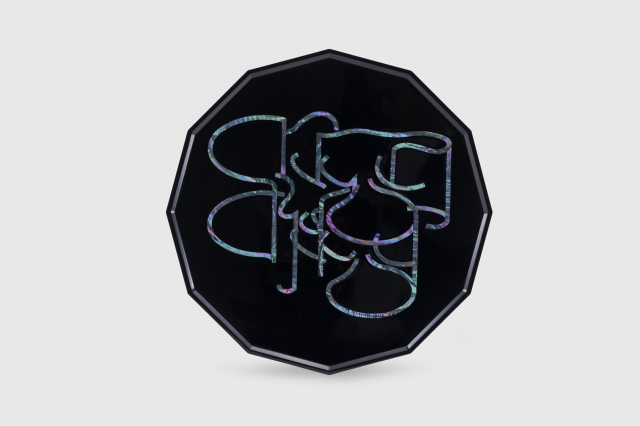
Odile Decq, “Fluid Maze” [Photo: Seoul Design Foundation]
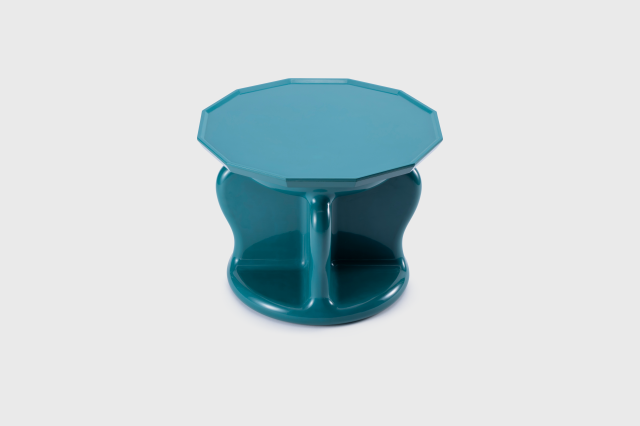
Seungji Mun, “Deongi Soban” [Photo: Seoul Design Foundation]
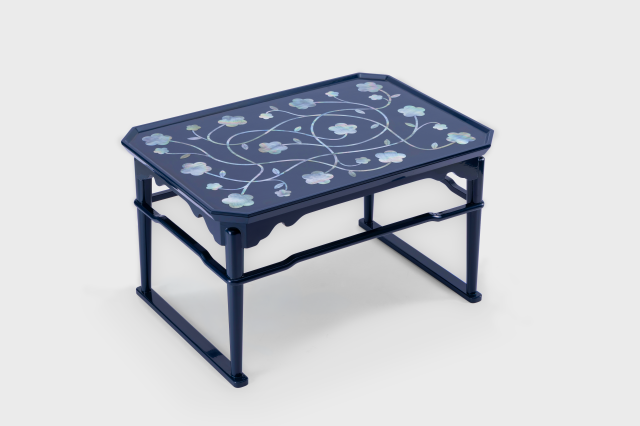
Stefano Giovannoni, “Orion” [Photo: Seoul Design Foundation]
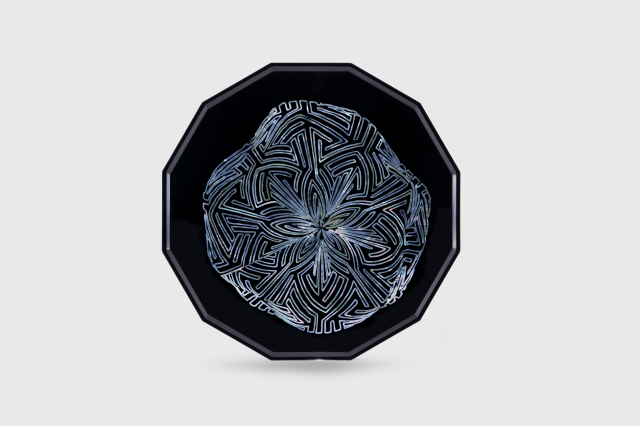
Yiyun Kang, “Afterimage” [Photo: Seoul Design Foundation]
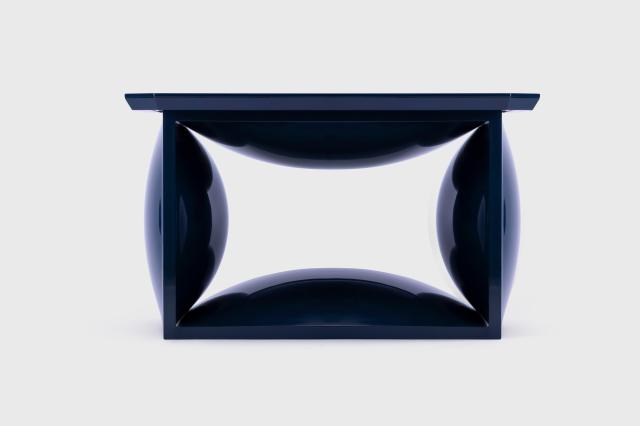
Donghoon Sohn, “Swell Series Soban” [Photo: Seoul Design Foundation]
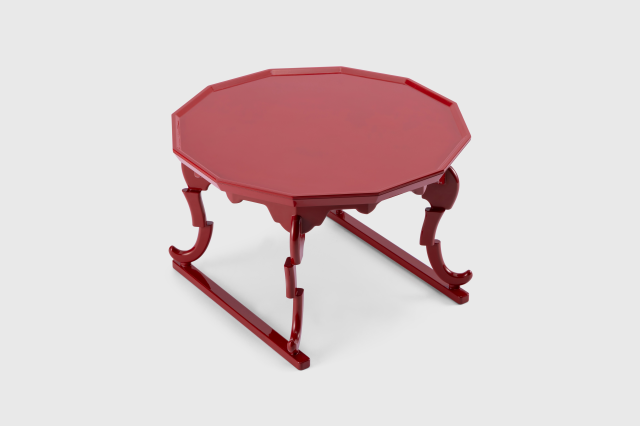
LEJE, “IRI-JEORI” [Photo: Seoul Design Foundation]
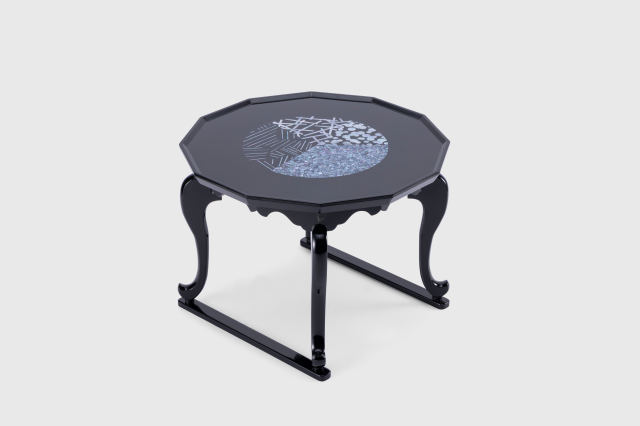
Sulki and Min, “Table per Person per Household” [Photo: Seoul Design Foundation]
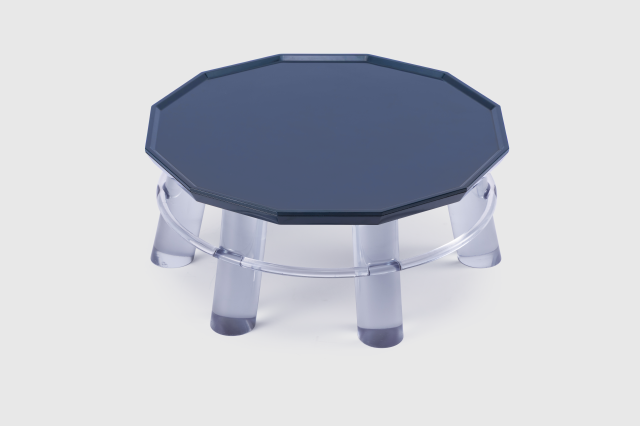
Andy & Jong, “Floating Heritage” [Photo: Seoul Design Foundation]
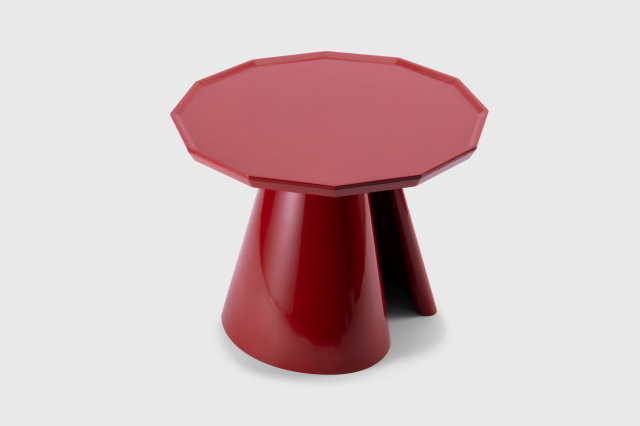
Junggi Sung, “DURUMAGI” [Photo: Seoul Design Foundation]
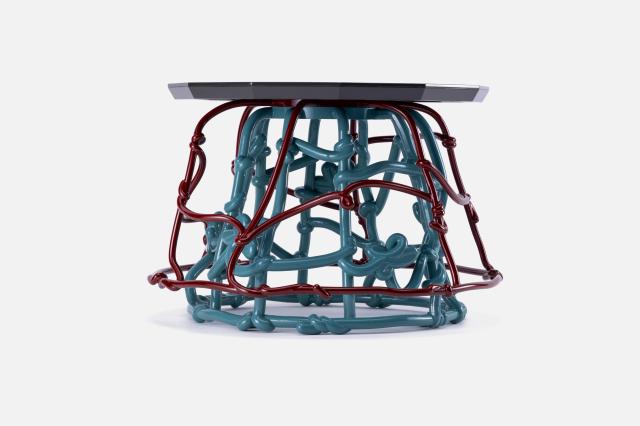
Jinsik Kim, “Taking My Snail for a Walk” [Photo: Seoul Design Foundation]
* This article has been translated by AI.
Copyright ⓒ Aju Press All rights reserved.