

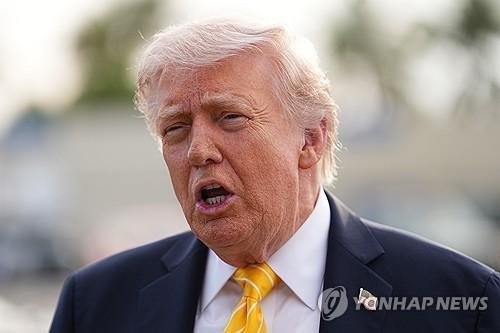
Tensions around the Strait of Hormuz are rising again. President Donald Trump has publicly pressed South Korea to join a military operation after claiming Iran attacked a South Korean vessel, urging participation in a U.S.-led “liberation project.” With possible damage to a South Korean ship being discussed, public opinion may sway. But in moments like this, the standard for decision-making should be clear: national interest, not emotion.
First, the facts must be verified. So far, it has not been confirmed whether Iran was responsible for any damage to the vessel. In conflict situations, early reports are often exaggerated or shaped by political aims. Making a military decision based on a single country’s claim is risky. The government should conduct objective checks through multiple intelligence and information channels. Rushing the process is the biggest risk.
Verification, however, should not become an excuse for inaction. What matters is having a response roadmap. Measures to protect South Korean nationals and assets on the ground should be immediate: securing ship safety, adjusting routes and ensuring the military is ready to provide protection. Strategic decisions, including whether to join military action, require caution. Tactics demand speed; strategy demands accuracy. The two should not be confused.
The Strait of Hormuz is a vital artery for South Korea’s economy. A large share of the country’s crude oil imports passes through it. Instability there can quickly translate into higher energy prices and rising costs across industry. Still, having a stake does not automatically mean military involvement. Interests require a response, but the form of that response is a matter of choice.
South Korea must weigh its national interests in concrete terms, and those interests are not singular. On one side is the U.S.-South Korea alliance, a top security interest. On the other are ties with the Middle East and economic interests such as energy supply. Both matter and can collide. National interest, therefore, is not a slogan but a question of priorities.
The standards for South Korea’s choice should be clear: Protecting lives and property comes first. Second, it should act in a way that does not undermine trust in the alliance. Third, it should minimize economic damage. The decision should seek balance within these principles; treating any one as absolute could harm the national interest.
Washington’s request also needs a cool-headed assessment. Trump is pressing South Korea while emphasizing allied military contributions. But an alliance is not automatic mobilization; it should rest on shared interests and agreement. South Korea has the sovereign right to decide whether to participate, and its benchmark should be its own national interest.
That does not mean ruling out multilateral cooperation. In practice, maritime security in the Strait of Hormuz operates within a U.S.-led multilateral framework. The key is separating independent decision-making from cooperation in execution. South Korea should decide on participation on its own, but if it joins, it can use the multilateral structure. In other words, decisions should be sovereign, implementation realistic.
A sober view is also needed on diplomacy. It is structurally difficult for South Korea to serve as a fully neutral mediator between the United States and Iran. But it can play a buffering role that helps reduce tensions. As a country with energy interests at stake, it is more realistic to seek diplomatic space that manages conflict rather than expands it.
Military involvement should be a last resort. Once involved, South Korea could become a party to a clash beyond a simple escort mission. That could have long-term effects on relations across the Middle East. Given South Korea’s deep economic ties in the region, a one-track choice carries risks.
What is needed now is clear: respond quickly on the ground, judge carefully at the strategic level, and organize national interests by priority. The more U.S. pressure, international urgency and domestic opinion shifts converge, the more disciplined the standard for judgment must be.
Tensions in the Strait of Hormuz are unlikely to ease quickly. This decision may not be a one-off, but a test that signals the standards of South Korea’s diplomacy going forward: calculation over emotion, structure over speed, and principles over pressure.
* This article has been translated by AI.
Copyright ⓒ Aju Press All rights reserved.