

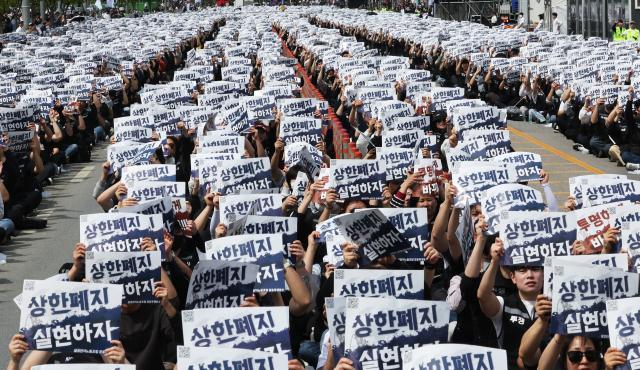
Donghaeng, a union centered in the company’s non-semiconductor operations, has formally withdrawn from the joint bargaining group and the joint struggle headquarters. The unified response system was formed for last year’s wage talks and later expanded into a protest organization after negotiations broke down, but it ultimately failed to overcome internal differences.
Donghaeng cited dissatisfaction with demands led by the semiconductor division for bigger performance bonuses and with a hard-line protest strategy. Members in the DX division, which handles finished products, have argued that their interests were not reflected in the structure. The group also publicly pointed to a lack of consultation among unions and an erosion of trust.
As a result, conflict has widened from labor-management tensions to disputes among unions themselves. With division-by-division interests colliding inside the same company, the episode underscores how difficult it can be to hold those interests together under a single union framework — a reflection of Samsung Electronics’ complex corporate structure.
The timing adds to the stakes. With a general strike having been announced, the collapse of the joint front could weaken both the rationale and momentum for collective action. Observers have also raised the possibility that, after Donghaeng’s exit, participation in any strike could splinter into separate decisions.
Samsung Electronics’ unions have expanded rapidly in size, but growth does not necessarily translate into broad representation. The more complex the business, the more layered the interests. Semiconductors and finished products differ in profit structures and performance-based compensation systems, and demands can diverge accordingly. This episode suggests those fault lines have reached a breaking point.
Union fragmentation also burdens the company. A divided bargaining channel can complicate negotiations and raise the cost of conflict. But responsibility cannot be placed solely on management; unions that cannot coordinate internally are also exposing their own limits.
What is needed now is not a higher level of confrontation but a reset of representation. A structure in which one division’s demands effectively speak for the whole workforce is unlikely to last. Without a system that can reconcile competing interests, similar disputes are likely to recur.
The challenge facing Samsung Electronics’ unions is not confined to one company. As industries become more complex, labor, too, becomes harder to unify around a single set of interests. The latest split highlights a new task confronting South Korea’s labor movement.
* This article has been translated by AI.
Copyright ⓒ Aju Press All rights reserved.