

Alliances long operated on a simple premise: In a crisis, partners move together. Little explanation was needed, and the choice seemed straightforward. That premise is now under strain. President Donald Trump’s demand that South Korea take part militarily in a crisis involving the Strait of Hormuz is more than routine diplomatic pressure. It signals a structural shift in how alliances are expected to work.
Trump’s message is blunt: “Security is not free.” That line carries three calculations. First is burden-sharing; the United States is making clear it does not intend to carry the full security load alone. Second is domestic politics, aimed at voters with the argument that Washington will not accept “one-sided” alliances. Third is negotiating leverage: start with maximal demands, then seek better terms at the bargaining table. Together, those factors push alliances toward something closer to a contract.
The change, however, does not apply equally to every country. South Korea is close to an exception. Its security rests on the U.S. military presence on the peninsula, and it faces what the article describes as an existential military threat from North Korea. In that setting, the alliance is not a policy option but a condition of survival, unlike the situation for many European partners.
France and the United Kingdom, for example, have their own nuclear deterrents. Germany is not described as facing a direct military threat. Those countries can rely on alliances while still exercising strategic autonomy when needed. South Korea, by contrast, could face an immediate security gap if the alliance weakens.
For that reason, calls for Seoul to act “calculatingly like other allies” miss the reality on the ground. South Korea’s alliance is not a discretionary arrangement but a “survival alliance,” the article argues. Without that premise, any strategy becomes hollow.
Still, Seoul cannot move without calculation. The issue is not whether to calculate, but how. Past alliances assumed automatic participation; today’s alliances demand predictable behavior. The key question is less “how much to participate” than “by what standards to participate.”
That is the shift Trump-style pressure has accelerated. Alliances remain important, but they no longer run on autopilot. Countries are expected to set the scope and conditions of their participation and apply those standards consistently. In this model, trust comes not from sentiment but from predictability.
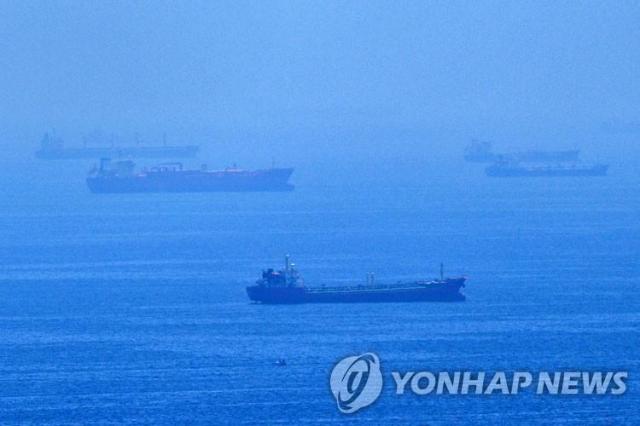
The article lays out four standards South Korea should consider. First is direct national interest. Protecting sea lanes is tied to South Korea’s economy, it says, because much of its oil and raw materials arrive through the Middle East. Maritime security, in that view, is not merely a diplomatic issue but a matter of national survival, making some level of contribution close to essential.
Second is managing the level of conflict. Military participation is not simply a yes-or-no choice, the article says, but a question of how far to go. Naval escort missions can raise tensions and carry risk, but the intensity can be managed by limiting rules of engagement, defining the operational area and avoiding offensive operations. Military action, it argues, exists on a spectrum.
Third is using multilateral frameworks. Acting alone is different from operating within a coalition. Multilateral operations can spread political burden and reduce the risk of direct confrontation with a specific country. The article notes this is an approach favored by Japan and European states and says South Korea should use such frameworks strategically.
Fourth is separating timelines. Diplomacy often requires balancing speed and caution. While military threats may demand quick responses, decisions such as troop deployments require national-level strategic judgment. Treating them as one can distort decision-making, the article says. It argues for phased decisions: begin with limited participation, assess conditions, then expand or adjust gradually. That approach can avoid impulsive choices while preserving responsiveness.
The article points to other allies as examples of this approach. Japan contributes through intelligence and rear-area support while avoiding direct combat participation. Germany is cautious about military intervention but pairs that stance with economic and diplomatic support. France may use military force when necessary while maintaining independent judgment. Each, it says, adjusts the method and level of participation to manage both alliance commitments and autonomy.
South Korea faces the same questions: How far will it go, and by what standards? The article argues the priority is not a one-time decision but a repeatable set of criteria that can preserve policy consistency under outside pressure.
It describes Trump’s pressure as not a one-off event. U.S. strategy, it says, is becoming clearer: demand larger roles from allies and use those demands as bargaining chips. The article argues this pattern is likely to recur and that South Korea must be prepared.
The conclusion is that the alliance should be maintained, but the operating method must change: from automatic participation to conditional participation, and from emotional solidarity to structured judgment. Any shift, it adds, must reflect South Korea’s reality as a “survival alliance,” rather than copying other countries’ models.
The world, the article says, is moving from “alliances that go together” to alliances that decide “how far to go together.” For South Korea, it argues, the need is not courage but design: how to act matters more than what to do. Pressure may force choices, but clear standards can turn pressure into strategy.
* This article has been translated by AI.
Copyright ⓒ Aju Press All rights reserved.