

A senior Trump administration official told Reuters on Monday that China has been reluctant to accept the return of Chinese nationals in the U.S. illegally and that Washington is prepared to tighten travel restrictions if Beijing does not change course.
The official said China accepted about 3,000 people for deportation in early 2025 via charter and commercial flights, but has sharply reduced cooperation over the past six months. “China is not cooperating sufficiently with the United States to repatriate its own citizens,” the official said, calling it a violation of China’s international obligations and its responsibility to its nationals.
If China does not expand cooperation, the official said the U.S. could consider raising visa application bonds, widening limits on visa issuance and strengthening entry denials at the border. The official warned that China’s lack of cooperation could also affect future travel by Chinese people who follow the law.
The U.S. government estimates more than 100,000 Chinese nationals are in the United States illegally. More than 30,000 have final deportation orders, and about 1,500 are detained awaiting removal, the report said.
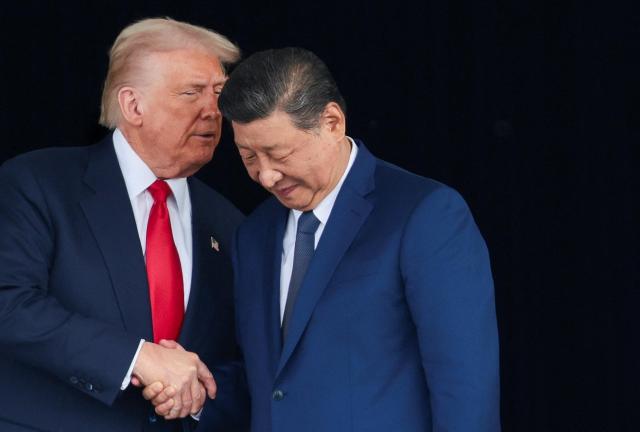
The warning comes as Trump is scheduled to visit Beijing on May 14-15 for a summit with President Xi Jinping. Trump is expected to raise deportations alongside trade issues.
Since returning to office, Trump has made immigration enforcement and deportations a core policy and has raised the possibility of tariffs or sanctions against countries that do not cooperate in taking back their nationals. China has been described as responding cautiously to U.S. requests for years, saying it is willing to accept “verified Chinese nationals” while maintaining that identity checks take time.
U.S. urges China to help pressure Iran
The United States is also pressing China in connection with Iran. The New York Times reported that Treasury Secretary Scott Bessent said in a Fox News interview on Sunday that he urged China to join “this international operation” and said it remains to be seen whether China will use diplomacy to get Iran to reopen the strait.
“Iran is the world’s largest state sponsor of terror, and China has been buying 90% of Iran’s energy, so it is effectively funding the world’s largest state sponsor of terror,” Bessent said.
Bessent also said the United States has “complete control” of the strait, underscoring the U.S.-led maritime operation. “We are demanding that (Iran) release these ships for the benefit of the international community, and we expect our international partners to engage in the same way,” he said, adding that it is a good time for partners to step up pressure on Iran.
He said the United States is returning fire only if attacked and “is not the provocateur,” but added that if Iran seeks to escalate, the U.S. is ready to respond.
The United States has also tightened sanctions targeting China in recent weeks. The State and Treasury departments last month sanctioned China’s Hengli Group over imports of Iranian crude oil, and on May 1 added sanctions on operators tied to a “shadow fleet” linked to Iran’s petroleum exports.
Treasury also sanctioned three Iranian exchange houses and related front companies that it said brokered foreign-exchange transactions worth billions of dollars, cutting them off from financial dealings. The groups are accused of converting yuan flowing in from China into other currencies that could be used for military funding.
China has pushed back against U.S. sanctions on its companies, signaling discomfort and urging noncompliance, the report said.
* This article has been translated by AI.
Copyright ⓒ Aju Press All rights reserved.