

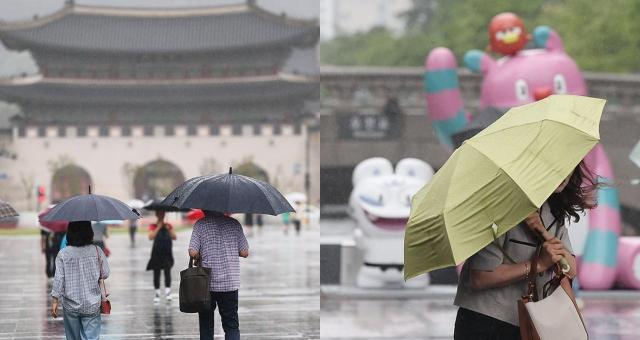
The 2026 rainy season in South Korea is expected to start around the same time as in previous years and last for about a month.
According to weather observations from 1991 to 2020, the typical pattern of the monsoon begins in Jeju Island, followed by the southern and central regions of the country. Based on this pattern, the anticipated start dates for the 2026 rainy season are as follows: Jeju Island is expected to see the onset between June 19 and 21, the southern region around June 23 to 25, and the central region, including the capital area, between June 25 and 27.
The end of the rainy season is also projected to follow a similar timeline to previous years. Jeju Island is likely to experience the conclusion around July 20, the southern region between July 24 and 25, and the central region from July 26 to the end of July. The overall duration of the rainy season is expected to be about 30 to 31 days, which aligns closely with the average duration of 31 to 32 days.
However, these projections are based on historical weather data, and actual start and end dates may vary by one to three days due to factors such as the expansion of the North Pacific High, the positioning of stationary fronts, and changes in atmospheric flow. Experts have noted that climate change is increasingly affecting precipitation patterns, making it more important to prepare for the intensity of rainfall rather than just the duration.
While the duration of the rainy season may be similar to previous years, experts are paying attention to the possibility of different precipitation patterns. Instead of steady rainfall over long periods, there is a trend toward intense downpours occurring in shorter bursts. This could lead to greater damage even with the same amount of rainfall.
Recently, claims circulating on social media that it will rain continuously for a month have been deemed exaggerated. It is typical for the rainy season to include clear days and breaks in rainfall, and continuous rain is not common meteorologically. However, localized heavy rain could create the impression that it is raining constantly.
Additionally, weather statistics indicate that unstable atmospheric conditions can lead to sudden downpours, often referred to as “guerrilla rain,” continuing into early August. In recent years, there have been instances of stronger localized downpours occurring after the rainy season has ended, highlighting the importance of disaster preparedness during the summer months.
Experts emphasize the need to prepare for potential natural disasters such as flooding, landslides, and river overflow this summer. Even if the rainy season duration is similar to previous years, concentrated rainfall at specific times could result in significant damage.
This forecast is based on statistical predictions derived from 30 years of weather data, and actual weather conditions may vary as the season progresses. Therefore, it is essential to continuously monitor the Korea Meteorological Administration's short-term and medium-term forecasts.
* This article has been translated by AI.
Copyright ⓒ Aju Press All rights reserved.