

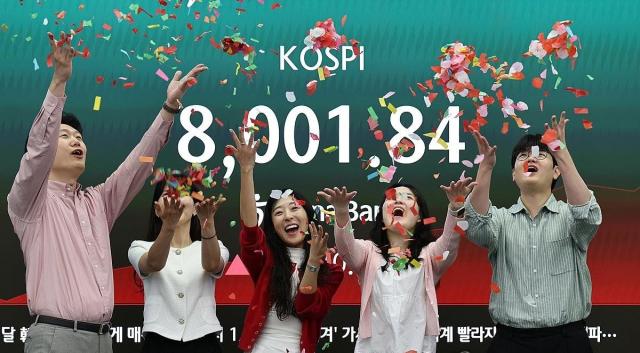
The KOSPI index has crossed the 8000-point mark for the first time, signaling an unprecedented bullish phase in the South Korean stock market. Just a week after surpassing 7000 points for the first time, the index has risen by another 1000 points in only seven trading days, ushering in the '8000-point era.' Analysts attribute this rapid increase to a rally in the semiconductor sector, inflows of foreign capital, and expectations surrounding government policies.
According to the Korea Exchange, the KOSPI index reached an intraday high of 8046.78 on May 15, setting a new record. This surge comes just seven trading days after it first crossed the 7000-point threshold on May 6, when it recorded an intraday high of 7426.60.
The most notable aspect of this rally is its speed. The KOSPI first broke through the 3000-point mark in January 2021, during a liquidity-driven market following the COVID-19 pandemic. It took 13 years and five months to rise from 2000 to 3000 points, a period when increases of 1000 points were considered to take years.
However, recent trends have shown a dramatic shift. It took 92 days for the KOSPI to rise from 4000 to 5000 points, and only 25 days to move from 5000 to 6000 points. While the index took 70 days to climb from 6000 to 7000 points, it reached 8000 points in just seven trading days after breaking through 7000. This indicates that the cycles of market growth are becoming increasingly shorter.
Market analysts report that the semiconductor sector is driving this bullish trend, with significant foreign investment flowing into major semiconductor stocks like Samsung Electronics and SK Hynix amid growing expectations for artificial intelligence (AI) investments. Additionally, government policies aimed at boosting the stock market and stimulating the capital market are also enhancing investor sentiment.
There are projections that the speed of the index's rise could accelerate further. Historically, moving from 2000 to 3000 points required a 50% increase, but reaching from 7000 to 8000 points required only about a 15% increase. A rise to 10,000 points would necessitate approximately 25% more growth from the current level. As the absolute value of the index increases, the percentage increase required for the same point gain decreases.
Market sentiment is now shifting from the '8000-point era' to the potential for a '10,000-point era.' However, there are concerns about increased volatility following such rapid gains, highlighting the need for caution among investors.
* This article has been translated by AI.
Copyright ⓒ Aju Press All rights reserved.