

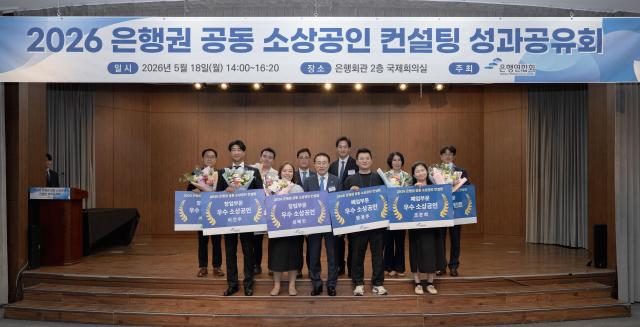
Cho Yong-byeong, chairman of the Korea Federation of Banks, stated at the 'Joint Small Business Consulting Results Sharing Event' held on May 18 in Seoul, "Small business owners, our valued customers, are directly facing economic changes and cost burdens in the most immediate sectors of the economy." He emphasized the commitment to actively support the processes of business closure and recovery.
Since 2025, 20 domestic banks have collaborated on consulting for startups and businesses facing closure. Due to recent economic downturns, the number of consulting applicants has reached 646, exceeding the initial target by more than double. In total, 2,100 consulting sessions have been provided to 800 small business owners. The consulting results indicate a concerning trend, with 50% of requests focusing on closure strategies rather than management improvement or tax inquiries, highlighting the deepening financial struggles of small businesses. The service industry accounted for the largest share of requests at 27.1%, followed by retail and food services at 26.3%.
The prolonged domestic economic slump has led to a wave of closures among self-employed individuals, who are crucial to local economies. The annual business closure rate has reached over 1 million, with a closure rate of approximately 9%. Increasing numbers of self-employed individuals are unable to meet their loan obligations, contributing to a rise in delinquency rates. The delinquency rate for loans to individual business owners at the five major banks—KB Kookmin, Shinhan, Hana, Woori, and NH Nonghyup—was 0.78% in the first quarter of this year, up 0.07 percentage points from late January. Meanwhile, Kakao Bank, which has been increasing its loans to individual business owners, reported a delinquency rate of 1.40%.
In response, the Korea Federation of Banks has implemented tailored consulting services based on data and artificial intelligence (AI) from professional consultants. Additionally, they are linking consulting services for small business owners to various financial support programs, such as Personal Business Loan 119, to alleviate interest burdens. It is estimated that 99.3% of borrowers have total loans of less than 1 billion won. If 30% of those who close their businesses apply for financial support, the reduction in interest burdens could amount to 315 billion won annually. A consultant noted, "27% of applicants have completed their business closure process, and we will continue to support the remaining applicants."
However, the burden on the banking sector is significant. The annual financial support burden for small businesses is estimated to be between 600 billion and 700 billion won. Nevertheless, as support for startups and businesses in distress aligns with productive finance strategies, the banking sector plans to expand the scope of Personal Business Loan 119 and long-term installment repayment options.
Chairman Cho stated, "We will continue to disseminate the experiences and best practices from this joint initiative across the banking sector to enhance the self-sustainability of small businesses and support the recovery of the economy and inclusive finance."
* This article has been translated by AI.
Copyright ⓒ Aju Press All rights reserved.