

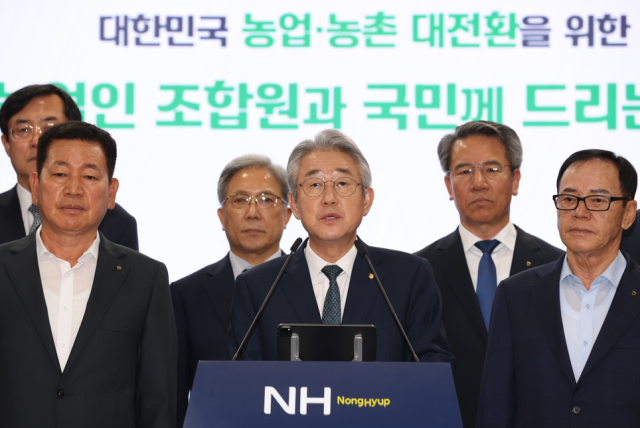
Kang Ho-dong, Chairman of NongHyup, made this announcement on May 21 during a statement titled 'A Letter to Agricultural Members and the Public' at the NongHyup headquarters. This followed an emergency meeting of the joint emergency response committee, attended by over 60 members, including the committee chair, committee members, and executives from across NongHyup.
Kang stated, "We will actively accept the direct election system with an open mind and a sense of responsibility," adding that NongHyup recognizes the need for a more democratic and accountable electoral system.
However, he expressed concerns about potential regional conflicts, politicization of NongHyup, and the adverse effects of money-driven elections that could arise from implementing the direct election system. He emphasized the urgent need for institutional support, such as a public election system, to mitigate excessive election costs, which could reduce funding for member support.
Regarding the establishment of the audit committee, Kang voiced apprehension, stating, "There are concerns that overlapping regulations and increased personnel and operational costs could undermine the overall autonomy and stability of management." He asserted that NongHyup would thoroughly enhance its internal auditing functions and seek effective measures that align with public expectations, while also engaging in public discussions involving academia, farmers' organizations, and stakeholders.
Kang also indicated that improvements in governance and fairness in executive nominations would be addressed internally. He pledged to implement 13 self-innovation tasks recommended by the NongHyup Reform Committee to create tangible changes that agricultural members and the public can feel. The NongHyup Reform Committee serves as an official forum for discussions on structural reforms and improvements within NongHyup.
Kang positioned NongHyup as a partner in the government's push for agricultural policy transformation, stating, "We will introduce a basic income for farmers and fishermen, expand solar income villages, and innovate agricultural product distribution, while also addressing labor shortages in rural areas to bring hope to agriculture and rural communities."
He further committed to investing 93 trillion won in productive finance and 15 trillion won in inclusive finance over the next five years to support economic growth and assist low-income households. He also announced plans to expand the number of subsidized smart farms, which cover 75% of project costs, to 2,000 locations to establish a profitable agricultural foundation.
* This article has been translated by AI.
Copyright ⓒ Aju Press All rights reserved.