

The landscape of South Korea's pharmaceutical industry is changing. The focus has shifted from domestic and wholesale markets to global sales and royalties from new drugs in markets such as the United States, Europe, and Japan. Major companies like Yuhan, GC Green Cross, HK Inno.N, and SK Biopharm are increasingly competing on the international stage.
According to the pharmaceutical industry on May 21, the sales performance of new drugs approved in advanced markets and the accompanying licensing and royalty income have become key components of annual results for domestic pharmaceutical companies.
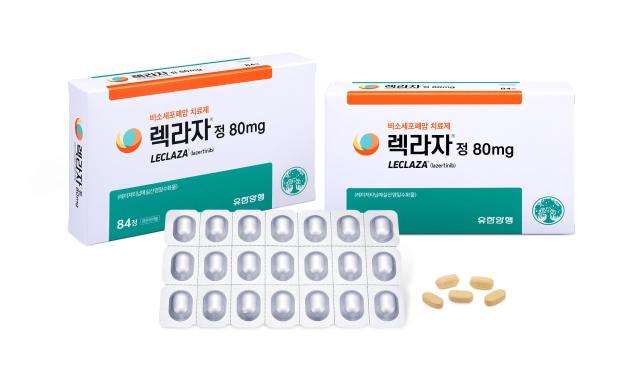
Yuhan is a leading example of this trend, having joined the "2 trillion won club" last year. Its non-small cell lung cancer treatment, Lecare (known as 레이저티닙 in Korea), received approval in major markets like the U.S. and Europe, leading to stable overseas sales and royalty income that boosted the company's revenue. Analysts expect Lecare's milestones and royalty income to drive growth, projecting operating profit to exceed 100 billion won this year, following a similar performance last year.
In 2018, Yuhan licensed Lecare to Johnson & Johnson's subsidiary Janssen for approximately $950 million, of which it has received about $300 million to date. This agreement also anticipates additional milestones and over 10% in sales royalties as global sales expand.
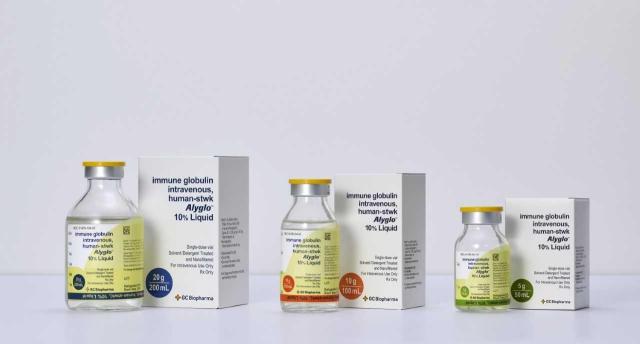
GC Green Cross aims to enter the "2 trillion won club" this year, led by its immunoglobulin product, Aliglo. The company is currently collaborating with local pharmaceutical firms for co-commercialization in major markets, particularly showing strong sales growth in the U.S. Analysts project Aliglo's U.S. sales to reach around $300 million by 2028.
SK Biopharm is fundamentally changing its performance structure through its product, Cenobamate. Since its launch, Cenobamate has rapidly gained market share in the U.S., achieving annual sales between $400 million and $600 million, establishing itself as a key product in the global market.
In the first quarter of this year, Cenobamate's U.S. sales reached 197.7 billion won, a 48.4% increase compared to the same period last year. As of March, the total monthly prescriptions (TRx) for Cenobamate reached approximately 47,000 and continues to trend upward.
HK Inno.N entered the "1 trillion won club" for the first time last year, driven by its gastroesophageal reflux disease treatment, K-Cab. The domestic product, K-Cab, recorded prescription sales of 58.5 billion won in just the first quarter, contributing significantly to its growth.
An industry insider stated, "Companies with new drugs targeting global markets are becoming the performance leaders. The structure is such that domestic prescriptions serve as a foundation, while overseas performance creates the premium, indicating a shift in the domestic pharmaceutical industry towards R&D and global commercialization capabilities."
* This article has been translated by AI.
Copyright ⓒ Aju Press All rights reserved.