

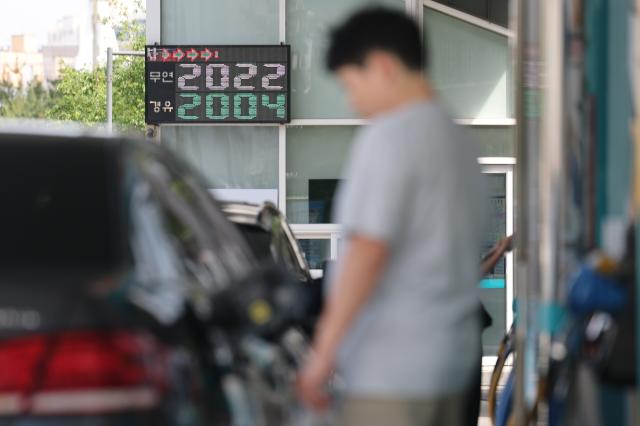
The Ministry of Trade, Industry and Energy announced on May 21 that the sixth oil price cap, effective from midnight on May 22, will maintain the prices at 1,934 won per liter for regular gasoline, 1,923 won for diesel, and 1,530 won for kerosene.
The government implemented the oil price cap system on March 13 in response to rising inflation pressures due to international oil prices exceeding $100 per barrel. The initial cap set prices at 1,724 won for regular gasoline, 1,713 won for diesel, and 1,320 won for kerosene.
The second cap, effective from March 27, set the prices at 1,934 won for gasoline, 1,923 won for diesel, and 1,530 won for kerosene. The third and fourth caps were also frozen, with the current prices remaining unchanged.
The decision to freeze the price cap again was influenced by the lack of significant changes in international circumstances since the last adjustment. The cumulative factors contributing to price increases continue to exert pressure on inflation and the cost of living.
Yang Gi-wook, head of the Ministry's Resource Security Division, stated, "While there seemed to be progress in the ceasefire negotiations between the U.S. and Iran, they are currently at a standstill, and the U.S.-China summit has not yielded clear results. International oil prices are hovering around the $100 mark, and there have been no significant changes since the fourth price cap decision."
He added, "The cumulative increase factors for gasoline have slightly risen to the upper 200 won range, while diesel and kerosene have decreased to the mid-300 won and mid-400 won ranges, respectively."
Sales of oil products continue to decline compared to the previous year. In May, gasoline sales decreased by 2% and diesel by 6% compared to the same month last year. Over the past ten weeks since the price cap was implemented, gasoline sales dropped by 8%, and diesel sales fell by 8% compared to the same period last year. Prices at gas stations have mostly remained stable.
The government has also decided to extend the adjustment period for the price cap from two weeks to four weeks. Previously, the Ministry adjusted the price cap every two weeks to respond quickly to market changes. However, with the ongoing stalemate in the Middle East conflict, international oil price volatility has decreased.
This change aims to enhance predictability and stability for gas station operators, the general public, and drivers reliant on their vehicles for economic activity.
Yang emphasized, "If there are changes in the situation, we will adjust the price cap regardless of the schedule. If the situation in the Strait of Hormuz changes, we will immediately begin adjustments. If there are no changes in the Strait of Hormuz, the likelihood of stabilization appears low, so we will monitor the situation closely."
Regarding the recent agreement to pursue an oil swap system with Japan during the Korea-Japan summit, he noted, "We have reached a consensus on the general direction, but we need to specify the details through discussions with private companies. Japan has significant reserves, but South Korea has superior refining capabilities, suggesting there may be mutually beneficial solutions to explore."
He further explained, "Given Japan's relatively long territory, it may be effective to utilize Ulsan's refining facilities for areas adjacent to the East Sea. We have examined various aspects, including storage facilities, leading to the Korea-Japan agreement. Further details will be developed in the future."
* This article has been translated by AI.
Copyright ⓒ Aju Press All rights reserved.