

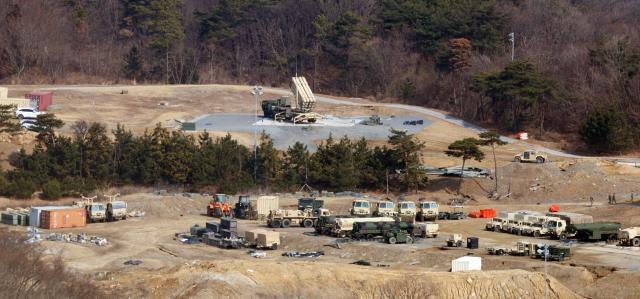
According to the Washington Post on May 21, the U.S. launched over 200 THAAD interceptors to bolster Israel's defense, which accounts for nearly half of the Pentagon's total inventory. Additionally, U.S. Navy vessels stationed in the eastern Mediterranean fired more than 100 SM-3 and SM-6 interceptors.
Israel's usage was lower than that of the U.S., with the country firing fewer than 100 Arrow interceptors and about 90 David's Sling interceptors. A U.S. administration official noted, "The U.S. fired approximately 120 more interceptors than Israel and intercepted twice as many Iranian missiles."
The concern now lies with the remaining stockpile. Kelly Grieco, a senior fellow at the Stimson Center, estimates that the U.S. has about 200 THAAD interceptors left. There are also concerns that production lines may struggle to keep pace with demand. The large-scale depletion of advanced interceptors in the Middle East could weaken U.S. military readiness in other regions.
This anxiety has spread to Asian allies such as South Korea and Japan. The Washington Post reported, "The shortage of U.S. interceptors is heightening tensions for Asian allies like South Korea and Japan." Both countries rely on U.S. military deterrence and missile defense support to counter threats from North Korea and China.
If hostilities resume, the burden on the U.S. could increase further. The Washington Post noted, "The Israeli military has temporarily excluded some missile defense batteries for maintenance, which could increase the burden on the U.S. if hostilities resume."
The U.S. Department of Defense and Israel have refuted interpretations suggesting that the burden has fallen disproportionately on one side. The Pentagon stated that the ballistic missile defense system is just one part of a multi-layered integrated air defense network. Both countries have coordinated various assets, including fighter jets and drone defense systems. The Israeli Embassy in Washington also emphasized that operations between the two nations have been coordinated at the highest levels.
* This article has been translated by AI.
Copyright ⓒ Aju Press All rights reserved.