
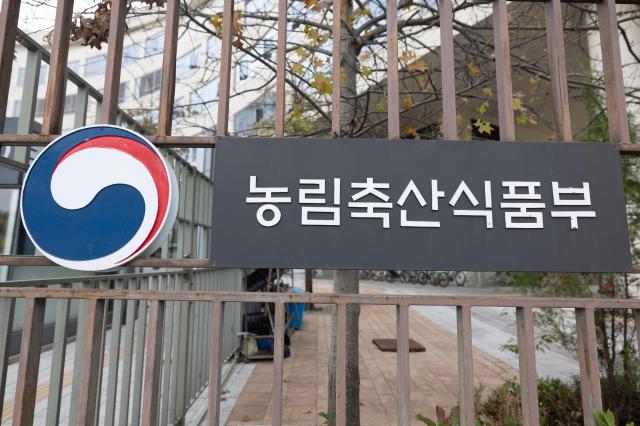
Ministry of Agriculture, Food and Rural Affairs in Sejong City. [Photo by Yu Dae-gil]
As concerns over the supply of eggs and chicken continue due to the impact of highly pathogenic avian influenza (AI), the South Korean government plans to import an additional 20 million fresh eggs and 9 million chicken breeding eggs. This move aims to alleviate the financial burden on consumers.
The Ministry of Agriculture, Food and Rural Affairs announced on May 28 that it will import 20 million fresh eggs from the United States and Thailand between June and July. Since January, the ministry has already imported 7.87 million fresh eggs from these countries through the Korea Agro-Fisheries & Food Trade Corporation (aT) and plans to bring in an additional 2.24 million eggs by next month. The government aims to counteract the expected decrease in egg supply during the summer months by importing these additional eggs.
A ministry official stated, "The number of laying hens aged six months and older has decreased, raising concerns about a drop in egg production next month. The average daily egg production in June is projected to decline by 3.6% compared to last year, totaling 46.92 million eggs."
Due to the supply shortage, egg prices have remained high. According to the Korea Agricultural Products Quality Evaluation Institute, the average retail price for a carton of eggs (30 eggs) nationwide is 7,547 won, a 7.58% increase from the same period last year.
The government is also expanding discounts on eggs. Starting today until July 1, the discount support price will increase from 1,000 won to 1,500 won. The National Agricultural Cooperative Federation (Nonghyup) is implementing a program to lower the supply price of eggs delivered to Hanaro Mart by 2,000 won per carton, in collaboration with the Korea Poultry Association, Daejeon-Chungnam Poultry Association, and Pocheon Livestock Association.
In addition to eggs, the government is taking steps to stabilize chicken prices by increasing supply. The average retail price for chicken nationwide is currently 6,504 won per kilogram, a 15% increase from last year.
The ministry plans to import an additional 900,000 chicken breeding eggs by August, following the previous import of 800,000. The imported breeding eggs will be hatched and raised in domestic broiler farms for 33 days before being supplied to the market, aiming to restore chicken production levels to last year's figures.
The government will also implement a tariff quota on 30,000 tons of chicken starting at the end of this month. Additionally, it will provide discount support for chicken until July 1 and plans to supply chicken to markets at prices reduced by more than 1,000 won per bird through self-help funds during the summer.
A ministry official expressed optimism, stating, "We expect these measures to contribute to market supply stability and alleviate consumer price burdens. We will continue to monitor the supply and demand situation for livestock products and respond actively to maintain stable supply conditions and reduce consumer burdens."
The Ministry of Agriculture, Food and Rural Affairs announced on May 28 that it will import 20 million fresh eggs from the United States and Thailand between June and July. Since January, the ministry has already imported 7.87 million fresh eggs from these countries through the Korea Agro-Fisheries & Food Trade Corporation (aT) and plans to bring in an additional 2.24 million eggs by next month. The government aims to counteract the expected decrease in egg supply during the summer months by importing these additional eggs.
A ministry official stated, "The number of laying hens aged six months and older has decreased, raising concerns about a drop in egg production next month. The average daily egg production in June is projected to decline by 3.6% compared to last year, totaling 46.92 million eggs."
Due to the supply shortage, egg prices have remained high. According to the Korea Agricultural Products Quality Evaluation Institute, the average retail price for a carton of eggs (30 eggs) nationwide is 7,547 won, a 7.58% increase from the same period last year.
The government is also expanding discounts on eggs. Starting today until July 1, the discount support price will increase from 1,000 won to 1,500 won. The National Agricultural Cooperative Federation (Nonghyup) is implementing a program to lower the supply price of eggs delivered to Hanaro Mart by 2,000 won per carton, in collaboration with the Korea Poultry Association, Daejeon-Chungnam Poultry Association, and Pocheon Livestock Association.
In addition to eggs, the government is taking steps to stabilize chicken prices by increasing supply. The average retail price for chicken nationwide is currently 6,504 won per kilogram, a 15% increase from last year.
The ministry plans to import an additional 900,000 chicken breeding eggs by August, following the previous import of 800,000. The imported breeding eggs will be hatched and raised in domestic broiler farms for 33 days before being supplied to the market, aiming to restore chicken production levels to last year's figures.
The government will also implement a tariff quota on 30,000 tons of chicken starting at the end of this month. Additionally, it will provide discount support for chicken until July 1 and plans to supply chicken to markets at prices reduced by more than 1,000 won per bird through self-help funds during the summer.
A ministry official expressed optimism, stating, "We expect these measures to contribute to market supply stability and alleviate consumer price burdens. We will continue to monitor the supply and demand situation for livestock products and respond actively to maintain stable supply conditions and reduce consumer burdens."
* This article has been translated by AI.

Copyright ⓒ Aju Press All rights reserved.