
Journalist

Lee Hugh
=
-
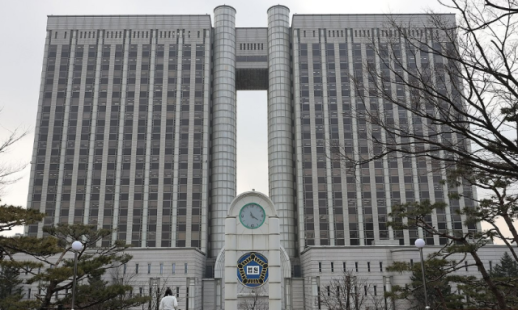 Judge in former first lady's corruption case found dead in Seoul SEOUL, May 6 (AJP) - The presiding judge of the Seoul High Court who oversaw the appeals trial on corruption charges involving former first lady Kim Keon Hee was found dead on Tuesday, according to legal officials. Police found judge Shin Jong-oh's body at around 1 a.m. near the court compound in southern Seoul, after receiving a report from his family that they had been unable to reach him about an hour earlier. The 55-year-old was taken to a hospital, where he was pronounced dead. Police, who are investigating the exact cause of his death, believe Shin jumped, as no foul play is suspected and a suicide note was also found at the scene. His handwritten message reportedly included an apology but made no mention of Kim's case or any trial-related matters. The Seoul High Court, presided over by Shin, sentenced Kim last week to four years in prison on multiple charges including accepting luxury handbags and jewelry in return for favors, as well as involvement in stock manipulation. The sentence was much harsher than the 20-month prison term handed down at the first trial. Shin, a graduate of Seoul National University, passed the bar exam in 1995 and served at courts nationwide including in Daegu, Uijeongbu and Ulsan. 2026-05-06 15:07:04
 -
 Shipbuilding Quality Manager Lee Yoo-beom Wins Gold Tower Order of Industrial Service Lee Yoo-beom, quality management director at Jiseung ENG, a partner company of HD Hyundai Heavy Industries, received the Gold Tower Order of Industrial Service, the top honor in the government’s Labor Day awards, for nearly five decades of work in shipbuilding focused on quality innovation and passing on skills. The Ministry of Employment and Labor said it held the 2026 Labor Day Government Awards Ceremony on Tuesday at Luna Miele in Seoul’s Yeouido district, presenting medals, commendations and citations to 210 people recognized for contributions to industrial sites and the labor community. The annual awards honor workers and union officials for dedicated service in the field. The ministry said this year’s program was the first since the official name “Workers’ Day” was restored to “Labor Day.” A total of 210 awards were presented: one Gold Tower Order of Industrial Service; 17 orders including the Silver, Bronze, Iron and Stone towers; 17 Industrial Service Medals; 53 presidential commendations; 57 prime minister’s commendations; and 66 ministerial commendations. The Gold Tower award went to Lee. The ministry said he joined Hyundai Heavy Industries in 1978 and was credited with helping build production systems in the marine engine sector and improving quality and safety to raise productivity. It also cited his continued work at partner companies after mandatory retirement, including training and developing talent. Silver Tower awards went to Kang Seok-yoon, standing vice chairman of the Federation of Korean Trade Unions, and Choi Mi-ra, chair of the Soonchunhyang Medical Center Labor Union. The ministry said Kang was recognized for participating in efforts to revise labor union laws and develop field-focused policies. Choi was cited for advancing workers’ rights and workplace-centered welfare, including reaching wage and collective bargaining agreements without strikes for 25 years, creating a sleep leave system for three-shift workers, and expanding paid sick leave. Also receiving the Silver Tower, Lee Tong-muk, a principal engineer at Kia Autoland Hwaseong, was recognized for more than 30 years of technical innovation and on-site improvements in press die processes that helped improve quality and productivity. The ministry said this year’s awards also sought out “hidden contributors” who had been less represented in past honors, including labor providers and freelancers, and women and workers with disabilities. Yeom Jeong-yeol, head of the Broadcasting Writers Branch of the National Union of Mediaworkers, received the Iron Tower Order of Industrial Service for efforts to improve working conditions for broadcast writers and institutionalize collective bargaining. Lee Jun-hwan, secretary general of the social cooperative Sarang-gwa-Saram, received the Stone Tower Order of Industrial Service; the ministry cited his 21 years of work in vocational rehabilitation and welfare for people with physical disabilities, despite having a physical disability himself. Labor Minister Kim Young-hoon said the ministry would “change first and take the lead” to build a South Korea where labor is respected, workers are treated properly, and everyone who works hard can shine. * This article has been translated by AI. 2026-05-06 15:06:59
 -
 Vietnam Sends Seasonal Farm Workers to South Korea as Mandatory Insurance Rules Tighten Vietnam’s Dong Thap Province, Can Tho city and Dak Lak Province have been sending seasonal workers to South Korea in a steady stream, with the workers headed to agricultural jobs for months-long stints. Many are also expected to return with experience in more advanced farming techniques. Vietnamese media including VnExpress reported that on May 5, the Dong Thap Employment Service Center held a send-off for 206 workers departing for South Korea. The group is to travel to Yeoncheon in Gyeonggi province and Cheorwon in Gangwon province, where they are expected to work in agriculture for about eight months. Nguyen Phu Hieu, director of the Dong Thap Employment Service Center, said sending workers abroad is “not simply to address unemployment,” calling it a key strategy for local social and economic development. “Workers who return from overseas bring back not only capital, but also valuable knowledge, workplace discipline and vocational skills,” he said. Nguyen said the province plans to expand seasonal work placements to new markets such as Germany and Russia. He urged local authorities to provide careful support to families of departing workers, and repeatedly told workers to comply strictly with host-country laws and contract terms to avoid violations. Officials from the employment service center and provincial people’s committees handed out gifts and took commemorative photos at the event. Earlier, on March 26, the Can Tho Employment Service Center held a departure ceremony for 76 workers bound for Cheorwon. The workers, recognized for diligence and prior work experience, passed a direct selection process by South Korea and are expected to work there for eight months. On April 30, 20 seasonal workers who entered South Korea from Dak Lak attended a welcome event at the Gyeongsan Agricultural Technology Center. After completing required training, they were to be assigned to farms starting May 6. Seasonal foreign workers must enroll in three mandatory insurance plans South Korea is also revising rules aimed at improving working conditions for foreign workers. Since Feb. 15, seasonal workers on E-8 visas have been required to enroll in three mandatory insurance plans: accident insurance, wage arrears guarantee insurance and farmers and fishers safety insurance. Accident insurance must be purchased by the worker. According to an official notice the Vietnamese Ministry of Home Affairs sent to provincial and municipal people’s committees, workers must complete enrollment within 15 days of arrival to ensure coverage for medical costs arising from accidents or illness during their stay in South Korea. Violations can draw fines of up to 5 million won. Minimum coverage requirements are specified: at least 30 million won for accidental death and injury; at least 15 million won for death or injury due to illness; and at least 10 million won for actual medical expenses. Workers may buy travel insurance in Vietnam in advance or enroll in products offered by private insurers after arriving in South Korea. Premiums for seasonal workers run about 20,000 won per month. Employers must enroll in the wage arrears guarantee insurance and the farmers and fishers safety insurance. The wage arrears policy provides compensation of up to 4 million won per seasonal worker if wages are not paid on time. The safety insurance provides benefits including 120 million won in death benefits, 10 million won for funeral costs and up to 50 million won in medical expenses. The Ministry of Agriculture, Food and Rural Affairs said it will allow a one-year guidance period. The measures come as South Korea’s rural areas rely more heavily on foreign labor. Statistics cited in the report said the number of foreign workers in agriculture is expected to rise from about 20,000 in 2020 to more than 100,000 in 2025 due to aging. From 2020 to 2024, the average industrial accident rate in agriculture was 0.78%, similar to manufacturing at 0.79%, but the average death rate per 10,000 workers was higher than in manufacturing.* This article has been translated by AI. 2026-05-06 15:03:45
 -
 Corruption probe indicts sitting chief judge accused of taking bribes from lawyer The Corruption Investigation Office for High-ranking Officials said it has indicted a sitting chief judge accused of taking tens of millions of won in bribes from a lawyer who was a high school alumnus and providing favors tied to trials. The agency’s Investigation Division 2, led by Chief Prosecutor Kim Su-hwan, said Tuesday it indicted Chief Judge Kim, identified only by his surname, and attorney Jeong on charges including bribery under the Act on the Aggravated Punishment of Specific Crimes and giving bribes. Both were indicted without detention. The agency said Kim, who served as presiding judge of criminal appeals at the Jeonju District Court from 2023 to 2025, is suspected of receiving about 33 million won in money and valuables in return for reducing sentences in cases handled by Jeong, a senior alumnus from the same high school. Investigators said Kim handled 21 appeals cases taken by Jeong’s law firm and reduced sentences in 17 of them. They said that in six cases decided after March 2024 — when the alleged bribes were received — Kim also overturned the lower-court rulings. In one case, a defendant caught repeatedly driving drunk while on probation had a five-month prison sentence reduced on appeal to a 5 million won fine, the agency said. In another, a defendant involved in operating an illegal sports gambling site received a suspended sentence after getting a prison term in the lower court. The agency also said Kim received additional benefits, including the free use for one year of a commercial space intended for his spouse’s violin lessons, and had Jeong cover costs for soundproofing and other construction for the lessons. Investigators said they also found an additional 3 million won bribe provided in the form of items such as boxes of nuts. The agency said it confirmed through recorded visitation audio and other materials that word of the alleged arrangement spread inside and outside prisons, leading to a surge of case requests to Jeong’s law firm. The agency said it sought to indict the two in March, but the court rejected the request, citing insufficient explanation regarding the alleged bribe-giving. It later proceeded with indictments without detention. A CIO official said the agency uncovered evidence that a sitting chief judge took bribes from a defense lawyer in cases he was handling, using the trials as the channel. The official said the agency would continue to deal strictly, under law and principle, with corruption that undermines trust in the judiciary. Kim’s side denied any quid pro quo. In a statement, Kim’s attorneys criticized the agency for announcing the indictment, saying the court had found the allegations insufficient during the warrant review process and that the agency indicted him without additional investigation and with claims they said were not true. They said Kim had cooperated with the investigation and that the allegations of receiving money and a quid pro quo were all false. They said he received no benefit related to the commercial space, and that the 3 million won was lesson fees paid to his spouse for 31 violin lessons provided to the lawyer’s child. They said there was “absolutely” no trial deal. They said Kim would fully participate in the court process to establish the truth and urged that unnecessary misunderstandings not spread. 2026-05-06 15:02:09
 -
 BC Card Launches May ‘My Tag’ Discounts on Baseball Tickets, Dining and Retail BC Card said Tuesday it is running a May “My Tag” promotion for Family Month. My Tag is a discount service on Paybooc, a personal finance platform, that lets users choose an offer and receive a discount when paying with a BC personal credit or debit card. The event runs through May 31 and is open to customers with cards issued by BC Card member companies, including Woori Card, Hana Card, NH NongHyup Card, IBK Industrial Bank of Korea, KB Kookmin Card, iM Bank, BNK Busan Bank, BNK Kyongnam Bank, Shinhan Card, Sh Suhyup Bank, Gwangju Bank and BC Baro Card. Users must tag the offer in the Paybooc app before payment for the discount to apply. BC Card said the promotion provides additional discounts on top of existing card benefits, with no separate performance requirement. It added that heavy traffic around midnight at the start of each month—when benefits change and many users log in to tag offers—has at times caused delays or waiting in the Paybooc app. Key offers include a 2,000 won discount plus an additional 1,000 won off KT Wiz home-game tickets when paying 10,000 won or more. Outback Steakhouse and VIPS offer 5,000 won off purchases of 100,000 won or more, while Ediya Coffee offers 1,000 won off purchases of 10,000 won or more. Olive Young provides 2,000 won off purchases of 50,000 won or more, and Daiso offers 300 won off purchases of 10,000 won or more once a day, up to three times. 2026-05-06 14:57:13
 -
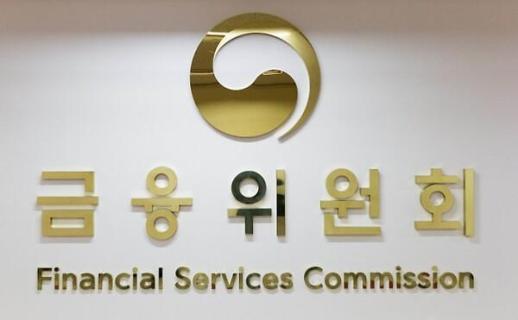 Korea to Sell Public Growth Fund With Tax Breaks and Loss Backstop, Testing Policy-Fund Model A public-participation National Growth Fund, promoted with what officials call unprecedented tax and loss-support benefits, will go on full sale later this month. The fund is designed to address shortcomings of the earlier New Deal fund and strengthen incentives, but its success will hinge on whether it draws real inflows and delivers results. The Financial Services Commission said on the 6th that the Public Participation Growth Fund will be sold for three weeks, from the 22nd through the 11th of next month, through branches and online channels of 25 banks and securities firms. Total sales to individuals will be 600 billion won, offered on a first-come, first-served basis until the allocation is exhausted. The annual subscription cap is 100 million won per person. Minimum subscriptions vary by seller, ranging from 0 to 1 million won. Investors should be cautious because early redemption is not allowed during the five-year term. Tax support is the fund’s biggest draw. Investors can claim income deductions up to 18 million won: a 40% deduction rate on investments up to 30 million won, 20% on amounts over 30 million won up to 50 million won, and 10% on amounts over 50 million won up to 70 million won. Dividend income is separately taxed at 9% if the investment is held for five years. The main investment targets are companies in advanced strategic industries — including semiconductors, future vehicles and artificial intelligence — and related firms. Ten sub-fund managers operating under the National Growth Fund must invest at least 60% of their committed capital in those areas. The remaining 40% may be invested at the managers’ discretion. The fund aims to channel private money into future growth industries, but critics warn it could repeat the familiar limits of policy funds, given that similar products in the past fell short of expectations. As an example, the average annual return for the general public on the New Deal fund launched in 2021 under the Moon Jae-in government was 2.37%, roughly in line with bank deposit rates. That figure reflected the government budget taking losses first; excluding fiscal funds, the average return of 10 sub-funds was just 0.75%. The structure that ties up money for years is also similar. The New Deal fund had a four-year maturity, while the National Growth Fund has a five-year term and bars redemptions. If an investor transfers the holding within three years, an amount equivalent to the tax benefit will be clawed back. Some also question whether the fund’s target return — 30% cumulatively over five years — will look compelling given the KOSPI’s 56.6% rise over the past four months. With the KOSPI topping 7,300 on the day, some analysts said investors may worry about buying in near a peak. Na Hye-young, director of the FSC’s Public and Regional Participation Support Division, said the government sought to improve on the New Deal fund by diversifying sub-fund strategies and methods. “Within a 20% range, fiscal funds will take losses first for each sub-fund, and tax benefits are provided, which has the effect of increasing investors’ net returns,” she said. 2026-05-06 14:54:15
 -
 Top 10 South Korean Brokerages’ Q1 Net Profit Nearly Matches Big Five Banks South Korea’s securities industry has narrowed the earnings gap with banks, buoyed by a strong stock market that has lifted trading and brokerage revenue. On the 6th, the financial investment industry and FnGuide said the combined first-quarter net profit of the 10 largest brokerages by equity totaled 4.4656 trillion won, bringing results to roughly the level of the banking sector. By firm (consensus estimates), Mirae Asset Securities posted the largest net profit at 1.0332 trillion won, followed by Korea Financial Holdings (Korea Investment & Securities) at 672.9 billion won, Meritz Financial Group (Meritz Securities) at 668.5 billion won, Kiwoom Securities at 417.9 billion won, Samsung Securities at 386.0 billion won and Daishin Securities at 69.5 billion won. Brokerage units of financial groups also reported: NH Investment & Securities 475.7 billion won, KB Securities 350.2 billion won, Shinhan Investment Corp. 288.4 billion won and Hana Securities 103.3 billion won. Against that backdrop, the combined first-quarter net profit of the five major banks totaled 4.4420 trillion won. By bank, Shinhan Bank led with 1.1571 trillion won, followed by Hana Bank with 1.1042 trillion won and KB Kookmin Bank with 1.1010 trillion won. NH NongHyup Bank posted 557.7 billion won and Woori Bank 531.2 billion won. The securities industry’s net profit relative to banks has risen steadily, from 27.8% in 2022 to 36.3% in 2023, 42.9% in 2024 and 50.0% in 2025. Last year, the combined net profit of the 10 brokerages reached 7.67 trillion won, close to half the 15.33 trillion won earned by the five banks. Analysts said the gap has narrowed faster this year as stock prices rose and trading value expanded, improving brokerages’ earnings structure. Brokerage business was cited as the main driver, with commission income jumping as both retail investors and foreign funds flowed into the market. The industry has also diversified revenue sources compared with the past, with results from global investment and trading adding support. Mirae Asset Securities, which is expected to post more than 1 trillion won in first-quarter net profit, saw earnings surge as valuation gains tied to its SpaceX investment increased sharply. Regulatory changes were also described as supportive. The introduction of comprehensive investment management accounts, known as IMA, and the expansion of short-term note issuance businesses are increasing the scale of brokerages’ fund management and broadening opportunities to generate revenue across investment and corporate finance. Market watchers said the brokerage sector is likely to remain resilient for the time being on the back of the market rally. Woo Do-hyung, an analyst at Yuanta Securities, said credit provision balances and client deposits (130 trillion won) rose 4.1% and 17.6%, respectively, from the previous month to record highs. He said buying sentiment remains firm and turnover among retail investors is likely to keep rising. * This article has been translated by AI. 2026-05-06 14:51:17
 -
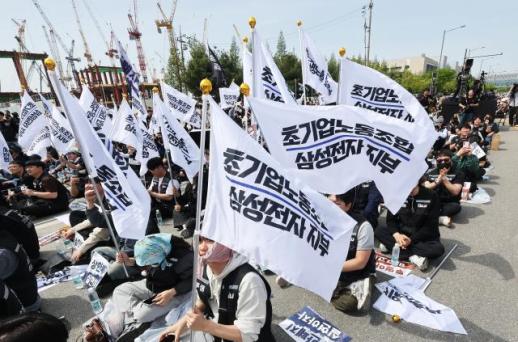 Samsung Electronics Shareholder Groups Rally Against Union’s Planned Strike as Market Cap Tops $1 Trillion As Samsung Electronics’ market value climbed past $1 trillion, some shareholder groups took to the streets to oppose the company’s union plan for a general strike. The groups called for a ban on the strike and said they would pursue tough measures, including damage claims, if an illegal strike occurs. Industry officials said Wednesday that shareholder groups including the Shareholder Action Practice Headquarters hung banners and held a rally in the Hannam-dong area of Seoul’s Yongsan district opposing the union’s planned walkout. The banners said the strike would “only give overseas semiconductor companies a windfall,” and included slogans such as “A strike in essential semiconductor processes is more serious than a strike by the military or police” and “Ban ruinous strikes that hold the national economy hostage through legislation.” The groups said that if the union representing a majority of Samsung Electronics workers pushes ahead with a general strike starting May 21 and holds a rally near the Hannam-dong home of Chairman Lee Jae-yong on the first day, they will stage a counter-rally with more than 100 shareholders. A day earlier, the Korea Shareholder Movement Headquarters warned it would seek damages from all union members if what it called an illegal strike damages key assets. Calling the planned walkout “a self-destructive act that harms corporate value,” the group said that if a strike begins in an illegal form and damages the company’s core assets, shareholders would join forces to seek damages from all union members who participate, citing a legal theory of “infringement of third-party rights.” The union has demanded performance pay equal to 15% of annual operating profit and has announced an 18-day general strike starting May 21. Based on market estimates of operating profit, the amount would total 45 trillion won. Samsung Electronics on Wednesday became the second company in Asia to join the “$1 trillion market cap club.” As of 2:30 p.m., shares were up 15.05% from the previous session at 267,500 won. Market capitalization rose to 1,563 trillion won, or about $1.0738 trillion. That put Samsung Electronics above the $1 trillion mark, following Taiwan Semiconductor Manufacturing Co., the world’s largest foundry operator, with a market cap of $1.86 trillion. 2026-05-06 14:44:12
 -
 Kakao Pay posts record Q1 operating profit, extends streak of profitability Kakao Pay said it posted its highest-ever quarterly results in the first quarter, driven by growth across its payments, financial services and platform businesses. In a regulatory filing on Tuesday, the company reported consolidated revenue of 300.3 billion won and operating profit of 32.2 billion won for the January-March period. That was up 41.7% and 630.9%, respectively, from a year earlier, both record highs. Operating margin rose to 10.7%, and net profit margin reached 11.6%, both in double digits. Transaction volume also increased. Consolidated transaction value rose 15% from a year earlier to 50.9 trillion won. Revenue-contributing transaction value climbed 15% to 14.6 trillion won, holding at about 29% of total transaction value. The balance of Kakao Pay Money top-ups continued to rise, reaching 2.5122 trillion won. Remittance transaction value also grew 15% from a year earlier as stock trading expanded. Financial services led the gains. Revenue from the segment jumped 82% to 145.9 billion won, helped by a 137% increase in investment-service revenue and a 78% rise in insurance-service revenue. The segment accounted for 49% of total revenue, as the company broadened earnings beyond payments. Payments revenue rose 13.3% to 138.4 billion won. Online payments at merchants outside the Kakao Group increased 24%, supporting revenue growth, the company said, citing data-driven solutions aimed at boosting partner sales. Overseas payment transaction value increased 20% from a year earlier. Subsidiaries also contributed. Kakao Pay Insurance posted first-quarter revenue of 24.3 billion won, up 85% from a year earlier, while regular premium payments rose 157%. Kakao Pay Securities reported quarterly revenue of 100.1 billion won and operating profit of 23.6 billion won, both record highs. Chief Executive Shin Won-geun said the company’s data-driven business model and new growth engines have moved onto a firmer track. “We will keep our growth momentum solid so that technological innovation can translate into higher corporate value,” he said.* This article has been translated by AI. 2026-05-06 14:43:17
 -
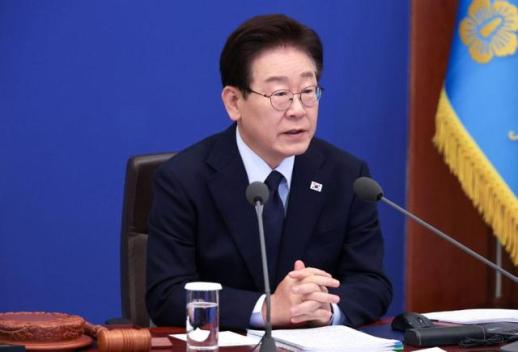 South Korea to send special envoy to Costa Rican president's inauguration SEOUL, May 6 (AJP) - South Korea will send former lawmaker Yang Kyung-sook as a special envoy to Costa Rica as the country's new president is set to be inaugurated this week. In a written press briefing, presidential spokesperson Kang Yu-jung said Yang is set to attend Costa Rican President-elect Laura Fernandez's inauguration ceremony on Friday. She will deliver a personal letter from President Lee Jae Myung to Fernandez and discuss South Korea's foreign policy priorities with the new government. Kang said the envoy will convey the Lee administration's intention to strengthen practical cooperation between the two countries in various areas including infrastructure and education. Yang is also expected to attend other events including a reception hosted by the Central American country's foreign minister. 2026-05-06 14:37:51