
Journalist

Lee Hugh
=
-
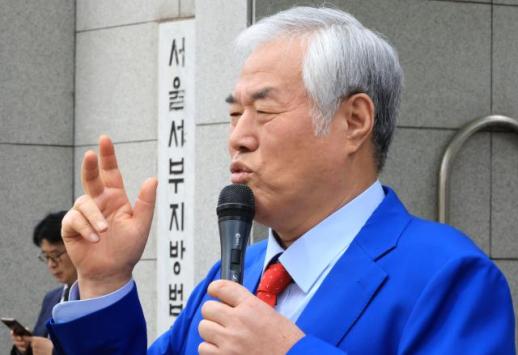 Pastor Jeon Kwang-hoon holds weekly Gwanghwamun rallies after visiting Yoon Suk Yeol On May 2, Jeon Kwang-hoon held a downtown Seoul rally after visiting former President Yoon Suk Yeol, Yonhap News Agency reported. Jeon’s group, the Korea First National Movement Headquarters, began its rally at 11:30 a.m. near the Dongwha Duty Free Shop in the Gwanghwamun area. About 6,000 people attended, according to an unofficial police estimate, waving South Korean and U.S. flags. From the stage, Jeon referred to his visit with Yoon. Jeon’s visit to Yoon at the Seoul Detention Center on April 30 had been reported earlier. “We have to make a decision. The preamble to the Constitution says to carry on the spirit of April 19,” Jeon said, adding that when the country is in turmoil it means invoking “the people’s right to resist,” as in the April 19 movement. Jeon also said martial law is “one of the president’s governing powers,” and claimed that if 10 million people gather in what he called “nonviolent arms,” as advocated by India’s Gandhi, “we can rebuild the Republic of Korea.” Jeon was previously arrested in connection with unrest at the Seoul Western District Court and was released on bail last month. He has since resumed public appearances and rallies, delivering political messages. The May 2 event was among the first large public rallies held after Jeon’s visit with Yoon became known. Separately, at 5 p.m. the progressive group Candlelight Action held a rally in front of Seoul City Hall and marched toward the U.S. Embassy in Gwanghwamun. The group denounced U.S. calls to ensure the personal safety of Coupang Inc. Chairman Kim Beom-seok, calling it a “violation of sovereignty.” It also described some U.S. diplomatic and security-related steps as “interference in internal affairs” and demanded a reset of South Korea-U.S. relations.* This article has been translated by AI. 2026-05-02 17:42:17
 -
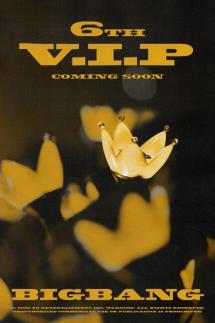 BIGBANG to reopen fan club after 11 years ahead of comeback SEOUL, May 02 (AJP) - K-pop boy band BIGBANG will recruit members for its official fan club, V.I.P, for the first time in 11 years ahead of the group’s 20th anniversary comeback, YG Entertainment said Saturday. The group unveiled a teaser poster for the recruitment of the sixth generation of V.I.P through its official social media channels on Friday. It marks the first official fan club drive since 2015. The poster features BIGBANG’s official light stick, known as Bang Bong, which symbolizes the bond between the group and its fans. Recruitment for the fan club will take place through BIGBANG’s official community on fan platform b.stage. “We prepared this new V.I.P membership round to communicate more closely with fans who have supported BIGBANG for many years,” YG said. “Please look forward to the new journey of the 20th anniversary that the artists and V.I.P will write together.” BIGBANG recently performed at the 2026 Coachella Valley Music and Arts Festival in the United States, where the group said it had completed preparations for a new album and plans to begin a world tour in August. Originally a five-member group, BIGBANG now works as a trio after Seungri left in 2019 amid the Burning Sun scandal involving a Seoul nightclub and T.O.P departed following the end of his contract with the agency. T.O.P, who later appeared in Netflix’s “Squid Game” Season 2, had previously been convicted of marijuana use. 2026-05-02 17:09:01
 -
 Iran War Risks Hormuz Strait Disruption, Exposing China’s Oil Import Dilemma When the tide goes out, what was hidden is exposed. A line attributed to the Chinese poet Su Shi has become a shorthand for what the Iran war is revealing about the global economy. In years of ample liquidity and optimism, the world rode a wave of growth. The shock of war has pushed that water back, exposing structural weaknesses. China, the world’s largest oil importer, is now at the center of that strain. Global outlets have pointed to early signs. The BBC recently reported that the war’s fallout is hitting China’s textile and apparel sector as oil prices surge. Polyester prices, tied to petroleum-based inputs, rose by about 20% in a short period, pushing up production costs. Factories in Guangzhou and Zhejiang have delayed orders or cut output because they cannot absorb higher costs. Some traders warned that “at this cost structure, global clothing price increases are inevitable.” The pattern is familiar: war lifts crude prices, and the shock moves from petrochemicals to textiles and then to consumer prices, underscoring how deeply modern industry depends on oil. The pressure is broader than textiles. The Financial Times and The Wall Street Journal have said Chinese manufacturing is facing a double hit from higher raw-material costs and logistics disruptions. The electric-vehicle sector, which has relied heavily on Middle East markets, has been unexpectedly hard hit. With shipping constrained, ports are filling with vehicles waiting to be exported, tightening cash flow. For some companies, where the Middle East accounted for 80% to 90% of exports, business has nearly ground to a halt. Demand may exist, but supply is blocked — a hallmark of a wartime economy. The economic shock is also becoming a diplomatic dilemma. China imports more than about 10 million barrels of crude oil a day, much of it from the Middle East and routed through the Strait of Hormuz. About 20% of the world’s oil shipments pass through the strait, making it a critical chokepoint. If it is blocked or becomes too risky, China would face not only higher prices but physical supply disruptions. China has built up strategic petroleum reserves, but the International Energy Agency has said stockpiles are only a short-term buffer, not a long-term solution. They may buy weeks or months, but they cannot replace the supply chain itself. At the same time, alternative sources such as Venezuela and Iran remain unstable because of sanctions and geopolitical risk. State refiners including Sinopec and Sinochem are also under pressure. When crude prices jump, refining margins become volatile, and government price controls can further squeeze profitability. International media have described the companies as moving into “crisis management mode,” a sign that the energy foundation of the broader economy is under strain. China is trying to maintain strategic cooperation with Iran while also strengthening economic ties with Saudi Arabia. It can expand purchases of Russian crude, but logistics and payment constraints remain. Energy supply chains are becoming more politicized amid strategic competition with the United States. Reuters reported that “China is positioning itself as a stable economic partner and a peace mediator, but in reality it is moving under the urgent interests of energy security.” Iran is not just a supplier. Its ability to influence the Strait of Hormuz is a strategic asset. Even without an actual blockade, the possibility can jolt markets, driving up prices, insurance costs and shipping risk. Energy, in this environment, is increasingly treated as a strategic asset tied to politics, security and diplomacy. Russia is another pillar. After Western sanctions, Russia built new markets by selling discounted oil to China and India. That can help China in the short term, but it also raises the risk of dependence on a narrower set of suppliers. As these moves intersect, the world is sliding into a cycle of “blockade and counter-blockade.” The next month is expected to test China’s ability to balance these pressures. If oil prices rise further, cost strains on manufacturers will intensify. If exports do not recover, inventories and debt could worsen at the same time. Domestic demand could also weaken under inflation pressure. International investment banks have been cutting their short-term growth forecasts for China. The article argues this should not be viewed as a routine business cycle. China’s growth model — low-cost production, stable supply chains and large-scale exports — is being shaken simultaneously by higher input prices, logistics disruptions and geopolitical risk. As the war drains away the water, the rocks underneath are becoming visible. China may try to ride out the immediate shock with stockpiles and diplomacy, but the longer-term tasks — reshaping its energy structure, diversifying supply chains and upgrading industry — are harder, and time is limited. The central question, the article concludes, is whether the crisis ends as a temporary shock or becomes a trigger for structural change.* This article has been translated by AI. 2026-05-02 16:39:23
 -
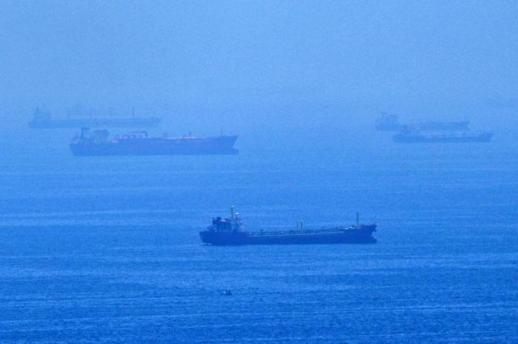 Seoul weighs role in Hormuz security efforts as US plan adds new variable SEOUL, May 02 (AJP) - South Korea is weighing how to contribute to multinational efforts to secure safe passage through the Strait of Hormuz, as a separate U.S.-led proposal adds another layer of complexity to ongoing discussions led by Britain and France. Military authorities have been taking part in talks on supporting the reopening of the key waterway after the war, starting with a virtual meeting of chiefs of staff hosted by France in March and followed by senior-level military discussions. Seoul has maintained that it is reviewing possible contributions. The discussions, involving around 40 countries, have produced broad agreement on the need for international cooperation to ensure freedom of navigation. The more difficult question is whether South Korea will deploy military assets. The Strait of Hormuz remains exposed to regional tensions and irregular threats. Operations to clear mines or protect civilian vessels could leave participating forces vulnerable to drone attacks and other asymmetric threats. The possible deployment of the Cheonghae Unit’s destroyer Dae Jo-yeong, or its replacement vessel Wang Geon, has been discussed, but caution remains strong within the military given the need to ensure troop safety. Domestic procedures also remain a key factor. If the Cheonghae Unit, currently deployed in the Gulf of Aden, is redirected to the Strait of Hormuz or given an expanded mission, parliamentary approval would be required. That means the issue would require not only a military decision but also political consensus. The government’s emphasis on a phased response plan appears to reflect these constraints. As an initial contribution, Seoul is expected to consider sending personnel and sharing intelligence. Options include dispatching liaison officers to a multinational command or strengthening information-sharing channels. Such steps would allow South Korea to respond to international calls for cooperation while minimizing the military burden. The U.S. proposal for a “maritime freedom” coalition has emerged as a new variable. If a separate U.S.-centered coalition takes shape alongside the existing UK-France-led initiative, Seoul may have to reassess how and where to participate. The government has refrained from making a formal announcement while continuing close consultations with Washington. Experts say the issue should be seen not simply as a question of troop deployment but as a broader diplomatic strategy. Seoul must balance cooperation with the U.S., given the importance of the alliance, with participation in a European-led multilateral security effort. Leaning too heavily toward one coalition could also create diplomatic risks, they say. The government is likely to first assess the details of the U.S. proposal and the level of international participation before deciding on the scale of its phased contribution. The deployment of military assets is expected to be considered only as a limited option at a later stage. However, pressure for more active military involvement could grow if the security situation in the Middle East deteriorates further or if disruptions in the Strait of Hormuz are prolonged. 2026-05-02 16:24:05
 -
 Seoul mayoral race: Poll lead holds, but undecided voters and turnout loom large Seoul’s political mood is hard to read. Poll numbers are moving, but many voters are holding back. The central dynamic in the race is this: public sentiment appears to be shifting, but many people still hesitate to vote. Recent published polling trends still show a gap, with candidate Jeong Won-o ahead and candidate Oh Se-hoon closing in. But reading the race only through charts is risky. The key is momentum. Oh’s gradual rise matters because small shifts can become the start of a turnaround. Against that backdrop, Jeong’s campaign was hit by a controversy over a promotional post citing a poll. The material was posted without required disclosure items such as the polling firm and survey period, then deleted at what critics called “the speed of light.” The episode left a political impression beyond a simple mistake. A front-runner needs steadiness, not haste, and the incident suggested a campaign in a rush. With similar disputes said to have occurred repeatedly, Jeong’s camp may struggle to avoid criticism of poor oversight. In politics, impatience can be costly. The more a candidate leads, the more composure voters expect. When a small error hardens into doubts about why a campaign is rushing, the contest can shift from numbers to psychology. For Jeong, the immediate need is tighter management, not more messaging. For Oh’s side, the moment creates an opening. Challengers start at a disadvantage, but they can benefit first when the race becomes unstable. If the opponent repeats mistakes, momentum can move without direct attacks. In that sense, elections can reward the side that holds steady when the other side wobbles. The biggest variable, however, may be undecided voters. In conversations with residents, a pattern keeps emerging: distrust of politics, fatigue with the two major parties, and signs of weakening willingness to vote. One resident described themselves as “undecided” while sharply criticizing certain political behavior. Yet when asked whether they would vote, the answer became uncertain. That reflects a slice of Seoul’s mood. This type of distrust-driven undecided voter could be decisive. They do not move easily, but when they do, they can shift the race. The risk is if they do not move at all: turnout falls, and the side with stronger organization gains an advantage. It is a democratic paradox — anger without action — and the article describes it as a warning sign. Intense political clashes and disputes over prosecutors and special prosecutors are also adding to fatigue rather than energizing voters, the article says. Instead of generating momentum through conflict, politics is widening cynicism. A typical result in such moments is a low-turnout election. The race, then, is not only about who leads in support. It is also about who can get more voters to the polls. A front-runner can stumble through complacency, and a challenger can flip the contest by seizing an opening. Meanwhile, undecided voters may delay their decision until the end. For now, the article concludes, sentiment in Seoul may be moving, but whether it turns into votes remains unclear — and the gap could close quickly depending on who bridges it first. * This article has been translated by AI. 2026-05-02 16:21:18
 -
 Pokémon leaps off screen as game IP craze paralyzes Seongsu SEOUL, May 02 (AJP) - Crowds are continuing to line up for a Pokémon pop-up event in Seoul’s Seongsu-dong on Saturday, a day after tens of thousands of fans packed the area and prompted organizers to suspend parts of the event just hours after it opened. The continuing turnout shows how game and animation intellectual property, or IP, is increasingly moving beyond screens into offline spaces, drawing massive crowds through pop-up stores and experience-based events. The event, held to mark the 30th anniversary of the Japanese animation and game franchise, drew large crowds from early morning as fans gathered for a pop-up store operated by Pokémon Korea. Authorities began receiving multiple reports around 10:30 a.m. that the area was becoming dangerously crowded. No injuries were reported. Pokémon Korea had opened the pop-up store in Seongsu-dong and held an event offering rare cards to visitors who participated in games. The promotion drew fans during the Labor Day holiday, while visitors to a Pokémon-themed garden installed at the nearby 2026 Seoul International Garden Show in Seoul Forest also added to the crowd. Photos and videos posted on social media showed narrow streets in Seongsu packed with people, with some users expressing concern over crowd safety. According to Seoul city estimates, the number of people in the Seongsu cafe street area rose from around 26,000 at 10 a.m. to about 40,000 by noon. The organizer suspended the event around noon at the request of Seoul city and other authorities. Some participants protested the decision, leading to brief disputes at the scene. Police officers were deployed to mediate and manage the crowd. The trend comes as pop-up stores have become a mainstream marketing channel in Korea. According to Sweet Spot’s 2025 Pop-up Trend Report, 3,077 pop-up stores were held across its network last year, up 109 percent from a year earlier. Seongdong District, which includes Seongsu-dong, accounted for 35.38 percent of pop-ups in Seoul. Sweet Spot also said more than 60 pop-up stores were operating in Seongsu-dong in a single week as of April 2026, showing how temporary retail events have become a regular feature of the district rather than one-off promotions. Cushman & Wakefield’s 2025 Seoul High Street Retail report said the district is evolving from a pop-up store hub into a flagship destination, recording the lowest vacancy rate among major commercial districts in Seoul. The shift also reflects the growing commercial value of character and content IPs. KOCCA’s latest annual report showed Korea’s content industry sales rose 2.6 percent to $112 billion in 2025, while exports grew 5.9 percent to $14.91 billion, driven in part by character businesses. 2026-05-02 15:05:19
 -
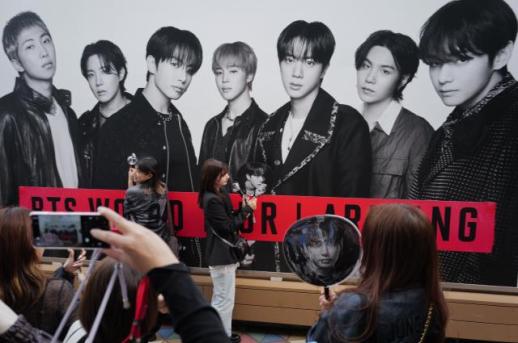 BTS’ ‘ARIRANG’ Holds U.K. Top 100 for Sixth Week; No. 4 on Billboard 200 BTS’ fifth full-length album, ‘ARIRANG,’ has stayed on the U.K. Official Charts Top 100 for a sixth straight week. According to Yonhap and other reports on May 2, ‘ARIRANG’ ranked No. 17 on the Official Albums Chart Top 100, down four spots from the previous week. The title track, ‘SWIM,’ placed No. 41 on the Official Singles Chart Top 100, down seven. The releases also remained on U.S. Billboard charts. ‘SWIM’ fell 10 places to No. 22 on the Hot 100, while ‘ARIRANG’ slipped three spots to No. 4 on the Billboard 200. HYBE said the album reflects BTS’ identity and universal emotions, combining traditional symbols with a modern sensibility to underscore the group’s message. BTS stepped up promotions in March with a large-scale comeback performance at Gwanghwamun Square in Seoul to mark the album’s release. Since April, the group has expanded global activities with the ‘BTS WORLD TOUR ARIRANG,’ including stops in Goyang and other cities. 2026-05-02 14:45:16
 -
 Chinese Diplomats Visit North Korea’s Border Region Near Planned Russia Bridge As North Korea and Russia push ahead with construction of a road bridge over the Tumen River, Chinese diplomats stationed in North Korea visited the North Korea-China-Russia border area to review local conditions. Yonhap News Agency and the Chinese Embassy in North Korea said Wang Chongling, a minister-counselor, led a delegation that visited North Hamgyong province and the city of Rason from April 25 to 30, inspecting five factories and exhibition facilities. The embassy said Wang’s group also visited the Wonjong-ri trading port in Rason for “survey, research and inspection” activities. Wonjong-ri is a key hub for North Korea-China trade and links to the Quanhe trading port in Hunchun, China’s Jilin province. Yonhap reported the trip included Jin Yanguang, China’s consul general in Chongjin, along with Jang Gwang-nam and Rim Gwang-ho, researchers at North Korea’s Foreign Ministry Asia 1 Bureau; Ri Jun-pil, head of Rason’s external affairs bureau; and Kim Song-chol, deputy head of North Hamgyong’s external affairs bureau. The visit came shortly after North Korea and Russia officially set out a completion schedule for the Tumen River road bridge. On April 21, the two countries held a ceremony in the border area to mark the bridge connection and accelerate the project. The bridge project was agreed at a June 2024 summit in Pyongyang between North Korean leader Kim Jong Un and Russian President Vladimir Putin. The two signed a “comprehensive strategic partnership treaty,” which took effect in December that year. The new bridge is designed as a two-lane, two-way structure about 800 to 850 meters long and 10 meters wide. It will be built about 400 to 415 meters downstream from the existing Tumen River rail bridge, built in 1951 and known as the Korea-Russia Friendship Bridge. The project is expected to strengthen overland links between the two countries and improve logistics efficiency.* This article has been translated by AI. 2026-05-02 13:54:17
 -
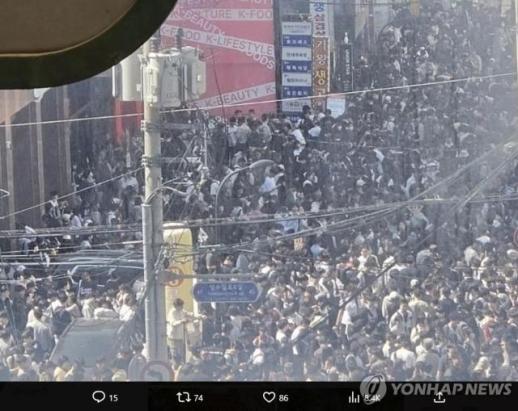 Pokemon Event Overwhelms Seoul’s Seongsu-dong, Highlighting the Power of Content On May 1, Seoul’s Seongsu-dong effectively ground to a halt. Streets filled with people, mobile service nearly failed, and routine movement became all but impossible. Some posted warnings not to head toward Seongsu; others complained they could not get online. It was not an accident or a disaster. The cause was simple: a Pokemon event. Many people’s first explanation is nostalgia: a childhood character and storyline returned, drawing crowds. That is part of it, but not the whole story. Pokemon is not just a legacy brand. It remains a growing industry, expanding through new games, animation and merchandise. Children and teenagers still consume it, while adults return with their memories. When two generations move at once, the pull goes beyond a passing trend. The crowd in Seongsu-dong cannot be reduced to a single motive. Some came for childhood memories, some for games they play now, and others because it was “the hottest place” at the moment. With those drivers operating at the same time, the turnout swelled faster and larger than expected. A key point emerges: modern content is increasingly built to mobilize all ages at once. Event design amplified that effect. This was not a simple exhibition. It used a participatory route: visit specific spots, collect stamps and receive rewards. The model has already been proven worldwide through Pokemon GO. Games no longer stay on a screen; they pull people into the streets and make them move through real space. In that process, the city becomes a play space, not just a backdrop. Viewing the surge as a spontaneous wave misses what happened. The outcome was planned: where people would gather, how they would move and where spending would occur. Routes, rewards and even time on site were designed. The Seongsu-dong crowd was not accidental but a “planned crowd,” reflecting how the content industry has moved beyond storytelling to shaping behavior. The scene also showed a modern feature of mass gatherings. Thousands shared the same space, yet interaction was limited. Most stared at smartphone screens, completing individual missions. It looked like a festival, but it was a collection of individual actions. Where older festivals connected people to one another, many current events connect people to content. People are together, but also alone. The pattern is not unique to South Korea. In 2016, in New York’s Central Park, thousands rushed in after word spread that a rare character appeared soon after Pokemon GO’s release. News reports showed cars stopping and people running out. Tokyo has seen similar scenes: long lines at Pokemon events and congestion serious enough to require police control. Content-driven movement has become a global phenomenon. Comparable cases appear in other industries. U.S. streetwear brand Supreme draws long lines on release days. Scarcity and the value of the experience lead consumers to line up not only to buy, but to participate. Apple also draws lines for new product launches. The common thread is demand for an experience, and that experience is often designed by companies. Problems arise when the structure scales too far. Crowds can signal economic vitality: local businesses benefit and a city’s brand value can rise. But beyond a certain point, the picture changes. Traffic locks up, communications fail and safety risks grow. At that moment, it stops being a festival and becomes a hazard. That raises the question of responsibility. When such situations occur, criticism often focuses on city management. Public authorities matter; police and local governments must control crowds and secure safety. But the starting point should be clear. The city did not create the demand; companies did, by planning events and rewards. The social costs that follow should also be shared by companies to some degree. In the current structure, companies take the gains while cities and residents bear congestion and risk. As content grows more influential, the imbalance could worsen. Companies, the argument goes, should not stop at attracting crowds; they should design responsibly, including capacity limits, dispersing routes and safety management. Such episodes are likely to become more frequent and larger. Content is getting stronger, social media spreads faster and people move more easily. A single event changing a city’s flow is no longer an exception. It reflects a shift in industrial structure, not just culture. What happened in Seongsu-dong leaves a question: Is it merely popularity, or a new structure that must be managed? Content is already moving the real world, and its influence is growing. In the end, what was on display was not just Pokemon. It was a system: content gathers people, people reshape space, and the result can shake a city’s functioning. If that system is not understood, the same scenes will repeat. Seongsu-dong stopped for a simple reason: too many people arrived. More precisely, they arrived because the event was designed to bring them there.* This article has been translated by AI. 2026-05-02 12:29:13
 -
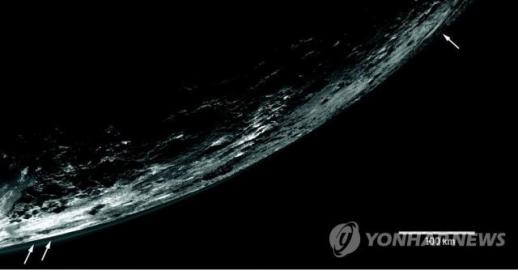 Why Pluto’s Planet Status Debate Still Resonates in U.S. Politics Pluto’s long-running status fight has moved well beyond astronomy. In 2006, the International Astronomical Union redefined what counts as a planet and reclassified Pluto as a dwarf planet. The decision followed scientific criteria, yet the argument keeps returning in ways that science alone does not explain. National memory and identity have helped keep Pluto at the center of public debate. Pluto was discovered in 1930 by American astronomer Clyde Tombaugh. For many Americans, that fact carried meaning beyond a line in a scientific record: Pluto was remembered as the only planet discovered by an American, a symbolic U.S. achievement in space. With Europe long dominant in astronomy, the discovery became a source of national pride, and Pluto came to be seen as part of “a world the United States discovered.” Against that backdrop, the IAU’s 2006 decision triggered an especially emotional reaction in the United States. The change was about scientific standards, but many people felt “our discovery” had been downgraded by outside rules. The IAU did not target any country, but when scientific judgments collide with public sentiment, the debate can take on a different meaning. Over time, those feelings began to merge with political language. Donald Trump’s “Make America Great Again,” or MAGA, became more than a campaign slogan, shaping a broader mood about restoring a past order. The phrase works less as a detailed policy program than as an appeal to emotion, mixing anxiety about lost standing with a desire to reclaim it. Pluto has increasingly been pulled into that frame. NASA Administrator Jared Isaacman recently used the phrase “Make Pluto a Planet Again,” linking the dispute to political symbolism rather than a neutral scientific review. The wording echoes MAGA, recasting Pluto as something to be “taken back.” Arguments for restoring Pluto’s planet status are not necessarily unscientific. Debate over how to define a planet continues within the scientific community. Some researchers argue that instead of an orbit-centered definition, classification should be based on geological features and internal structure. Under that approach, Pluto could be considered a planet again. Reducing the issue to emotion or politics alone does not reflect the full scientific discussion. Still, the way the dispute reaches the public is different. For many people, Pluto is not a technical category but the “ninth planet” they learned about in school. That memory is part of how they organize their understanding of the solar system. A nine-planet model is easy to grasp and feels like a stable order. Scientists, however, did not remove Pluto to make the world more complicated. They acted to manage complexity. As more Pluto-like objects were found in the outer solar system, keeping the old standard could have expanded the number of planets into the dozens. The definition was reset to prevent that outcome. In that sense, science was not embracing complexity so much as trying to preserve a workable system through a new kind of simplification. That helps explain the clash: the public’s nine-planet memory and the scientific classification system represent different simplification strategies. One favors recall and familiarity; the other favors theoretical consistency. Pluto’s controversy grows where those approaches collide. It is not appropriate to treat the Pluto dispute as a case of science denial. Unlike climate change or vaccines, Pluto’s status is not a fight over objective facts but over classification standards. But the debate does highlight a pattern: when scientific arguments are translated into political language, complexity can vanish, leaving only a simple message. “Make Pluto a Planet Again” may be an effective slogan, but it can also flatten the issue and pull it into the realm of emotion. Science is typically slow and complex; political language is fast and intuitive. Where the two meet, the risk of distortion is always present. In the end, the question raised by Pluto’s status is straightforward: Do people try to understand the world as it is, or reshape it into something easier to grasp? The issue is not limited to astronomy. Similar tensions appear across technology, economics and politics. Pluto still circles the outer solar system. Its orbit and physical properties have not changed. What has changed is the standard used to describe it, and the interpretation attached to that standard. Those judgments are shaped not only by data but also by social context, emotion and, at times, political language. Whether Pluto is called a planet again may not be the most important point. Why the question keeps returning is not trivial. Understanding that helps clarify how science, society and human perception intertwine. The Pluto debate, in that sense, is not only about a small celestial body. It is also about discovery, definition and ownership: Who discovered something, who sets the rules, and who accepts them. The same structure appears in today’s global disputes, from semiconductor rules and artificial intelligence ethics to energy supply chains. From far away, Pluto continues to pose a basic question: What do people want to reclaim, and where does that desire come from? As long as that question remains, Pluto is likely to keep returning to public attention. 2026-05-02 12:27:18