
Journalist

Lee Hugh
=
-
 Japan Intervenes in FX Market for First Time in 22 Months; Media Estimate 5 Trillion Yen Buy Japan moved to support the yen by intervening in the foreign exchange market, selling U.S. dollars and buying yen. It was Japan’s first market intervention in about 22 months, since July 2024, when the yen-dollar rate rose to 161.7 yen. Kyodo News and other foreign media reported on May 1, citing a Japanese government official, that the government intervened on April 30. Japanese media, based on projections for the Bank of Japan’s current account balances, estimated the yen-buying operation at 5 trillion yen (about 47 trillion won). A Finance Ministry official declined to answer direct questions about intervention. Asked whether the ministry still believes speculative moves are continuing in the currency market, the official said, “Yes.” On cooperation with the United States, the official said Japan is “in close contact, sharing our understanding of the situation and our actions.” A day earlier, Japan’s currency authorities warned that “decisive action” against yen weakness was imminent, saying it was a “final warning.” After the strong verbal warning, the yen strengthened sharply, with the yen-dollar rate falling from around 160 yen to about 155 yen. The rate remained volatile on May 1, trading around 157 yen before slipping back into the 155-yen range around 4 p.m. Japan last intervened in July 2024, when the operation totaled 5.5348 trillion yen (about 52 trillion won) over two days.* This article has been translated by AI. 2026-05-01 19:54:17
 -
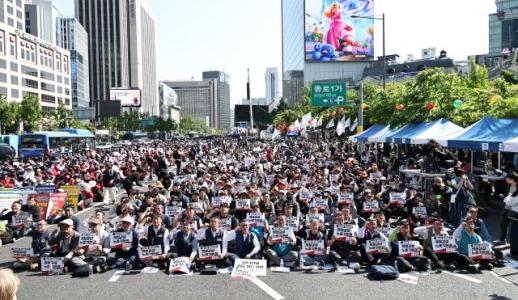 Korea’s Two Biggest Labor Federations Rally on First Labor Day Holiday, Seek Stronger Rights Large labor rallies were held across central Seoul on May 1, Labor Day, as unions marked the first Labor Day since it was designated a public holiday for the first time in 63 years. The country’s two biggest labor federations called for stronger protections for workers’ basic rights. The Federation of Korean Trade Unions (FKTU) held a Labor Day event in Yeouido, while the Korean Confederation of Trade Unions (KCTU) staged its rally near Gwanghwamun Station. At the FKTU’s “136th World Labor Day Commemoration: National Workers’ Rally,” Chairman Kim Dong-myeong said the spread of artificial intelligence is reshaping jobs and that the climate crisis and industrial transition are changing how people work. He said the federation would pursue a “just transition” in which labor is not excluded and participates in decision-making. KCTU Chairman Yang Kyung-soo, speaking at the “2026 World Labor Day Rally,” said Labor Day had “regained its name,” but added, “I couldn’t come with an unconditionally happy heart.” He called for basic labor rights to be guaranteed through laws and institutions and urged workers to unite through unions to withstand what he described as capital’s offensive. The KCTU also issued a resolution saying the rights guaranteed under the constitution’s three basic labor rights, the Labor Standards Act and the Trade Union Act are not properly ensured for more than 10 million nonregular workers. It said it would push to make a general strike in July a success and to win direct bargaining with prime contractors.* This article has been translated by AI. 2026-05-01 18:21:17
 -
 Crowds Jam Seoul, Highways and Incheon Airport as 5-Day Holiday Begins; Pokemon Event Halted Crowds surged across Seoul, on expressways and at Incheon International Airport on the first day of a holiday stretch that can run as long as five days. In Seongsu-dong in Seoul’s Seongdong district, a 30th anniversary event for the Japanese anime and game franchise “Pokemon” drew such heavy foot traffic that police and firefighters were dispatched over safety concerns. According to the game industry, Pokemon Korea opened “Pokemon Mega Festa 2026” in the Seongsu area to mark the 30th anniversary of “Pokemonster.” Large crowds arrived early, and with Seongsu already busy on weekends, the influx intensified congestion. At one point, the Seoul city government estimated about 40,000 people in the Seongsu cafe street area. Police received multiple reports warning that the crowd could lead to an accident. No injuries were reported, but organizers canceled events in stages starting around noon to prevent accidents. When the planned distribution of commemorative gifts was also halted, some visitors who had waited for a long time protested at the site. Pokemon Korea said on its official social media accounts, “The event has been canceled for on-site safety reasons,” adding that it would provide the gifts online later. It urged those who meet the requirements to “go home without worry.” Holiday travel also brought heavy congestion on highways nationwide. At one point in the morning, the estimated travel time from Seoul to Busan rose to as much as 8 hours 40 minutes. The Korea Expressway Corp. had forecast 6.05 million vehicles on expressways nationwide for the day. With more overseas travelers, long lines formed for boarding procedures at Incheon International Airport. The government projected about 1.3 million people would pass through the airport from the previous day through Children’s Day on May 5. With nearby countries including Japan and China also observing holiday periods this weekend, more international travelers are expected to enter South Korea via Incheon, the report said. A Justice Ministry official said authorities will implement special staffing measures for immigration screening to prepare for a sharp rise in travelers. The official said major departure screening areas will open 30 minutes earlier, and special mobile teams and emergency standby units will be assigned to support immigration processing.* This article has been translated by AI. 2026-05-01 17:54:20
 -
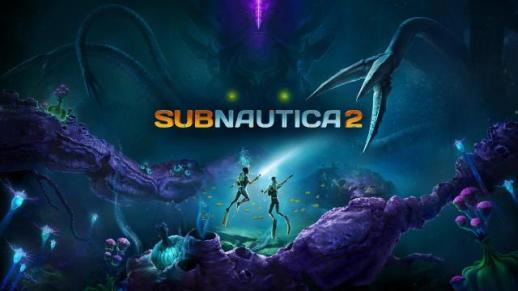 Krafton's Unknown Worlds sets May 14 early access launch for Subnautica 2 SEOUL, May 01 (AJP) - Unknown Worlds Entertainment, the creative studio under South Korean gaming giant Krafton, confirmed that its underwater survival sequel Subnautica 2 will enter early access on May 14 for PC and Xbox Series X|S, priced at $30. The title has held the top spot on Steam's global wishlist ranking for about nine consecutive months since September 2025, amassing an estimated 3.8 million wishlists and cementing its status as one of the most anticipated games of 2026. A new cinematic trailer released alongside the announcement showcased the game's alien ocean ecosystem and its survival mechanics. Built on Unreal Engine 5, Subnautica 2 transports players to an uncharted alien planet and introduces four-player cooperative gameplay for the first time in the franchise's history. The series' predecessor, released in 2018, has sold more than 18.5 million copies worldwide and is widely regarded as a benchmark in the survival genre. "We will actively engage with players throughout the early access period and refine the game together," said Ted Gill, chief executive of Unknown Worlds. The launch comes after a turbulent chapter in the game's development. Krafton ousted Gill and studio co-founders in July 2025 and delayed the release from its original 2025 window, triggering lawsuits and a court order that reinstated Gill as CEO earlier this year. The former developers alleged the shakeup was aimed at avoiding a $250 million earnout payment tied to the game's delivery. Industry observers say the early access performance of Subnautica 2 will serve as a critical test of Krafton's push to diversify beyond its flagship PUBG franchise, particularly in Western markets where the Subnautica brand commands a loyal following. 2026-05-01 17:16:38
 -
 Investigators Suspect Gas Explosion in Uiwang Apartment Fire That Killed 2 Authorities said a gas explosion is the leading suspected cause of an apartment fire in Uiwang, south of Seoul, that killed two people and injured six others. Police, fire officials and the National Forensic Service inspected the unit on the 14th floor where the fire started and confirmed the kitchen gas valve was open, officials said. With no flammable materials found at the scene, they are presuming the blaze was triggered by a gas explosion. The fire broke out with an explosion about 10:30 a.m. the previous day in the 20-story apartment building with one basement level. A man in his 60s who lived in the 14th-floor unit, identified only as A, died after falling. His wife, in her 50s, was found dead in a bathroom. Authorities believe she had already died before the fire. Six other residents suffered minor injuries, including smoke inhalation. After receiving the report, fire authorities issued a Level 1 response and deployed about 30 pieces of equipment and about 110 personnel. The fire was fully extinguished about two hours later, at 12:35 p.m. A note was reportedly found on A’s clothing describing personal despair, including financial hardship.* This article has been translated by AI. 2026-05-01 16:57:07
 -
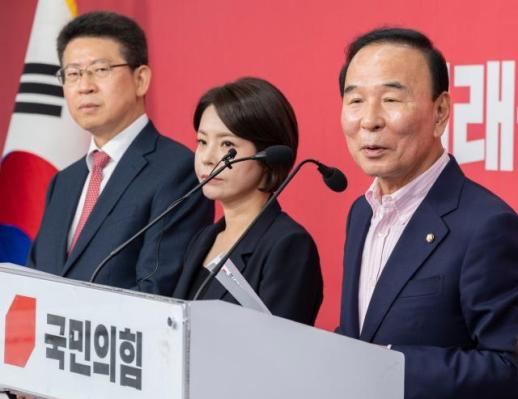 People Power Party Nominates Lee Jin-sook, Lee Yong for June 3 By-elections; Park Min-sik to Face Primary The People Power Party on April 30 finalized candidates for seven of the districts holding June 3 parliamentary by-elections, including Daegu Dalseong. Lee Jin-sook, who previously served as chair of the Korea Communications Commission, was nominated in Daegu Dalseong, and Lee Yong, a former lawmaker, was nominated in Gyeonggi Province’s Hanam Gap. The party put nominations on hold in South Chungcheong’s Gongju-Buyeo-Cheongyang, where Chung Jin-suk, who previously served as presidential chief of staff, applied. The party’s nomination committee met at headquarters in Seoul’s Yeongdeungpo district and approved screening results for eight by-election districts. It decided on single-candidate nominations for Lee in Daegu Dalseong; Park Jong-jin, head of the party’s Incheon chapter, in Incheon Yeonsu Gap; Shim Wang-seop, chairman of the Environmental Landscaping Development Foundation, in Incheon Gyeyang Eul; Ahn Tae-uk, who previously led the party’s Gwangju chapter, in Gwangju Gwangsan Eul; Kim Tae-gyu, who previously served as vice chair of the Korea Communications Commission, in Ulsan Nam Gap; Lee Yong in Hanam Gap; and Ko Gi-cheol, head of the party’s Jeju chapter, in Jeju Seogwipo. In Busan Buk Gap, where former party leader Han Dong-hoon is running as an independent, the party said its nominee will be chosen through a primary between Park Min-sik, who previously served as minister of patriots and veterans affairs, and former KBS reporter Lee Young-pung. In Gongju-Buyeo-Cheongyang, seven people applied for the nomination, including Chung. The committee said it would suspend screening after an objection was filed. Committee chair Park Deok-heum said the matter was being handled through party ethics procedures and that a final decision would be made on May 7. The party also said it would reopen applications in North Jeolla’s Gunsan-Gimje-Buan district. The party accepted applications for the by-elections on April 30 and announced single-candidate picks a day later. While it had initially emphasized primaries, only one of the eight districts will hold a primary under the plan announced Friday. The nominations also included figures some classify as aligned with former President Yoon Suk Yeol, prompting renewed debate over a so-called “Yoon again” push. Kim Hyun-jung, floor spokesperson for the Democratic Party, said in a written briefing that the People Power Party had promised to break with the Yoon Suk Yeol government but was “returning to ‘Yoon again,’” and urged the party to “clear out” those forces if it was serious about reform. Asked about the controversy, Park said he was not sure “who is ‘Yoon again,’” adding that the party selected candidates with strong overall results based on document reviews and interviews. Separately, the committee nominated incumbent Mayor Lee Beom-seok for the North Chungcheong city of Cheongju. It said it would reopen recruitment for mayoral candidates in Siheung, Gyeonggi Province, and Jeonju, North Jeolla Province. The single-candidate recommendations announced Friday will be finalized after approval by the party’s supreme council.* This article has been translated by AI. 2026-05-01 16:18:19
 -
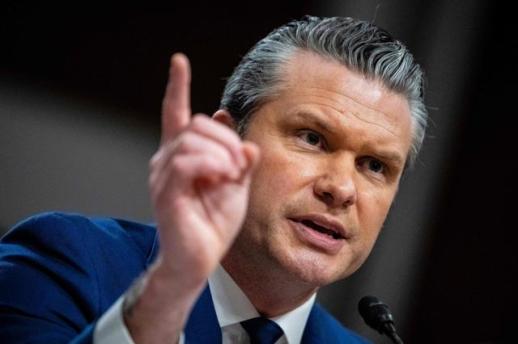 U.S. Tests Its Own War Rules as Trump Administration Cites Iran Ceasefire Wars are often launched in the name of principle, but when major powers act, they can also reshape the meaning of order itself. That is the argument now surrounding the Trump administration’s approach to the Iran war and its claim that military action can remain legitimate even at the edge of U.S. law and international norms. At the center is the War Powers Resolution, which requires a president to end military action within 60 days or obtain congressional approval if Congress has not authorized it. The Trump administration argues that the “60-day clock” stops during a ceasefire with Iran. Defense Secretary Pete Hegseth told a Senate hearing that “in a ceasefire, the 60-day count is paused.” Criticism has been sharp. Opponents question how continued maritime blockade and military pressure can be treated as a nonwar situation. Under international law, a blockade is widely regarded as an act of war. In Washington, skepticism has come not only from Democrats but also from some Republican lawmakers. The administration’s position, however, is framed as strategic rather than simply dismissive of legal limits. Washington does not describe the situation as a new war of aggression. In its view, Iran is not only a Middle Eastern state but a strategic factor that could threaten the Strait of Hormuz, a key artery for global energy flows. If the strait is destabilized, the broader international economy could be jolted. The United States casts its actions not as a regional fight but as a deterrence operation to protect maritime order and energy security. The logic is straightforward: “If we do not act, the global economy will pay a higher price.” Trump allies also argue that today’s security environment differs from the Cold War era. Cyberattacks, drones, asymmetric capabilities and threats of maritime blockade can disrupt markets and supply chains within hours. In that setting, they say, waiting for extended congressional debate and approval does not match reality, and the president needs the ability to act quickly as commander in chief. U.S. constitutional practice has long moved in that direction. After the Vietnam War, Congress passed the War Powers Resolution to limit presidential authority. Yet subsequent presidents repeatedly carried out military operations in Libya, Syria, Iraq and Afghanistan without an explicit congressional declaration of war, reflecting how U.S. power has often moved faster than statutory language. That history also helps explain international unease. Critics say the United States condemns power politics by China and Russia while seeking to exercise “exceptional authority” itself. Washington’s view is different: It sees itself not merely as another country but as the ultimate guarantor of the international order — both subject to rules and responsible for acting to prevent their collapse. That is a central dilemma of U.S. hegemony today. Markets, meanwhile, are already pricing in the costs. Oil prices and shipping rates have been unstable, and supply-chain risks are rising again. Economies heavily dependent on energy imports, such as South Korea’s, are especially sensitive. Central banks are again being pushed into difficult choices between inflation and slowing growth. Even so, the United States has not backed down. Washington fears costs larger than those already visible. If a perception spreads that the United States cannot control risks around the Strait of Hormuz, confidence in the dollar system and in the credibility of the U.S. security umbrella could be shaken. That, the argument goes, is why the Trump administration is maintaining a hard line despite congressional disputes and international legal criticism. The core issue is not only whether the actions are legal. International order is not sustained by norms alone. Rules without power can become mere declarations, while power without rules can slide into arrogance. The United States is now walking that boundary — and the global economy is being buffeted by the strain. * This article has been translated by AI. 2026-05-01 15:33:23
 -
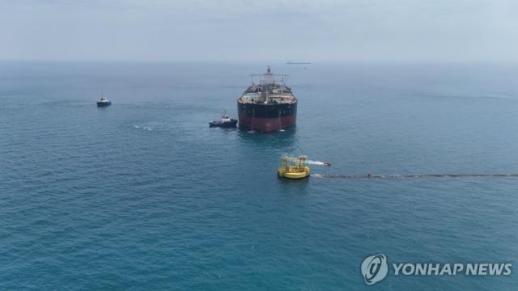 Hormuz Strait Blockade: Iran, U.S. ‘Counter-Blockade’ and China’s Calculus To understand Iran, its supporters argue, it is not enough to look at a single chokepoint on a map. They frame Iran through history: control of routes, trade flows and the rules that govern them. In that telling, today’s Strait of Hormuz is a modern version of an older idea — that whoever holds the passage can shape the price. That view surfaced recently in remarks attributed to some in Iran’s parliament, including a proposal to “buy oil passing through Hormuz at $110 and sell it at $200.” The point, in this framing, is not a market trade but leverage: a geopolitical claim that control of the route can translate into control over pricing. The article likens the approach to two historical methods of extracting wealth: charging passage fees at narrow corridors and profiting from intermediary trade by resetting prices at strategic hubs. It argues that Iran’s implied “toll” is broader than cash, extending to currency choice, payment systems and financial sovereignty — with references to the dollar, yuan, euro and rial as part of an effort to diversify settlement. By the numbers, the logic rests on Hormuz’s role as a major artery for global seaborne oil shipments, with more than 20% passing through the strait. Alternative routes exist, the article says, but cannot fully replace it in the short term. The problem, it adds, is that what appears coherent in theory may be difficult to sustain in practice. Unlike the past, when the counterpart might have been private merchant caravans with limited means of retaliation, today’s counterpart is states — including the United States, major industrial powers and global naval forces — operating under international legal norms and backed by tools ranging from financial sanctions to military action. That is where the U.S. concept of a “counter-blockade” comes in, the article says: an attempt to close Hormuz would collide with efforts to force it open. It argues the United States has the capability, if needed, to reopen the passage militarily, and that the broader structure of maritime insurance, financial settlement and global shipping could make a prolonged blockade self-defeating. The longer disruption lasts, it says, the more strategic petroleum releases and alternative supply arrangements accelerate, potentially weakening the strait’s long-term strategic value. The article says the “$200” figure captures the dilemma: prices rise when supply is constrained, but constraining supply can trigger swift international responses that drain leverage. It draws a historical parallel, arguing that excessive tolls have repeatedly encouraged the search for new routes. Turning to the present, the article says these dynamics are already being tested. In 2026, it describes the Strait of Hormuz as moving beyond a symbol of tension into a theater where control, blockade and counter-blockade operate at the same time. It says Iran is selectively opening and closing the strait to control passage, while the United States is responding by blocking ships that enter and leave Iranian ports. The article says traffic has fallen noticeably. Some vessels have turned back or rerouted, and some have moved with signals turned off — described as “shadow sailing.” It says oil prices jumped in the short term, with knock-on effects in financial markets and marine insurance. Iran’s approach, as described, is not to cut the route entirely but to maximize uncertainty — letting some ships pass while stopping others — to influence both prices and fear. The article argues the U.S. response seeks leverage without directly closing the strait, portraying it as a contest in which Iran holds the “entrance” while the United States tightens the “exit” by targeting access to Iranian ports. China’s role, the article says, adds another layer. It describes China as friendly to Iran but also the world’s largest energy importer, leaving it exposed to prolonged instability. In that view, China neither fully backs Iran nor fully aligns with a U.S.-led order, instead pursuing what the article calls a dual strategy: cooperation on payment systems while pushing diversification in supply chains. The article concludes that Iran, the United States and China are pursuing the same objective — dominance over routes — through different means: physical control, military and financial order, and payment and supply-chain leverage. It argues the central question is not missiles and guns but who can open or close the route and set the cost — and says the answer remains unsettled.* This article has been translated by AI. 2026-05-01 15:21:18
 -
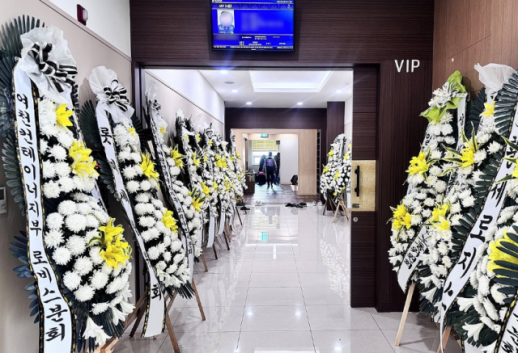 Funeral Begins for Cargo Truckers Union Member Killed at Jinju Logistics Center Rally Funeral rites began May 1, Labor Day, for a Cargo Truckers Union member who died at a rally outside the BGF Logistics CU distribution center in Jinju, South Gyeongsang Province. Yonhap News Agency reported that the South Jeolla headquarters of the Korean Confederation of Trade Unions set up a memorial altar that afternoon at a funeral home in Suncheon, South Jeolla Province. The start of the funeral came 11 days after the union member was killed April 20 when struck while trying to block a transport vehicle at the rally. It also coincided with the first Labor Day designated as a legal public holiday by the Ministry of Employment and Labor. The funeral is being held as a joint labor and civic society service, with the memorial altar to remain open through May 3. To honor the deceased, the union will hold a memorial cultural event at 7 p.m. May 2 on a road near the funeral home. About 500 union members and residents who knew the person are expected to attend, with eulogies and performances by labor singers planned. The funeral procession is scheduled for the morning of May 3. After cremation in Gwangyang, South Jeolla Province, the remains are to be buried at the Mangwol-dong National Cemetery for Democratic Martyrs in Buk District, Gwangju.* This article has been translated by AI. 2026-05-01 14:42:16
 -
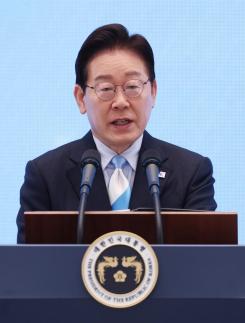 Lee Jae-myung says voice phishing losses down, vows to push toward zero President Lee Jae-myung, citing recent reports that voice phishing losses have fallen, said it was "truly fortunate" that public losses dropped in a short period and praised government workers for their efforts. In a post Thursday on X, formerly Twitter, Lee shared a news report saying voice phishing losses in January-March fell 45% from a year earlier, attributing the decline to results from arrests focused on higher-level figures. "This is thanks to the dedication of frontline public officials, including the police, the National Intelligence Service and the Foreign Ministry," Lee wrote. "You worked hard. Thank you." He added, "We should work a bit more until losses reach zero," and asked the public to encourage civil servants, saying they would do so. In March, Lee told aides in a meeting that voice phishing was one of the "seven major abnormalities" and ordered swift implementation of measures to eradicate the crime.* This article has been translated by AI. 2026-05-01 14:39:16