
Journalist

Lee Hugh
=
-
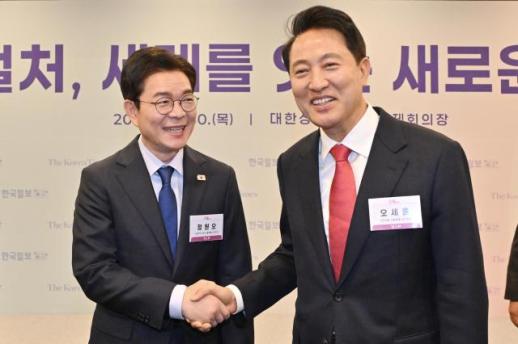 Seoul mayoral rivals Jeong Won-oh and Oh Se-hoon roll out Labor Day pledges On April 30, a day before Labor Day, Seoul mayoral candidates Jeong Won-oh of the Democratic Party and Oh Se-hoon of the People Power Party released labor pledges as they sought support from workers. Jeong said, “If Seoul runs on labor, the city government must also take responsibility for the time of working citizens,” as he unveiled proposals centered on expanding flexible work arrangements and supporting paid sick leave for freelancers. Under the banner of “Seoul, a special city that respects labor, rebuilt with the voices of working citizens,” Jeong said his plan aims to improve work-life balance and strengthen the right to rest when sick. He pledged to expand flexible work options — including work-from-home, remote work and staggered hours — as part of a “30-minute commute city” initiative, and to introduce paid sick leave for vulnerable workers such as freelancers and the self-employed. Jeong said May 1 would be “the first day to greet the holiday under the name ‘Labor Day’ for the first time in 63 years,” explaining why he chose to announce the pledges then. He also said he visited the Sinjeong rail depot and the Yangcheon public bus garage early that morning to meet subway and bus workers, and later laid flowers at a Jeon Tae-il statue near Cheonggyecheon. “I will carry the labor sites I met at dawn today and Jeon Tae-il’s dream into Seoul’s policies,” he said. Oh visited the Gasan Digital Complex (G-Valley) in Geumcheon-gu, Seoul, where he had lunch with young office workers and heard their concerns, while releasing his labor pledges in writing. “Your ordinary day, lived diligently, is Seoul’s future,” Oh told workers, adding, “I will work to build workplaces where the value of labor is respected and fairness and coexistence are firmly established.” Oh’s proposals focused on strengthening the safety net for vulnerable workers and addressing on-the-job problems. He pledged “hospital living-cost support” to ease financial strain during hospitalization, expanded tailored health checkups for workers in health blind spots, and a safety support system for small workplaces. He also pledged to expand late-night “owl bus” routes to help about 200,000 late-night workers in their 20s and 30s, and to provide once-a-year support for psychological counseling services and the cost of special health screenings for night work. He said the city would newly introduce a “late-night in-home caregiving service” for families facing care gaps because a guardian works nights. “Seoul must be a strong fence so the vulnerable can stand back up without despair,” Oh said. “I will 반드시 resolve the reality of not being able to rest when sick and the problem of not being able to focus at work because of caregiving worries, and make this a city where labor is respected.” The two candidates also continued sparring over real estate policy. In a statement, Jeong’s camp said Oh’s side blames a housing supply cliff on former Seoul Mayor Park Won-soon, but argued the real cause was that residents lifted redevelopment district designations made indiscriminately during Oh’s time as mayor. Jeong’s camp added, “Seoul citizens gave Oh four chances, but all that came back was a loud, empty cart.” Oh’s camp again raised controversy over remarks by President Lee Jae-myung about abolishing the long-term holding special deduction. Asked about the deduction while presenting his second pledge, Oh said, “Even the Democratic Party says it has never discussed it at the party level, but Jeong is taking the same position as the president.” He added, “I have serious doubts whether, as a Seoul mayoral candidate, he can ease anxiety about an issue many Seoul citizens are concerned about,” escalating his criticism.* This article has been translated by AI. 2026-04-30 18:54:22
 -
 Pension Lottery 720+ Draw 313 Numbers Awaited as Winner Story Draws Attention "A long time ago, an ancestor appeared in my dream and gave me lottery numbers, but I thought, 'No way,' so I didn't buy them — and I actually missed the first prize." As interest builds in the Pension Lottery 720+ Draw 313 winning numbers on April 30, a winner's account from Draw 293 has drawn attention. The person won with one first-prize ticket and four second-prize tickets, according to a post on Donghaeng Lottery's winners' bulletin board. The winner said they buy Lotto and Pension Lottery tickets whenever the thought occurs. While working, they happened to see a lottery retailer and bought tickets as usual. They said they had been struggling with a recent problem and suddenly remembered they had not checked their tickets, so they checked the numbers right away. "It turned out I won both first and second prizes at the same time, and I couldn't believe it, so I checked again and again," the winner wrote. They recalled a past experience in which an ancestor appeared in a dream and gave Lotto numbers, but they did not buy them and later missed the first prize. "After that, nothing seemed to go well, and I wondered if my ancestor was angry that I let the chance pass," the winner said. "With this win, it feels like I've been given another opportunity, and I'm grateful." The winner said the ticket was purchased at a lottery shop in Danwon-gu, Ansan, Gyeonggi Province. Asked what they usually buy, the winner said they purchase Lotto and Pension Lottery tickets in small amounts. They said they plan to use the winnings to repay loans and buy a home. The Pension Lottery 720+ Draw 313 winning numbers will be available after 7:05 p.m. today (30).* This article has been translated by AI. 2026-04-30 18:51:17
 -
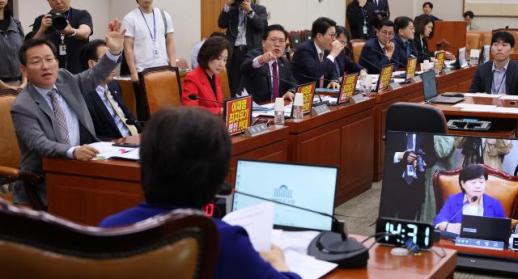 Korea parliamentary probe ends; Democrats introduce special counsel bill, PPP pushes back A National Assembly special committee investigating allegations of politically driven, fabricated indictments under the Yoon Suk Yeol administration effectively wrapped up its work on April 30, 42 days after it began, as the Democratic Party-led panel adopted its final report. The committee also voted to file complaints against 31 people on allegations including perjury. After the committee ended, the Democratic Party said it would “realize judicial justice” and introduced a special counsel bill. The People Power Party countered that “judicial justice has been damaged” and separately filed complaints against four hearing witnesses. With the ruling party planning to process the special counsel bill next month, clashes between the parties are expected ahead of the June 3 local elections. At a full meeting, the committee approved a report summarizing more than 40 days of work, including three agency briefings, two on-site inspections and four hearings. The committee ended its activities eight days earlier than the date stated in its plan (May 8). The panel approved an agenda item to file complaints against 31 people — including prosecutor Park Sang-yong, who investigated the Ssangbangwool North Korea remittance case, and former Ssangbangwool Chairman Kim Seong-tae and former Vice Chairman Bang Yong-cheol — on allegations such as perjury, refusing to take an oath or testify, and failing to appear. Complaints sought by the People Power Party against National Intelligence Service Director Lee Jong-seok and acting head of the Seoul High Prosecutors’ Office Jeong Yong-hwan were rejected. With the parties unable to narrow differences over the report and the complaint list, the People Power Party declared the meeting disrupted. It also filed perjury complaints on its own against four people it said it could report directly: KH Group Vice Chairman Cho Kyung-sik, former Gyeonggi Province Peace Vice Governor Lee Hwa-young, attorney Nam Wook, and one National Intelligence Service employee. People Power Party members of the committee criticized the ruling party at a news conference. Rep. Kim Hyeong-dong, the party’s floor spokesperson on the panel, said, “They say through this investigation that our judicial system is very solid and safe — so what is the purpose of shaking it?” Rep. Yoon Sang-hyun said the Democratic Party “failed to prove the reality of prosecutorial coercion and fabricated indictments,” adding, “Please do not turn the National Assembly into a ‘bulletproof factory’ that wipes away crimes.” The Democratic Party, citing the committee’s findings, introduced a “fabricated indictment” special counsel bill on April 30, saying it would set the justice system right. Under the bill, the special counsel would be granted authority to take follow-up steps as needed, including seeking dismissal of indictments. The special counsel could appoint up to six assistant special counsels and receive up to 30 seconded prosecutors. The initial term would be 90 days, extendable three times by 30 days each. Cheon Jun-ho, acting floor leader, said, “We intend to process the special counsel bill as quickly as possible, and within next month if we can.” People Power Party floor leader Song Eon-seok wrote on Facebook that he “strongly condemns” what he called an “Lee Jae-myung self-pardon special counsel,” alleging it would be used to eliminate trials involving “a special counsel appointed by President Lee Jae-myung.” He also criticized it as “cowardly politics” that, he said, would use the Democratic Party and a special counsel to erase the president’s own trial. In May, the Democratic Party is set to install new floor leadership, and negotiations are scheduled over the National Assembly’s second-half committee assignments. Lawmakers expect the parties to clash sharply during the special counsel bill’s handling. Some analysts also say passing the bill next month could prove difficult in practice, given concerns it could affect the June 3 local elections and by-elections for National Assembly seats.* This article has been translated by AI. 2026-04-30 18:48:21
 -
 LPGA’s Yoon Ina Apologizes for Remarks Blaming Caddie in Past Wrong-Ball Incident Yoon Ina has apologized after drawing criticism for comments she made in a local-media interview during the LPGA Tour major Chevron Championship about a past wrong-ball incident. In a statement released Thursday through her management company, Sema Sports Marketing, Yoon said she was not careful enough in how she described the situation in an interview ahead of the final round. “Because I was explaining it in an urgent situation right after the match, I was not careful in my wording during the process,” she said. “I take this seriously and am deeply reflecting.” “Above all, I apologize to everyone who may have been hurt by those remarks,” Yoon said. “I clearly recognize that in any situation, the responsibility lies with the player. I had no intention of shifting that responsibility to anyone else.” The controversy began after an interview with a local outlet following the third round of the Chevron Championship last week. In the interview, conducted through an interpreter, Yoon described the wrong-ball situation by saying her tee shot went into the rough and other players helped look for the ball. She said she did not realize it was not her ball until she was about to hit her next shot. She added that it was her first time in such a situation and she panicked. “My caddie told me to hit it, but I shouldn’t have listened,” she said. She also said she should have reported it immediately but was “too nervous and scared,” and believed it would be OK because she thought she would miss the cut and people around her said it would not become a big issue. The remarks drew scrutiny because they conflicted with what she had previously stated while playing on the Korea Ladies Professional Golf Association tour. Her apology at the time said she realized the ball had been switched only after reaching the green. After the interview became an issue, Yoon apologized again, saying the episode made her realize her words and actions can have a major impact. She said she would approach every moment with greater care and maturity and work to earn the trust of officials and fans. Yoon received a three-year suspension after she recognized a wrong-ball play during the first round of the 2022 Korea Women’s Open but reported it a month later. The penalty was later reduced to 1 1/2 years. She returned to the KLPGA Tour in 2024, won the season’s top award, and moved to the U.S. the following year.* This article has been translated by AI. 2026-04-30 18:30:17
 -
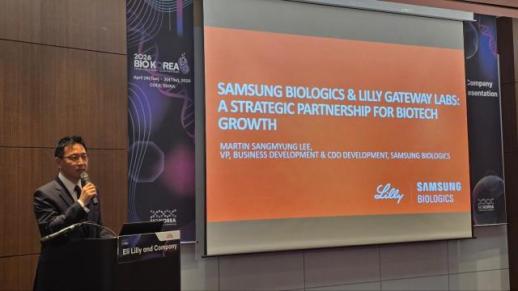 Samsung Biologics, Eli Lilly to Back Up to 30 Biotech Startups at Songdo C-Lab Outside Samsung Biologics said Wednesday it plans to select and support biotech companies to join “C-Lab Outside” in Songdo in partnership with Eli Lilly. The company unveiled an operating roadmap for C-Lab Outside, which is scheduled to be established next year, at the “Bio Korea 2026” event. Lee Sang-myeong, executive director in charge of CDO development at Samsung Biologics, said Songdo International City is expected to grow into the world’s largest bio cluster by 2030 and called it an ideal location for open innovation with infrastructure spanning the value chain. Under the collaboration, the companies plan to jointly select and support up to 30 biotechs capable of developing next-generation therapies. C-Lab Outside is set to be completed in July next year at Samsung Biologics’ second bio campus in Songdo, Incheon. The five-story facility will have a total floor area of about 12,000 square meters. Recruitment will begin in the fourth quarter of this year, before the center is completed, and will target early-stage startups at Series B or below. Companies that already have partnerships with global conglomerates will be excluded. Tenancy will be two years, extendable to a maximum of four years. Selection and incubation will be carried out jointly with Lilly’s innovation program, Lilly Gateway Labs (LGL). Samsung Biologics said it is also expanding support for South Korea’s biotech ecosystem through biotech investment, seminars and efforts to localize raw and subsidiary materials. A company official said it plans to broaden support, including creating an industry development fund worth 25 billion won.* This article has been translated by AI. 2026-04-30 18:27:16
 -
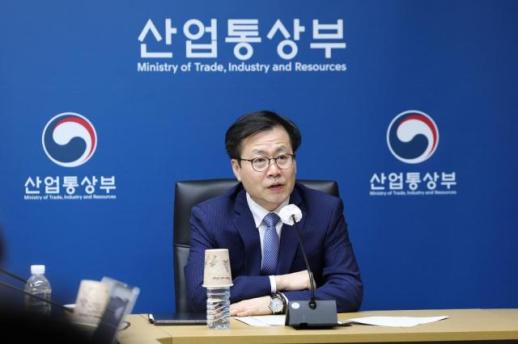 South Korea, Pakistan Move to Speed Up CEPA Talks, Trade Minister Says South Korea will step up negotiations with Pakistan on a Comprehensive Economic Partnership Agreement, or CEPA. Yeo Han-koo, South Korea’s minister for trade at the Ministry of Trade, Industry and Energy, held a video meeting on the 30th with Pakistan’s Commerce Minister Jam Kamal Khan to discuss ways to advance the Korea-Pakistan CEPA talks and expand bilateral trade and investment cooperation. Pakistan, with a population of 240 million, is the world’s fifth-most populous country and a key potential market in Southwest Asia with abundant natural resources. It is also a strategic hub linking the Middle East and Southwest Asia. Still, bilateral trade remained limited, totaling $1.574 billion last year. The two countries have laid the groundwork for negotiations since declaring the launch of CEPA talks and agreeing to terms of reference in January last year. They plan to accelerate negotiations starting with the first official round, which is scheduled to be held in the future, to expand trade and investment. Yeo said, “For our companies to operate their businesses stably and expand investment, it is important to ensure predictable administration of institutions and create a friendly investment environment,” and asked for the Pakistani government’s attention and support. He added that, following India and Bangladesh, CEPA talks with Pakistan would further strengthen South Korea’s trade network in Southwest Asia, and said the two sides would build a mutually beneficial foundation for cooperation through a CEPA with Pakistan, a hub connecting the Middle East, Central Asia and Southwest Asia.* This article has been translated by AI. 2026-04-30 18:24:27
 -
 Woman in Her 40s Killed by Forklift While Biking Across Crosswalk in Seoul A woman in her 40s died after a collision with a forklift while riding a bicycle across a crosswalk, according to a media report. The report said the crash happened on the 24th near Sinmokdong Station in Seoul’s Yangcheon District, when a forklift driven by a man in his 60s, identified only as A, struck the woman as she crossed. Police responded to a witness report and arrested A at the scene on suspicion of violating South Korea’s traffic accident handling law. He was not believed to be intoxicated at the time of his arrest, the report said. Seoul’s Yangcheon Police Station is investigating the circumstances of the crash, including whether the driver ran a signal. The victim’s family said the driver has not offered a proper apology. In a phone interview with Aju Economy on the 30th, the family cited a witness who said the forklift continued for about 7 meters after hitting the bicycle. The family said it reviewed nearby closed-circuit television footage and confirmed the witness account. The family also claimed the forklift entered a child protection zone without slowing and appeared to be moving quickly, adding that the driver seemed unaware he had hit the cyclist. They said that after realizing what happened, the driver got out and shouted profanity at the woman, including, “Why did you jump out, you XX,” and did not attend her funeral.* This article has been translated by AI. 2026-04-30 18:15:45
 -
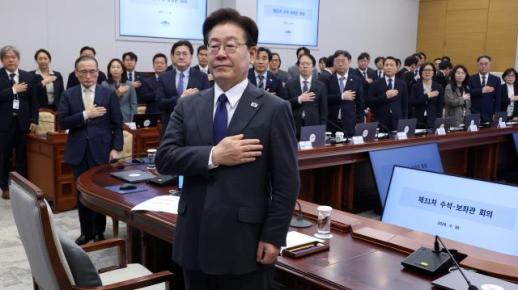 Lee Jae-myung to Host First Blue House Labor Day Ceremony With Both Major Unions President Lee Jae-myung will invite leaders of the country’s two largest labor federations and workers to Cheong Wa Dae’s state guesthouse on May 1, Labor Day, to hold a commemorative ceremony. Cheong Wa Dae said April 30 that Lee will host about 120 guests, including key figures from labor, management and government and workers from a range of occupations and generations, to mark Labor Day, which it said was restored 63 years ago. Both the Federation of Korean Trade Unions and the Korean Confederation of Trade Unions plan to attend, Cheong Wa Dae said. It will be the first time Cheong Wa Dae has hosted a Labor Day ceremony, and the first time the two federations have held a joint Labor Day event. Cheong Wa Dae said the event was made possible as organized labor responded to the Lee administration’s governing stance of “respect for labor.” It said Lee, who it described as a former “boy factory worker,” plans to reflect on the meaning of the restored Labor Day, share in the value of labor and thank workers for their dedication. Lee is expected to use his commemorative address to outline the government’s labor policy direction, including goals he has emphasized since taking office such as “eradicating industrial accidents” and “redistributing the fruits of growth.” With a Samsung Electronics union recently warning of a large-scale strike, attention is also focused on whether Lee will address the issue. Labor Day has been observed since 1923, but in 1963 its name was changed to “Workers’ Day.” The government restored the name Labor Day last year and designated it a legal public holiday this year.* This article has been translated by AI. 2026-04-30 18:12:24
 -
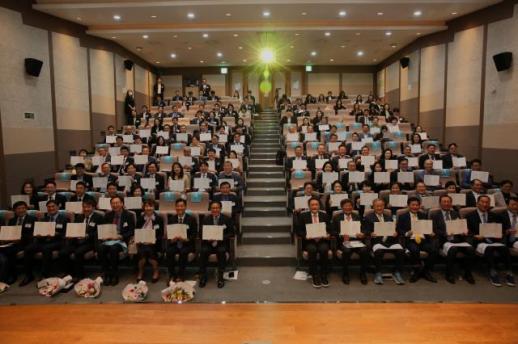 Yoonkyung Forum Holds 23rd CEO Ethics Pledge Ceremony on AI-ESG Strategy The Yoonkyung Forum, hosted by the Industrial Policy Research Institute and Seoul School of Integrated Sciences & Technologies, held its 23rd CEO ethics pledge ceremony on Wednesday at the Ahn Jung-geun Memorial Hall in Seoul, organizers said. Held under the theme “the convergence of AI and ESG,” the event drew about 100 leaders from private companies, public institutions, government and civil society. Participants discussed strategies that combine AI-driven innovation with ESG management and pledged to put them into practice. Organizers said the gathering underscored that strengthening ethical management with AI and building ESG competitiveness are key factors shaping the future competitiveness of South Korean companies. They noted that ESG is moving beyond declarations toward data-based execution and verification, and that combining AI with ESG is increasingly seen as a driver of competitiveness and sustainable growth. In a video message, the prime minister called the ceremony a meaningful occasion to reaffirm the idea that “ethics is competitiveness,” and said AI is opening a new chapter for ESG management. The prime minister said ESG is developing toward transparent, data-based verification, and that market trust is concentrating on companies that grow in sustainable ways. The prime minister added that the convergence of AI and ESG will be a key engine for competitiveness and sustainable growth, and said the government would support efforts to further embed ethical management in the AI era. A congratulatory address by the chairperson of the Anti-Corruption and Civil Rights Commission followed. The chairperson emphasized that responsible management grounded in ethics, fairness and transparency strengthens trust and provides a foundation for sustainable growth, and stressed the importance of public and private sectors working together to spread a culture of ethical management. The event was moderated by Kang Shin-sook, former head of SH Suhyup Bank, and included welcoming and congratulatory remarks, an awards presentation, a calligraphy performance, a CEO ethics pledge and a group recitation of “Our Pledge,” followed by a commemorative photo. Attendees agreed that ethical management is not optional but a necessary strategy for sustainable growth and public trust. An awards ceremony for the sixth annual contest recognizing institutions with strong ethical-management practices was held alongside the event. The contest, held annually since 2021, aims to identify organizations that have embedded ethical management institutionally and culturally, establish social standards and spread best practices. This year’s winners were Korea Ginseng Corp., Korea Water Resources Corp., Merz Aesthetics Korea, Korea Ocean Business Corp., KEPCO KPS and Korea Land & Housing Corp. Founded in 2003, the Yoonkyung Forum has promoted seminars, research and campaigns under the principle that “ethics is competitiveness.” Organizers said the 23rd CEO pledge ceremony and the contest again highlighted the forum’s role as a platform for cooperation to strengthen ethical and ESG management suited to the AI era and to bolster the global competitiveness of South Korean companies.* This article has been translated by AI. 2026-04-30 18:09:21
 -
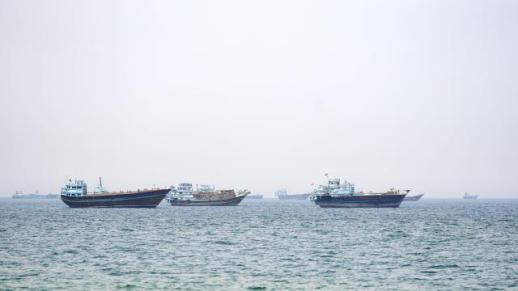 South Korea says Hormuz transit for its ships depends on safety, operators’ decisions South Korea’s Foreign Ministry said April 30 that the passage of Korean-flagged vessels through the Strait of Hormuz amid the U.S.-Iran war must take into account multiple factors, including safety conditions and decisions by shipping companies. Spokesman Park Il told a regular briefing that “there are various matters to consider, including the safety situation in the strait,” and that judgments and decisions on transit ultimately rest with ship operators. Park said the government’s basic position is that free passage for all vessels, including Korean ships, should be restored quickly. Under that stance, he said, Seoul is asking Iran for special cooperation so that 26 Korean vessels can pass through the strait as soon as possible, while staying in close contact with Gulf countries and the United States. The ministry recently dispatched Special Envoy Chung Byung-ha, the foreign minister’s special envoy, to Iran. Asked about a Japanese oil tanker that transited the strait on April 28, Park said each ship and operator faces different circumstances and the case cannot be treated as identical to the situation involving Korean vessels. He said the government will continue diplomatic efforts until the issue is resolved. Park added that Seoul is consulting with Iran and other relevant countries while taking into account operators’ views, but said it was difficult to provide details. “Our government is looking after our ships more actively than anyone,” he said. Some shipping companies are reported to be taking the position that, with prospects for U.S.-Iran ceasefire talks still unclear, they would rather watch negotiations than push for transit and take on added risk. The government has also reportedly conveyed to Iran its basic position that it will not pay transit fees for passage through the Strait of Hormuz. * This article has been translated by AI. 2026-04-30 18:03:16