
Journalist

Lee Hugh
=
-
 South Korean Optical Communications Stocks Slide After AI-Fueled Rally Optical communications theme stocks that surged on expectations of expanding artificial intelligence infrastructure have quickly moved into a sharp correction, with volatility rising and investor sentiment cooling as recent gains are erased. According to the Korea Exchange on Wednesday, major optical communications-related shares have shown a clear downtrend since forming peaks in mid-April. Optical Electronics, which makes optical sensors and related products, jumped from 2,080 won on March 17 to 17,780 won on April 15, then slid to close at 10,110 won on Wednesday after a pullback. Daehan Optical Communication topped 20,000 won, hitting 20,150 won on April 14, but closed Wednesday at 15,150 won, down about 24.8%. Wooriro, which had risen more than 1,000% since the start of the year, fell about 41.2% from 14,200 won on April 16 to 8,350 won on Wednesday, giving back a large share of its gains. Other names also extended losses: Bitsam Electronics fell about 48.8% from 23,650 won to 12,110 won; Lycom dropped about 38.0% from 8,400 won to 5,210 won. Bitgwang Electronics slid about 22.1% from 6,520 won to 5,080 won, and Gigalane fell about 27.5% from 2,855 won to 2,070 won, reflecting broad declines across the sector. Optical communications transmits data using light rather than electrical signals, enabling ultrafast, high-capacity networks over fiber optics and is widely viewed as next-generation infrastructure. As AI services spread and require real-time processing of massive data, demand has been rising for uses such as links between data centers and internal server networks, supporting longer-term growth expectations for the industry. The rally appeared to be sparked by comments from Nvidia CEO Jensen Huang. Speaking at "GTC 2026" on March 17 local time, he cited optical communications as a core technology for next-generation AI infrastructure, drawing market attention. Related shares then posted gains of several hundred percent through mid-April in a rapid run-up. More recently, however, prices have reversed and quickly surrendered gains. Market participants have described the move as typical theme-stock trading, with profit-taking accelerating after expectations were priced in. Some analysts said volatility could persist depending on whether earnings visibility improves and industry conditions are confirmed.* This article has been translated by AI. 2026-04-30 17:21:20
 -
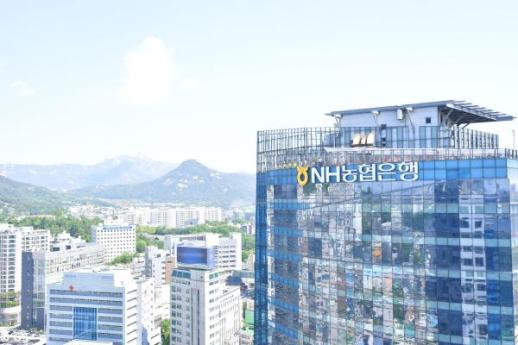 NH NongHyup Bank Waives ATM Withdrawal and Transfer Fees Nationwide Through June NH NongHyup Bank said April 30 it will waive fees on automated teller machine transactions nationwide through June 30 to ease customers’ burden amid elevated oil prices. The waiver applies to ATMs operated by NH NongHyup Bank and local agricultural and livestock cooperatives across the country. Customers will not be charged fees for cash withdrawals and interbank transfers made through NH NongHyup Bank and cooperative accounts. A bank official said customers are facing higher costs due to domestic and external factors, including instability in the Middle East, and the start of the peak farming season. The official added the bank will continue to strengthen practical support for financially vulnerable people, as well as working families and small business owners, to sustain “win-win” finance. Separately, the bank said it is carrying out other shared-growth finance efforts, including free enrollment support for “voice phishing compensation insurance” for customers age 60 and older, and a cashback service to help working families and small business owners reduce fuel expenses.* This article has been translated by AI. 2026-04-30 17:19:36
 -
 L&F posts 118.9 billion won Q1 operating profit on higher high-nickel shipments L&F said in a regulatory filing on April 30 that it posted first-quarter 2026 revenue of 735.2 billion won and operating profit of 118.9 billion won. Revenue rose 19% from the previous quarter and 102% from a year earlier. Operating profit increased 44% from the prior quarter and swung to a profit from a year earlier. The company attributed the improvement to higher shipments of high-nickel products that lifted utilization, along with higher selling prices and a favorable exchange rate. It also cited the impact of inventory valuation reversals as raw material prices rebounded. L&F said shipments of its high-nickel products set a quarterly record for the third straight quarter, helped by sole supply of its ultra high-nickel products and expanding shipments of a new 46-pi product that began shipping late last year. Overall product shipments in the first quarter rose about 12% from the previous quarter, about double the volume guidance the company presented at the start of the year. CFO Ryu Seung-heon said, "The first quarter clearly showed improved earnings as high-nickel volume growth and higher selling prices appeared at the same time." He added, "In the second quarter, we will continue stable performance improvement based on rising shipments, while diversifying our business portfolio through a two-track NCM+LFP strategy and steadily strengthening our mid- to long-term growth foundation."* This article has been translated by AI. 2026-04-30 17:18:16
 -
 Jeep Rubicon Tops 1 Million in Global Cumulative Sales Jeep said on the 30th that global cumulative sales of its Rubicon models have surpassed 1 million units. Rubicon is positioned as the top tier of Jeep’s off-road lineup and a benchmark for rough-terrain capability worldwide. In South Korea, Rubicon trims accounted for a growing share of Wrangler and Gladiator sales over the past three years, rising from 61% in 2023 to 72.4% in 2024 and more than 73.4% last year, reaching 78.7% as of March this year. The Rubicon name comes from the notorious Rubicon Trail in California’s Sierra Nevada. When the Jeep Wrangler Rubicon debuted in 2003, it drew attention for offering off-road readiness without requiring separate modifications. Key features included Tru-Lok electronic front and rear axle-locking differentials and a Rock-Trac part-time transfer case with a 4:1 ratio, Jeep said. Jeep said the Gladiator Rubicon extended Rubicon DNA into the pickup segment. It is the only pickup to earn Trail Rated certification, the company said, demonstrating stable performance across varied off-road conditions. With towing capacity of up to 2,721 kilograms, it has broadened options for outdoor use and helped define what Jeep describes as an off-road lifestyle beyond basic transportation.* This article has been translated by AI. 2026-04-30 17:16:29
 -
 LX Semicon Q1 Operating Profit Falls 65.5% to 20.6 Billion Won LX Semicon said in a regulatory filing on the 30th that its first-quarter consolidated revenue totaled 388.77 billion won and operating profit came to 20.594 billion won. Revenue fell 18.4% from a year earlier, while operating profit dropped 65.5%. From the previous quarter, revenue slipped 0.3% and operating profit declined 17.3%, which the company attributed to the impact of higher raw material prices. The company said the decline also reflected a base effect after customers increased inventory demand last year amid uncertainty over tariff policy. LX Semicon said it plans to focus on advanced R&D for its main products — driver ICs, timing controllers and power management semiconductors (PMICs) — and pursue market expansion based on its technology edge.* This article has been translated by AI. 2026-04-30 17:15:40
 -
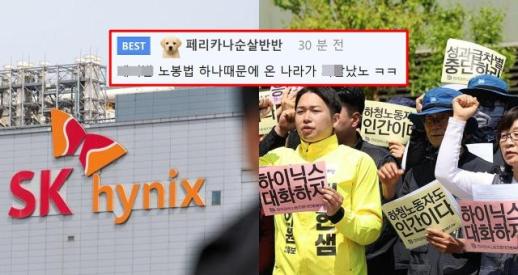 SK Hynix Faces Growing Pressure Over Bonus Distribution Amid Semiconductor Boom As the semiconductor industry thrives, tensions surrounding SK Hynix's bonus distribution are escalating, sparking widespread debate across the sector. Workers from subcontractors, including those in food service and support roles, are demanding a share of the bonuses, intensifying social conflict. Subcontractor workers have been protesting, stating, "We worked in the same environment but received no compensation," as SK Hynix reports record profits and substantial bonuses. Employees from partner companies are also joining in collective actions to demand bonuses. This trend is spreading beyond individual companies, affecting the entire industry. In shipbuilding and construction, indirect workers, including those from food service companies, are now demanding bonuses from primary contractors, asserting that even support staff should be included in compensation discussions. The recent implementation of the "Yellow Envelope Law" (amendment to labor laws) allows subcontractor workers to negotiate directly with primary contractors. Some unions are now pushing for profit-sharing, including bonuses. The issue is significant as these demands could reshape the industry's structure. Since the law's enactment, negotiations have expanded from subcontractors to include clients, with discussions now encompassing wages, benefits, bonuses, and direct employment issues. Conflicts are particularly pronounced in the semiconductor sector, where regular employees at large firms receive bonuses in the millions, leading subcontractor workers to feel deprived and demand equitable distribution. This has resulted in a "bonus domino effect," where increased profits for large companies correlate with rising demands from subcontractors. SK Hynix is reportedly facing demands for bonuses not only from its subcontractors but also from cargo unions and food service providers. Farmers have also joined the call for equitable distribution, further complicating the situation. Media outlets like MBC have echoed the sentiment that bonuses should be shared, amplifying the controversy. Many online commenters have expressed their views, stating, "Koreans claim to oppose communism but act like communists," and others suggesting that the nation's social structure aligns more closely with communism than democracy. This controversy extends beyond mere bonus disputes, raising questions about accountability between primary and subcontractors. Following the Yellow Envelope Law's implementation, the industry is grappling with the fundamental question of who the employer is and the extent of their responsibilities, with similar conflicts anticipated across major sectors like shipbuilding and construction. 2026-04-30 17:14:15
 -
 Tariff Refunds, USMCA Review Roil U.S. Auto Market; Hyundai’s Response in Focus A U.S. Supreme Court ruling has set tariff refund procedures in motion, signaling shifts in profit expectations for U.S. automakers. For foreign brands operating in the United States, uncertainty is growing as the U.S.-Mexico-Canada Agreement, or USMCA, heads toward a scheduled review. Attention is also on how Hyundai Motor Group, which has been posting strong U.S. results, will respond. Industry officials said April 30 that General Motors expects about $500 million (about 740 billion won) in tariff refunds for the first quarter following the Supreme Court’s decision that reciprocal tariffs were illegal. In its 2026 first-quarter earnings report, GM raised its forecast for adjusted earnings before interest and taxes this year to $13.5 billion to $15.5 billion, from $13 billion to $15 billion. The ruling found unlawful the broad tariffs President Donald Trump imposed under the International Emergency Economic Powers Act, or IEEPA. Ford is also reported to have reflected the impact of tariff refunds totaling about $1.3 billion paid over the past year. Despite those moves by U.S. automakers, other foreign automakers are taking a cautious stance, with tariff-related risks seen widening. Trump has added to uncertainty by raising the possibility of scrapping the USMCA or shifting to separate agreements with Canada and Mexico during the pact’s scheduled review in July. Since the launch of the second Trump administration, vehicles produced in Mexico and Canada have faced a 25% tariff depending on the share of non-U.S. parts. If remaining tariff benefits are removed, companies operating locally would face an unavoidable hit. Hyundai, Toyota and Nissan have responded by considering pulling low-priced models. Even with political uncertainty in the U.S. market, Hyundai Motor Group’s sales have remained strong. Hyundai and Kia sold 430,720 vehicles in the United States in the first quarter, up 2.6% from a year earlier. Over the same period, major rivals posted declines, including GM (-9.6%), Honda (-4.2%), Nissan (-8.3%), Toyota (-0.1%). The gains were driven by rising demand for eco-friendly models such as the Sonata Hybrid and higher sales of SUVs including the Tucson and Sportage. Hyundai said it is adjusting its strategy to fit the changing environment. It plans to invest $26 billion in the United States through 2028 to sharply increase production of vehicles, including hybrids. A Hyundai official said, "(In the U.S. market) tariff factors and policy uncertainty are growing, so we are focusing on expanding local production rather than exports from Korea."* This article has been translated by AI. 2026-04-30 17:12:36
 -
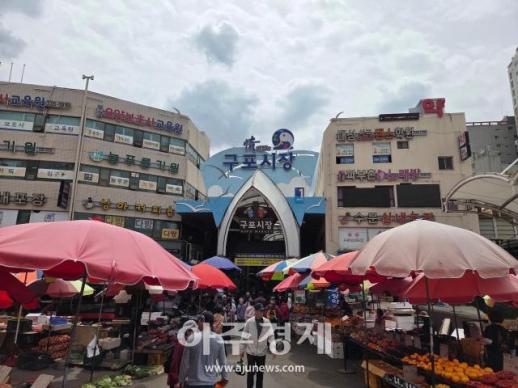 Busan Buk-gu Gap By-Election Emerges as Three-Way Fight, Poll Shows Tight Race “This time, people really want to pick someone who can get things done. If you show your face a lot and pay attention to the neighborhood, people’s hearts go to you,” a self-employed resident said in Busan’s Manduk-dong on April 29, describing sentiment ahead of the June 3 National Assembly by-election. Manduk-dong is part of Busan Buk-gu Gap, widely seen as the most competitive district among the upcoming by-elections. Han Dong-hoon, the former People Power Party leader, moved to Manduk-dong on April 14 and formally declared his candidacy. On April 30, Ha Jung-woo, former senior presidential secretary for AI Future Planning, was confirmed as the Democratic Party candidate. The People Power Party has not yet nominated a candidate, but Park Min-sik, former minister of Patriots and Veterans Affairs, has entered the race. The district has traditionally leaned conservative, but Jeon Jae-soo, the Democratic Party’s Busan mayoral candidate, won the seat three consecutive times. In the general election two years ago, it was also the only one of Busan’s 18 constituencies won by the Democratic Party. Observers attribute that to weaker partisan loyalty and a tendency to vote for individuals. Reporting across Buk-gu, Ajunews found Ha’s low name recognition in the district is viewed as a key weakness. Despite leading national AI policy at the presidential office, his name and face are not widely known locally. With the area aging rapidly, it is also unclear how much appeal an “AI expert” will have. An 80-something woman in Manduk-dong said, “I saw him on the news, but I don’t really know what he does,” adding that people around her also seem unfamiliar. Another resident, identified only as Choi, 80, said, “They say he’s impressive, but honestly I don’t know what an AI secretary is.” Han, who arrived in Buk-gu first, has built a solid base of support centered on Gupo Market. Vendors said that when he visits, supporters crowd in and sales rise, helping make him a welcome presence there. A woman in her 60s who runs a fruit shop at Gupo Market said, “Sales noticeably go up every time Han comes,” adding, “For merchants like us, it’s hard not to like someone who boosts sales.” Still, some said votes in Gupo Market alone will not decide the race and that he will need broader momentum elsewhere. Park, who served as the district’s lawmaker in the 18th and 19th National Assembly, has not secured the party nomination but has been campaigning locally since announcing his bid. Some residents, however, said they still view him negatively because he ran in Seoul’s Gangseo district, not Busan Buk-gu Gap, in the general election two years ago. A man in his 30s at Gupo Market said Park, “who went somewhere else and came back,” has no right to call Han a traitor. A woman in her 40s who said she lives in Buk-gu said leaving for another district after losing and then returning now “is a transparent move.” But one Manduk-dong resident said Park seems to be seen more often in the neighborhood than Han, expressing a favorable view. Political circles say the outcome could remain hard to predict even if the three-way race continues through Election Day without a unified candidacy. A poll commissioned by NewsTomato and conducted by MediaTomato on April 24-25 of 802 Buk-gu Gap residents age 18 and older (wireless ARS; details available on the National Election Survey Deliberation Commission website) showed Ha at 35.5%, Park at 26.0% and Han at 28.5%, a tight contest within the margin of error. The poll had a margin of error of plus or minus 3.5 percentage points at a 95% confidence level.* This article has been translated by AI. 2026-04-30 17:10:51
 -
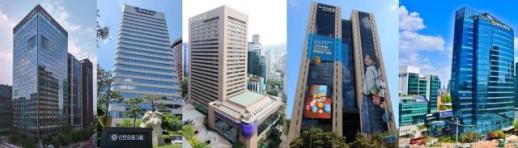 South Korea’s Top 5 Financial Groups to Invest 1 Trillion Won in Venture, Startup Support KB Financial Group, Shinhan Financial Group, Hana Financial Group, Woori Financial Group and NH NongHyup Financial Group will invest 1 trillion won to support venture companies and startups. The Financial Services Commission said the government and the five financial groups (KB, Shinhan, Hana, Woori and NH) signed a business agreement on Wednesday to boost venture investment and 추진 the “Startup for All Project.” Attendees included Minister of SMEs and Startups Han Seong-sook, Financial Services Commission Chairman Lee Eok-won, the chairmen of the five financial groups, and the heads of six related organizations including Korea Venture Investment Corp. and the Korea Technology Finance Corp. The agreement is aimed at linking the capital and capabilities of the five financial groups with the venture and startup ecosystem to accelerate a shift toward “productive finance” and expand private-sector-led venture investment. Under the plan, the five groups will create an 800 billion won private venture fund-of-funds by 2029, starting with 400 billion won this year. Hana Financial Group will contribute 100 billion won a year beginning this year, for a total of 400 billion won. Hana, KB, Shinhan and Woori will also create a 100 billion won LP (limited partner) growth fund, while Hana and NH will participate in a 20 billion won contribution to a regional growth fund. With the combined fund-of-funds totaling 920 billion won, and typical leverage from follow-on sub-funds running about seven to 10 times, officials said total assets under management are expected to expand to several trillion won. The five groups also plan to use their overseas networks to help companies backed by the government’s fund-of-funds grow into unicorns — firms valued at 1 trillion won or more — by linking support for investor relations, follow-on investment, initial public offerings and overseas expansion. The groups will jointly participate in the Ministry of SMEs and Startups’ “Startup for All Project.” The five groups will contribute 20 billion won, and the Korea Technology Finance Corp. will use the funds to launch a 150 billion won agreement-based guarantee program. Part of the contribution will be used to reduce guarantee fees for prospective entrepreneurs, fully waiving the fees and raising the guarantee coverage ratio to about 100% from 85%. “Productive finance means ensuring entrepreneurs and venture companies can secure funding when they need it,” Lee said, adding he hopes the agreement will further energize the startup and venture ecosystem. Han said the agreement was not merely a declaration of cooperation but “a starting point” for connecting the expertise and resources of the five financial groups with the startup and venture ecosystem to meet the challenges of the times. * This article has been translated by AI. 2026-04-30 17:05:41
 -
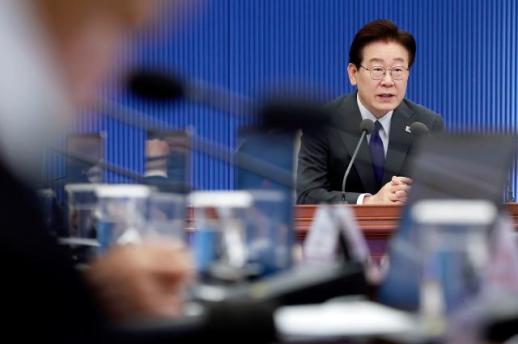 South Korea’s Lee orders public debate on school field trips, review of teacher liability President Lee Jae-myung on April 30 ordered officials to gather views from across society on school field trips and to review whether teachers face unreasonable legal burdens, amid what has been dubbed the “picnic controversy.” Senior presidential spokesperson Kang Yu-jung said at an afternoon briefing at Chunchugwan that Lee directed the government to collect opinions through an open public debate involving teachers, parents and experts on school experiential learning trips. Kang said Lee also instructed the Education Ministry and the Justice Ministry to examine whether teachers are being subjected to unfair responsibility and whether the scope of legal liability and immunity needs adjustment. At a Cabinet meeting at Cheong Wa Dae on April 28, Lee said he had heard that schools are increasingly avoiding picnics and class trips. “A picnic or a class trip is also part of instruction, isn’t it?” he said, adding, “You shouldn’t throw out the whole jar because you’re worried about maggots.” Cheong Wa Dae explained the next day, April 29, that Lee’s remarks were aimed at strengthening protections for teachers from safety accidents during field learning and ensuring they can carry out their core duties despite heavy workloads.* This article has been translated by AI. 2026-04-30 17:04:34