
Journalist

Lee Hugh
=
-
 Hanon Systems Q1 Operating Profit Jumps 361% to 97.2 Billion Won Hanon Systems, an automotive thermal energy management solutions company under the Hankook & Company Group, posted sharply improved results. In a regulatory filing on the 30th, Hanon Systems said its first-quarter operating profit on a consolidated basis was 97.2 billion won, up 361.1% from a year earlier on a preliminary tally. Revenue rose 5% to 2.7482 trillion won. Net profit was 67.5 billion won, returning to the black. The company said the performance reflects companywide restructuring efforts pursued since its acquisition by the Hankook & Company Group. Hanon Systems has maintained an operating margin in the 3% range since the second half of last year and posted a 3.5% margin in the first quarter, citing improved cost ratios and greater operating efficiency. Electrification, a key growth area, accounted for 29% of revenue, putting it close to surpassing 30% of total sales. The company said it responded flexibly to demand for internal-combustion and hybrid models, as well as the impact of new electric-vehicle launches. It said further revenue growth is expected this year, driven by European customers expanding electrification and rising demand for hybrids. Based on a full-line portfolio spanning internal-combustion vehicles to hydrogen fuel-cell electric vehicles, the company said it plans to introduce intelligent solutions that apply artificial intelligence to maximize energy efficiency. Vice Chairman and CEO Lee Soo-il said, "Based on our accumulated thermal management capabilities, we will accelerate qualitative growth by pursuing future new businesses such as AI-based integrated thermal management solutions, secure long-term financial soundness, and strengthen our technology leadership in the global market."* This article has been translated by AI. 2026-04-30 16:45:19
 -
 CNN: U.S. Iran War Costs Could Reach $50 Billion, Double Pentagon Figure The cost of the U.S. war with Iran could reach $50 billion, CNN reported, about double the $25 billion the Pentagon has publicly cited. CNN and Reuters reported on the 30th that the Defense Department told Congress the previous day that the war had cost $25 billion so far. CNN, citing multiple sources, said the actual total could be $40 billion to $50 billion. Reuters said most of the Pentagon’s $25 billion estimate was for munitions, and it was not specifically confirmed whether the figure included rebuilding and repair costs for U.S. bases in the Middle East. Officials cited by CNN said the higher estimate reflects restoration costs for U.S. facilities in Bahrain, Kuwait, Iraq, the United Arab Emirates and Qatar. Reuters reported that Jules Hurst, the acting Pentagon comptroller, told Congress that most of the $25 billion was for munitions. Reuters previously reported that in the first six days after the war began, U.S. costs alone were estimated at at least $11.3 billion. CNN’s latest report again highlights that the financial burden could exceed the official figure.* This article has been translated by AI. 2026-04-30 16:33:55
 -
 Samsung Heavy Industries Q1 2026 Operating Profit Jumps 122% to 273.1 Billion Won Samsung Heavy Industries said it extended its first-quarter earnings improvement on a larger share of higher-margin vessels. The company on Wednesday reported preliminary first-quarter 2026 results of 2.9023 trillion won ($2.9 trillion won) in revenue and 273.1 billion won in operating profit, according to a regulatory filing. Revenue rose 16% from a year earlier, while operating profit surged 122%. In shipbuilding, a higher proportion of construction for high-margin vessels such as LNG carriers, along with a strategy to diversify global production, supported results, the company said. In offshore operations, revenue also increased as work accelerated on FLNG projects including Malaysia’s ZLNG, Canada’s Cedar and Mozambique’s Coral. On that trend, Samsung Heavy said it expects to meet its annual revenue target of 12.8 trillion won. A company official said revenue is expected to rise further starting in the second quarter as production volumes increase. The official added the company will strengthen a stable profit structure based on an order backlog secured for more than three years.* This article has been translated by AI. 2026-04-30 16:27:46
 -
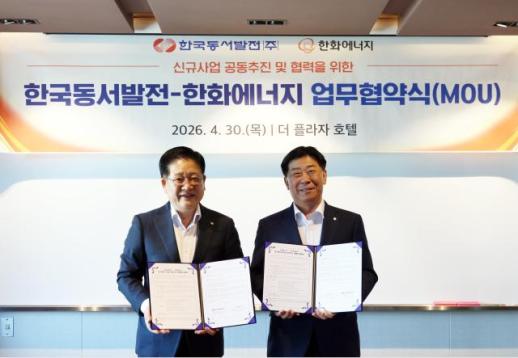 Hanwha Energy, Korea East-West Power Sign MOU on Distributed Power Projects Hanwha Energy Co. and Korea East-West Power Co. said April 30 they signed a memorandum of understanding to jointly cooperate on power development projects, including distributed energy. The agreement is aimed at expanding cooperation in power projects tied to industrial complexes and distributed energy, drawing on both companies’ experience and capabilities in power generation development. Under the MOU, the companies said they plan to work together on power development projects at major domestic industrial complexes and in distributed energy; cooperate on government policy programs such as RE100 industrial complexes and clean hydrogen power generation; identify and attract new energy-intensive demand, including from AI-related advanced industries; and coordinate on permitting for new power projects. They also said they will jointly review ways to build a distributed energy model centered on industrial complexes, based on a structure in which energy is consumed where it is produced. In addition, the companies said they will continue cooperation on energy operations linking renewable energy, distributed power sources and combined heat and power, and on the potential application of low-carbon generation technologies such as hydrogen co-firing. Hanwha Energy will handle project development, including fuel supply, securing demand and sites, and planning business models, the companies said. Korea East-West Power will provide technical support and operational cooperation based on its operating experience and technical capabilities. “This cooperation will serve as an opportunity to lay the groundwork for collaboration on power development projects centered on industrial complexes,” Hanwha Energy CEO Lee Jae-gyu said. “Through cooperation with Korea East-West Power, we will continue to identify new business opportunities.” Korea East-West Power President Kwon Myung-ho said it was meaningful to build a cooperative relationship with Hanwha Energy to develop the distributed energy market. “Based on the two companies’ expertise and experience, we will strengthen competitiveness and continue to identify new opportunities in future energy markets, including distributed energy,” he said.* This article has been translated by AI. 2026-04-30 16:26:36
 -
 Shinsegae Duty Free marks 10th anniversary with 50% off beauty brands for early May holidays With early May holidays in South Korea, China and Japan overlapping, Shinsegae Duty Free is rolling out a large-scale beauty promotion aimed at capturing rising shopping demand from domestic and overseas travelers. Shinsegae Duty Free said on the 30th it will offer 50% discounts on beauty brands from May 1 to 10 through its online mall and its Myeongdong store to mark its 10th anniversary. Participating brands include Yunjac, VDL, Amuse, Swiss Perfection, Dewy Some and The A Effect. Yunjac sales at Shinsegae Duty Free rose 123% year over year among Chinese customers and 83% among Japanese customers, while April sales jumped 150% from the previous month. At the Myeongdong store, customers who spend $300 or more will also receive a “lucky package” made up of beauty-brand products. A Shinsegae Duty Free official said the promotion was designed to introduce “brands guaranteed by Shinsegae” to customers worldwide and encourage repeat purchases through product use. Retailers are stepping up efforts to attract foreign visitors as Japan’s Golden Week (April 29 to May 6) and the Labor Day holidays in China and Taiwan (May 1 to 5) begin at the same time. The Ministry of Culture, Sports and Tourism and the Korea Tourism Organization forecast 80,000 to 90,000 Japanese tourists and 100,000 to 110,000 Chinese tourists will visit South Korea during the holiday period. In the first quarter, arrivals from Japan and China totaled 940,000 and 1.45 million, respectively, the highest levels on record. In South Korea, a stretch of holidays is also expected to lift demand for spring outings and shopping, starting with Labor Day on May 1, newly designated as a statutory holiday this year, through Children’s Day on May 5.* This article has been translated by AI. 2026-04-30 16:25:39
 -
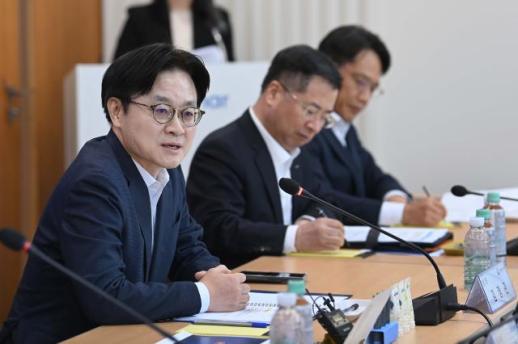 Industry Minister Kim Jeong-gwan calls for wider eco-friendly consumer culture at Beautiful Store Kim Jeong-gwan, South Korea’s minister of trade, industry and energy, visited the Beautiful Store in Seoul’s Anguk-dong on Wednesday and said expanding an eco-friendly consumer culture is “a very important task for the future of our economy and industry.” He added that the government would provide policy support, citing its potential as a future growth sector. Kim met with major distribution industry groups — including the Korea Chain Store Association, the Korea Department Store Association, the Korea Convenience Store Industry Association and the Korea Online Shopping Association — to discuss ways to broaden eco-friendly consumption. The Beautiful Store operates about 100 locations nationwide, selling donated goods from individuals and companies. It uses the proceeds for public-interest programs, including support for low-income people and assistance for young adults preparing for independent living. Kim and industry representatives agreed that recent instability in petrochemical feedstocks linked to the war in the Middle East should be used as an opportunity to shift toward eco-friendly consumption, including greener packaging and expanded recycling. The Beautiful Store and the distribution groups also signed an agreement to promote eco-friendly consumption and distribution practices, pledging closer cooperation on corporate social responsibility. The ministry said it expects the pact to create a formal cooperation framework beyond one-off company efforts and to encourage more social contribution activities. Kim said he hopes the agreement will serve as a model platform for cooperation between the distribution industry and social enterprises, adding that he expects eco-friendly consumption and sharing to continue to grow.* This article has been translated by AI. 2026-04-30 16:24:26
 -
 Culture Minister Choi Hwi-young Defends Contested Arts Appointments, Says They Have Reasons Culture, Sports and Tourism Minister Choi Hwi-young said April 30 that recent controversy over the Lee Jae-myung government’s arts and culture appointments had caused concern, but he defended the decisions as justified. “As the appointing authority, I feel sorry for causing worry,” Choi said at the second meeting of the Culture and Arts Policy Advisory Committee’s basic arts subcommittee (classical music, Korean traditional music and dance), held at the National Museum of Modern and Contemporary Art in Seoul. “But there are reasons. There are no appointments without reasons.” Choi said expectations for what he called a “people-sovereignty government” were high, and that some people appeared disappointed and asking, “Why are you doing it this way?” Committee member Won Il, representing the Korean traditional music field, urged the ministry to appoint “professional people” as heads of institutions, noting that leadership posts remain to be filled, including at the National Theater of Korea. He asked that the selections be reviewed carefully so that working artists would welcome the appointees. Choi replied that personnel decisions can look different depending on one’s perspective. “Differences in perspective clearly exist,” he said, adding that he believed the government should accept criticism, disappointment and scolding over appointment outcomes. At the same time, he said criticism should not turn into questioning an individual’s basic qualifications. “We can speak openly, but an approach that targets the person and treats it as a matter of competence should be viewed differently,” he said. He added that he was disappointed to see such attacks from artists who value respect for people. Choi also said the government does not “hide behind the scenes,” and that it can talk about and explain its decisions. While acknowledging that outcomes can prompt differing views and concern, he said he believed the appointees would perform their roles well and that they were not appointed without cause. Committee member Choi Woo-jung said he agreed that personal attacks should be avoided, but asked that when appointments are made it should become clear what vision and direction an organization will take under the new leader. Choi said controversy can push both him and appointees to work in line with the purpose of the appointments. He said the ministry must ensure “meaningful results” and progress toward a clear direction. He pledged to proceed transparently and asked for oversight. “Monitor and check us,” he said, adding that he hoped the committee would help ensure the ministry works properly and reliably. The remarks followed a news conference held April 21 in front of the Cheong Wa Dae fountain, where Culture Action and other arts groups condemned the Lee Jae-myung government’s appointment policy for heads of public arts and culture institutions. They cited Jang Dong-jik, chair of the National Jeongdong Theater; Park Hye-jin, head of the Korean National Opera; Seo Seung-man, CEO of the National Jeongdong Theater; and Hwang Gyo-ik, president of the Korea Culture and Tourism Institute. The groups said appointments to national arts institutions and state-funded research bodies with strong public missions were being made without clear standards and procedures, and that public popularity, political interests and personal ties were playing an outsized role. 2026-04-30 16:20:53
 -
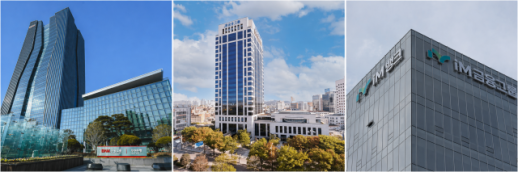 BNK and JB Post Solid Q1 Profit Gains as iM Stalls; Nonbank Units Lift Results Results diverged among South Korea’s three major regional financial holding companies in the first quarter. BNK Financial Group and JB Financial Group posted steady net profit growth, while iM Financial Group’s net profit was essentially flat despite expansion in scale. According to the financial sector on Wednesday, combined first-quarter net profit for BNK, JB and iM totaled 532 billion won, up 9.9% from 483.7 billion won a year earlier. By group, BNK reported 211.4 billion won in net profit for the quarter, a 26.9% increase from a year earlier. JB posted 166.1 billion won, up 2.1%, and iM recorded 154.5 billion won, up 0.1%. Nonbank businesses drove the three groups’ results. Even as earnings at their core banking units lagged, a larger share of profit came from nonbank units, led by capital businesses, supporting overall growth. At BNK, net profit from the banking segment rose 20.6 billion won from a year earlier to 175.6 billion won. BNK Busan Bank increased profit by 22.5 billion won, while BNK Kyongnam Bank fell 1.9 billion won. The nonbank segment posted 59.6 billion won in net profit, up 25.3 billion won, with all major affiliates contributing, including capital (10.7 billion won), investment securities (3.6 billion won), savings bank (1.0 billion won) and asset management (7.5 billion won). At JB, nonbank affiliates offset weaker bank earnings. Jeonbuk Bank and Gwangju Bank posted net profit of 39.9 billion won and 61.1 billion won, down 22.5% and 8.7%, respectively, from a year earlier. JB Woori Capital reported 72.7 billion won in net profit, up 24.3%, leading the group’s performance. Cambodia’s Phnom Penh Commercial Bank (PPCBank) posted 12.4 billion won, up 21%. iM also leaned on nonbank units. iM Bank’s first-quarter net profit fell 3.6% from a year earlier to 120.6 billion won. Nonbank affiliates iM Life and iM Capital posted net profit of 16.5 billion won (up 63.4%) and 19.3 billion won (up 31.3%), respectively. The share of group profit from nonbank affiliates rose to 34% from 30.3% in the first quarter of last year. The three groups also outlined shareholder return policies alongside their first-quarter earnings releases. BNK said its board approved a quarterly cash dividend of 150 won per share, up 25% from last year. It also decided to buy back and cancel 60 billion won worth of treasury shares in the first half of the year. JB said its board on April 23 approved a quarterly dividend of 311 won per share, about double the 160 won paid in the first quarter of last year. It also set a goal of raising its shareholder return ratio to 50% by the end of this year. iM said it plans to buy back and cancel 150 billion won worth of treasury shares by 2027, after announcing a 40 billion won buyback-and-cancellation plan in February. It also said it aims by 2027 to reach a return on equity of 9%, a common equity tier 1 (CET1) ratio of 12.3% and total shareholder return (TSR) of 40% to strengthen the foundation for shareholder returns.* This article has been translated by AI. 2026-04-30 16:19:32
 -
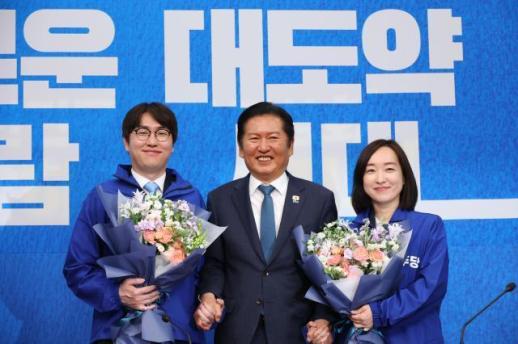 Ha Jeong-woo Faces Backlash Over Hand-Wiping Gesture After Shaking Voters’ Hands Ha Jeong-woo, who has signaled he will run in the Busan Buk-gu Gap by-election, is facing criticism over video showing him rubbing or shaking his hands after greeting voters. On the 29th, Ha, identified as a former presidential office senior secretary for AI Future Planning, visited Gupo Market in Busan’s Buk-gu district and greeted merchants. Footage captured him appearing to rub or shake his hands after handshakes, and the clips spread quickly online. Opposition figures responded by asking whether he thought voters’ hands were “dirty.” A former party leader preparing an independent bid in the district wrote on Facebook that he was prompted by a Democratic Party incumbent deputy spokesperson’s on-air remark that “Ha Jeong-woo’s hand-shaking gesture does not affect the overall trend.” He asked whether the party believed it could “disrespect Buk-gu citizens” without consequences. Park Min-sik, a former minister of Patriots and Veterans Affairs who is preparing to run as the People Power Party candidate, said the hands of Gupo Market’s mothers were not “filth” to be wiped away but a “medal” that raised the country, calling the incident an unconscious display of “deep-rooted elitism and arrogance.” People Power Party leaders and lawmakers aligned with Han Dong-hoon also criticized Ha. Supreme Council member Kim Jae-won said at a party meeting that Ha shook hands with several market merchants and then “shook off his hands as if something filthy had gotten on them,” calling him someone who “treats voters like bugs.” As the controversy grew, Ha held a news conference at the Busan City Council and denied any intent to insult voters. He said it was his first time shaking hands with “hundreds, close to a thousand” people in a day and that his hand began to ache, leading to an unconscious motion. He added that some merchants shook hands while wearing wet gloves, but said he never acted with that meaning and criticized what he called negative campaigning in politics.* This article has been translated by AI. 2026-04-30 16:16:22
 -
 Vietnam Jewelry Gold Demand Hits Record as Bullion Buying Slumps; PM Urges Less Hoarding Vietnam posted a record for gold jewelry demand in the first quarter, even as demand for gold bars and coins fell sharply, highlighting a split between consumer buying and investment flows. The government says it will continue to recognize citizens’ right to hold gold as an asset, while seeking to curb hoarding and speculation and steer money toward the real economy. Vietnamese media on April 30, citing the World Gold Council’s first-quarter report, said Vietnam’s gold jewelry demand totaled $472 million, the highest on record. That was up 28% from the fourth quarter of last year, bucking a broader cooling in consumption across many markets. Analysts said tight supplies of gold bars also pushed some demand toward alternatives such as pure-gold rings. Globally, first-quarter gold jewelry demand fell 23% from a year earlier to 300 tons. The decline was widespread, led by drops of 32% in China, 19% in India and 23% in the Middle East. Within ASEAN, the pullback in investment demand was especially notable. Vietnam’s first-quarter demand for gold bars and coins fell 24% from a year earlier to 9 tons, diverging from the global trend in which retail demand for bars and coins rose 42% to 474 tons. The government is moving to tighten institutional oversight of the gold market. At a meeting with the State Bank of Vietnam on April 29, Prime Minister Le Minh Hung told the banking sector to “develop a roadmap suited to reality and build mechanisms to effectively control the gold market.” While affirming that people have the right to hold gold as an asset, he said, “We must minimize gold hoarding and speculation.” He added that as macroeconomic fundamentals stabilize and the legal framework becomes more transparent, funds held by households and businesses could shift naturally into production and business activity or bank deposits, helping mobilize resources for growth. Le also laid out broader principles for economic management. “Macroeconomic stability is like the foundation of a house,” he said, adding that before adding floors, remodeling or rebuilding, “you must first strengthen that foundation.” He said exchange rates, interest rates and credit policy should all be managed within the overarching goals of maintaining stability, controlling inflation and ensuring the safety of the financial system. In late January, the government asked the central bank to quickly complete its review of documents related to a proposal to establish a national gold exchange or gold trading platform. The push to overhaul the gold market is tied to a broader effort to secure funding for growth. The National Assembly has set targets of average annual growth of at least 10% through 2030 and entry into the world’s top 30 economies by GDP. To meet those goals, the total capital required is projected to rise by about 1.7 to 2 times compared with the previous term. With the state budget expected to cover only 20% to 22%, mobilizing private funds is seen as critical. Against that backdrop, the prime minister also outlined credit-policy directions aimed at redirecting money concentrated in gold into the real economy. He called for flexible management of credit growth depending on conditions, while guiding funds toward production and business. He also urged a review of rules to allow above-limit lending for strategic and nationally important projects, tighter supervision of credit to potentially risky sectors, and stronger support for social housing and industrial park development.* This article has been translated by AI. 2026-04-30 16:15:05