
Journalist

Lee Hugh
=
-
 Samsung Electro-Mechanics Q1 Operating Profit Rises 40% as Revenue Tops 3 Trillion Won Samsung Electro-Mechanics said Thursday it posted first-quarter consolidated revenue of 3.2091 trillion won and operating profit of 280.6 billion won. Revenue rose 470.5 billion won, or 17%, from a year earlier and 307.0 billion won, or 11%, from the previous quarter. Operating profit increased 801 billion won, or 40%, year over year and 411 billion won, or 17%, quarter over quarter, despite reflecting 71.4 billion won in one-time costs. It was the first time since the company was founded that quarterly revenue exceeded 3 trillion won. The company said results improved on steady demand for high value-added industrial and automotive products, as it expanded supply of multilayer ceramic capacitors, or MLCCs, for artificial intelligence servers and advanced driver-assistance systems, or ADAS, as well as flip-chip ball grid array, or FCBGA, products. For the second quarter, Samsung Electro-Mechanics forecast continued growth in industrial and automotive components on expanding global AI investment and autonomous driving. It said demand should remain strong for high value-added MLCC and FCBGA products used in AI servers and data centers, citing data center upgrades and rising power use by AI servers. The company said it plans timely supply of its most advanced industrial MLCCs and next-generation high-layer, large-area FCBGA products. In the components business, first-quarter revenue rose 16% from a year earlier and 7% from the previous quarter to 1.4085 trillion won. The company cited rapid growth in AI-related sales for servers, power and networks, and expanded supply of automotive MLCCs as vehicle electrification accelerates. In the package solutions business, first-quarter revenue increased 45% year over year and 12% quarter over quarter to 725.0 billion won. Samsung Electro-Mechanics said revenue rose across applications as it expanded supply of high value-added substrates for global big tech customers’ AI accelerators, server CPUs and networks, and increased automotive substrate supply for ADAS and autonomous driving. It expects strong demand in the second quarter for high value-added FCBGA substrates for AI, servers and networks, and said it will begin full-scale supply of new products for big tech customers’ AI data center networks. In the optical solutions business, first-quarter revenue rose 5% from a year earlier and 15% from the previous quarter to 1.0756 trillion won. The company said performance improved as it began mass production of high-performance camera modules for IT devices, including 200-megapixel cameras and slim folded zoom, and expanded supply to global electric vehicle customers and broadened its in-cabin camera lineup for domestic original equipment manufacturers. For the second quarter, it said it will respond to continued demand for differentiated camera modules for flagship models at home and abroad by ramping up next-generation high-resolution folded zoom modules, while expanding automotive supply tied to new EV platform transitions and continuing to increase shipments to domestic OEMs.* This article has been translated by AI. 2026-04-30 12:48:25
 -
 South Korea Supreme Court Upholds Convictions of 18 in Seoul Western District Court Riot Supporters who stormed the Seoul Western District Court in protest of an arrest warrant for former President Yoon Suk Yeol have had their convictions finalized. According to the legal community on Wednesday, the Supreme Court’s third division, with Justice Oh Seok-jun presiding, upheld lower-court rulings that sentenced 18 defendants, including a man identified by his surname Kim, to prison terms or suspended sentences on charges including aggravated trespass. Prosecutors said the group forced its way into the court on Jan. 19 last year after the warrant was issued for Yoon. They assaulted police officers guarding the building and court employees, and searched for the judge who issued the warrant. They were indicted for breaking court windows, damaging facilities and furnishings, and causing a disturbance inside the building. Some also faced additional charges, including aggravated unlawful confinement, after surrounding and damaging a vehicle belonging to the Corruption Investigation Office for High-ranking Officials as it returned to the Gwacheon Government Complex after completing its schedule. Prosecutors indicted 63 people over the incident on Feb. 10 last year. In earlier trials, a first-instance court convicted 59 defendants, handing down sentences ranging from up to five years in prison to suspended terms. Of 49 people charged with aggravated trespass, 40 received prison terms, eight received suspended sentences and one was fined. Thirty-six of the 59 appealed. In an appeals ruling issued in December last year, the court kept the original sentences for 16 and reduced sentences for 20, imposing shorter prison terms or suspended sentences. Eighteen then appealed to the Supreme Court, which upheld the rulings. The Supreme Court on Wednesday also finalized a guilty verdict for documentary director Jeong Yun-seok, who said he entered the court with a camera to document the scene. He was fined 2 million won. The appeals court said Jeong could not be deemed to have shown “the power of a crowd” because he separated from rally participants and only filmed after entering the grounds. But it added that court staff could not distinguish between Jeong’s entry and that of other defendants who entered the building.* This article has been translated by AI. 2026-04-30 12:36:21
 -
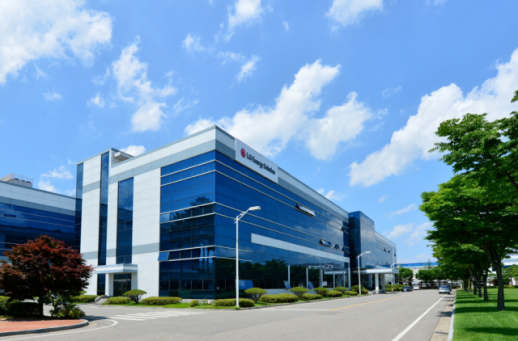 LG Energy Solution posts second straight loss, bets on ESS pivot SEOUL, April 30 (AJP) - LG Energy Solution reported its second consecutive quarterly operating loss in the first three months of 2026, hit by shrinking U.S. battery subsidies and weak electric vehicle demand. The nation's largest battery maker posted a consolidated operating loss of 207.8 billion won ($139.7 million) for the January to March period, reversing an operating profit of 374.7 billion won a year earlier, according to a regulatory filing on Thursday. Revenue slipped 2.5 percent year-on-year to 6.555 trillion won, while net losses ballooned to 944 billion won. Experts say the deterioration stemmed largely from a steep drop in the subsidies cut under Washington's Inflation Reduction Act, which fell to 189.8 billion won — just 41.5 percent of the 457.7 billion won booked a year ago. Ramp-up costs at five newly expanded North American ESS production sites and reduced pouch-type EV battery shipments to a major customer compounded the drag. Despite the red ink, LG Energy Solution laid out an aggressive blueprint to reshape its revenue mix around energy storage. The company said it would raise the share of ESS in total sales from about 25 percent in the first half to 35 percent by year-end, up from below 10 percent in 2025. "We secured an ESS order backlog of about 440 gigawatts in North America as of the end of April, and aim to build more than 50 gigawatts of ESS battery production capacity in the region by year-end," LG CNS CFO Lee Chang-sil said during an earnings conference call. To meet surging demand from power grid operators and AI data center developers, the company plans to convert multiple EV battery lines to ESS output at plants in Michigan, Ontario, Lansing and joint ventures with Honda and General Motors. The CFO projected second-quarter results would improve by about 10 percent from the first quarter on robust North American ESS demand and healthy appetite for high-nickel EV and hybrid batteries in Europe. Lee forecasted revenue growth of 15 to 20 percent in the second half relative to the start of the year, adding that the company aims to turn a profit without relying on U.S. production subsidies over the longer term. 2026-04-30 12:21:59
 -
 Samsung Electronics says Q1 chip profit hit 53.7 trillion won; HBM sales to triple in 2026 Samsung Electronics said its semiconductor business generated about 54 trillion won in operating profit in the first quarter, far exceeding the company’s total operating profit for all of last year. In its final earnings release on Wednesday, Samsung said its Device Solutions (DS) division posted revenue of 81.7 trillion won and operating profit of 53.7 trillion won. Results surged as the spread of artificial intelligence boosted demand for high-value memory chips and prices rose. Revenue from its finished-goods businesses totaled 52.7 trillion won, with operating profit of 3 trillion won. The Mobile eXperience (MX) unit grew on stronger flagship sales, including the Galaxy S26 Ultra, but profit gains were limited by higher costs and tariff burdens. Samsung said the widening gap between business units is likely to persist. It expects the semiconductor business to continue leading companywide results this year as memory prices keep rising and supply-demand imbalances deepen. The company also expects high-bandwidth memory (HBM) sales to climb sharply. On a first-quarter earnings conference call, Samsung said, “The situation where memory supply fails to keep up with demand is expected to continue into next year,” adding that the supply gap versus demand next year could widen further than this year even on those demand drivers alone. Samsung said it expects HBM sales this year to rise to more than three times last year’s level. It said HBM4 began mass-production shipments in February, the first in the world, and capacity expansion is proceeding as planned, with supply set to ramp up in the second half. Samsung added that HBM4 revenue is expected to exceed half of total HBM revenue starting in the third quarter and to account for a majority of full-year HBM sales. By contrast, Samsung said profitability at its Device eXperience (DX) division — which includes mobile, home appliances and TVs — is likely to weaken. “Due to factors such as rising component costs, a year-on-year decline in profitability for the MX business is unavoidable,” the company said. It added that securing performance and profitability in the TV market this year will be difficult amid higher raw material prices and an uncertain external business environment. Samsung said it plans a broader reshaping of its DX business under a “select and focus” strategy. It said it has withdrawn from sales in China’s TV and home-appliance markets and is reviewing outsourcing production for some low-margin appliance product lines. Samsung said it will pursue “fundamental improvements” through cost reductions, structural efficiency and stronger long-term organizational competitiveness, and will also focus on securing future growth engines through mergers and acquisitions. Samsung also said it will significantly increase semiconductor-related facility investment to meet AI-driven demand. “With continued AI demand this year, capex is expected to increase to a considerable level compared with last year,” it said, adding it will expand early-stage R&D investment in next-generation processes and core technologies to secure technology leadership. Samsung said memory investment fell from the previous quarter after it front-loaded spending late last year, including adding new cleanroom space at its Pyeongtaek campus, but investment is expected to rise this year as equipment is installed in that space, lifting overall capex substantially. * This article has been translated by AI. 2026-04-30 12:10:45
 -
 South Korea culture minister urges faster guidance as game rules lag behind AI era “Companies need to see a guide to move, but we keep only reviewing things. Then game companies can only ask, ‘Are you telling us to market or not?’” (Culture, Sports and Tourism Minister Choi Hwi-young) Culture, Sports and Tourism Minister Choi Hwi-young on April 30 scolded the ministry’s game policy team, saying it must quickly provide the industry with clear guidance as rules and interpretations lag behind rapid change in gaming and AI. “We need to give guidance quickly,” Choi said at the second meeting of the Culture and Arts Policy Advisory Committee’s game subcommittee at the National Museum of Modern and Contemporary Art, Seoul. “Even if it’s just, ‘You can do this much for now,’ or ‘Ask us,’ we should issue as much guidance as we can within what’s possible.” The meeting brought together committee members representing the ministry and the game industry (Bae Su-jeong, Yoo Seung-hyun and Lim Su-jin), academia (Lee Seung-hoon and Hwang Seung-heum), and associations and groups (Cho Young-gi, Hwang Sung-ik and Kim Young-man) to discuss key tasks and policies for the sector. Members said the industry remains constrained by the fallout from the Sea Story controversy 20 years ago, arguing that a lingering gambling-related stigma makes it difficult to run promotions, including prize giveaways. Kim Young-man, president of the Korea e-Sports Association, said prizes are also used in e-sports and are unrelated to gambling. He said problems persist because of regulations rooted in two-decade-old concerns, citing cases in which services that had operated for 15 years without issues, including Real Farm, were blocked. Kim added that game companies in Taiwan and Japan offer rewards and urged faster action on issues that can be resolved through the will of the ministry and the public. Choi said the government is reviewing regulatory easing but faces concerns about side effects. “We should move one step within what society can accept, then another step,” he said, adding that officials are discussing how far rules can be relaxed while remaining effective and reducing public unease. Lee Seung-hoon, a professor in the Department of Game Contents at Anyang University, said restrictions on prize giveaways are making it harder for game companies to build user data. He said Google and Apple do not share user information with developers, and that marketing costs tied to those platforms rise while companies cannot accumulate data. Lee said game companies risk losing key assets beyond development, including open-market access and promotion. He added that when the Sea Story issue erupted, there were no e-sports tournaments, and suggested that even clearer legal interpretation could help remove gambling-related concerns. Artificial intelligence was also a major topic. Choi said the game industry leads IT advances and urged rapid adoption of AI achievements in the field. He asked participants to propose what government support is needed so the industry does not fall behind. Industry representatives criticized support programs as outdated. Yoo Seung-hyun, CEO of Wonder Potion, said AI has made it possible for small teams to build games, but Korea Creative Content Agency programs still reflect older standards, including residency requirements that set a minimum staffing level of about 10 people. With AI, he said, three people can now make a game. Yoo called the criteria too harsh and urged easing standards to match changing conditions. He also said there is some support for AI tool costs, but the amounts are limited even as prices rise, and asked for expanded, more advanced support. The meeting also reviewed follow-up progress on issues raised at the first subcommittee session, including cracking down on illegal private game servers, making the 52-hour workweek rule more flexible for the game sector, and introducing a tax credit for game production costs. Choi said illegal private servers would be blocked immediately through the introduction of an emergency takedown authority. He said the tax credit for game production costs should be introduced next year. He also pledged that a 120 billion won game fund, created with a 60 billion won investment from Nexon, would be focused on small and indie game companies. 2026-04-30 12:09:17
 -
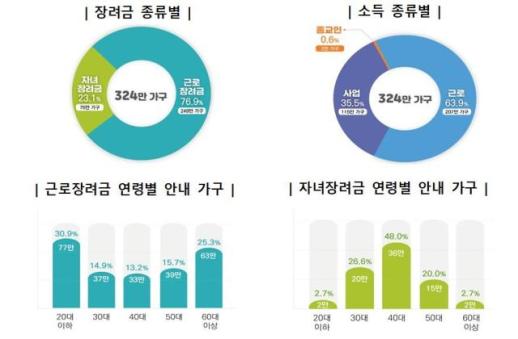 South Korea Tax Agency: Apply for Work, Child Tax Credits by June 1; Up to 3.3 Million Won The National Tax Service said Wednesday it will accept regular applications for 2025 earned income and child tax credits from May 1 through June 1 to support the living stability of low-income households. The agency said 3.24 million households with wage, business or clergy income in 2025 are eligible. It will send guidance in stages via mobile notifications (including government digital assistant alerts, KakaoTalk, Naver and text messages) and by mail. Payments will be made on Aug. 27 after reviews of income and asset requirements, more than a month earlier than the legal deadline at the end of September. Earned income credit amounts vary by household type: up to 1.65 million won for single-person households, 2.85 million won for one-income households, and up to 3.3 million won for dual-income households. The child tax credit pays 500,000 to 1 million won per dependent child under 18. To qualify for the earned income credit, combined spousal income must be below 22 million won for single-person households, 32 million won for one-income households, and 44 million won for dual-income households. For the child tax credit, combined spousal income must be below 70 million won. Total household assets must be below 240 million won as of June 1, 2025, with debts not deducted. If assets are 170 million won or more but below 240 million won, only 50% of the calculated credit will be paid. Recipients of the guidance notice can apply through SonTax using a QR code or mobile link, or through an automated phone service. Older adults and others who have difficulty using mobile devices or PCs can get help through the tax credit call center. Those who did not receive a notice can still apply directly through HomeTax if they meet the requirements, but must submit supporting documents such as income verification. Starting with this regular application period, the automatic application system has been expanded. The NTS said 1.55 million households — 47.8% of the total — that previously agreed to automatic applications will be processed without additional steps. Those who consent during this application period will be able to receive credits for a set period without reapplying. The agency also introduced a mobile electronic braille service so visually impaired users can access guidance materials in braille. Beginning May 1, it will pilot a generative AI chatbot service offering 24-hour consultations. Households that miss the regular deadline can apply through Dec. 1, but will receive only 95% of the calculated amount. Households with only wage income that already completed a semiannual application do not need to file a regular application; additional payments or repayments will be handled through a settlement on June 25. The NTS warned of scams impersonating the credits and asking for fees or bank account passwords. "The National Tax Service never asks for money transfers under any circumstances," it said, urging the public to be vigilant against financial fraud.* This article has been translated by AI. 2026-04-30 12:04:28
 -
 Korea’s Regular-Nonregular Pay Gap Widens as Short-Hour, Older Workers Rise Nonregular workers’ total wage growth lagged that of regular workers last year, widening the pay gap between the two groups, government data showed. The ministry attributed the trend largely to an increase in nonregular workers in lower-paid, shorter-hour jobs. According to the Ministry of Employment and Labor’s “June 2025 Survey on Working Conditions by Employment Type,” the total hourly wage for wage workers stood at 25,839 won as of June last year, up 2.7% from a year earlier. Regular workers averaged 28,599 won, up 3.2%, while nonregular workers averaged 18,635 won, up 1.3%. Nonregular workers’ total hourly wage was 65.2% of regular workers’ level, down 1.2 percentage points from 66.4% a year earlier. The ministry said the overall wage increase for nonregular workers slowed as their numbers rose in groups that typically work fewer hours and earn less, including short-hour workers, those 60 and older, women and workers in health and social welfare services. The share of low-wage workers earning less than two-thirds of the median wage was 15.8%, down 0.3 percentage points from 16.1% a year earlier. The wage quintile ratio improved to 4.39 from 4.42. The ministry said key distribution indicators improved as average wages for the bottom 20% rose 3.4%, outpacing the 2.4% increase for the top 20%. At workplaces with at least one employee, average actual working hours per worker totaled 146.3 hours, down 0.5 hour from 146.8 a year earlier. Regular workers averaged 162.1 hours, down 0.1 hour, and nonregular workers averaged 104.8 hours, down 1.0 hour. More than 91% of all workers were enrolled in social insurance programs, the ministry said, adding that enrollment in industrial accident insurance showed little difference between regular and nonregular workers. Union membership at workplaces with at least one employee rose to 10.2% from 9.7% a year earlier. Membership was 13.7% for regular workers and 1.2% for nonregular workers, up 0.6 and 0.2 percentage points, respectively.* This article has been translated by AI. 2026-04-30 12:03:18
 -
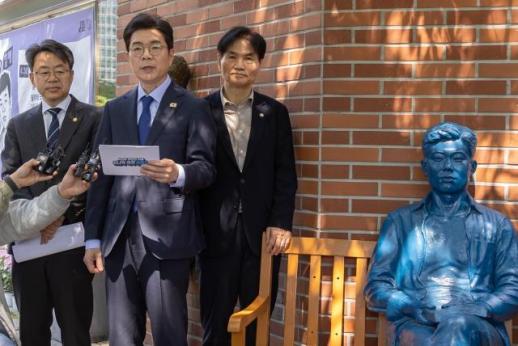 Seoul mayoral candidate Jeong Won-oh pledges paid sick leave for freelancers, expanded flexible work Jeong Won-oh, the Democratic Party candidate for Seoul mayor, said April 30 he would expand Seoul-style flexible work arrangements and introduce a Seoul-funded paid sick leave program for freelancers and other vulnerable workers. Speaking outside the Jeon Tae-il Memorial Hall along Cheonggyecheon in central Seoul, Jeong said that if Seoul runs on labor, the city government should also share responsibility for the time of working residents. Under the slogan, "Rebuilding a worker-respecting special city, Seoul, with the voices of working citizens," Jeong said his labor platform focuses on work-life balance and ensuring the right to rest when sick. To pursue his goal of a "30-minute commute city," Jeong pledged to broaden flexible work options, including telework, remote work and staggered hours. He also said the city would build a dense network of "public and shared offices near home" by using idle spaces such as subway stations. Companies that adopt flexible work would receive incentives and get extra points when participating in Seoul city bids and projects. Jeong also pledged a paid sick leave program for freelancers, the self-employed, platform workers and day laborers, expanding a pilot program previously launched in Jongno district across the city. "Resting when you're sick is not a privilege, it's common sense," he said, adding that Seoul would serve as a safety net for residents in blind spots of workers' compensation insurance and paid leave. He said the city would create new "Seoul-style worker protection standards" so workers do not lose jobs as artificial intelligence, robots and automation spread. He also pledged to set up a framework for "just transition" discussions to protect workers expected to be harmed by the climate crisis. Before the announcement, Jeong visited the Sinjeong rail depot and the Yangcheon public bus garage early April 30 to meet workers, and later laid flowers at a Jeon Tae-il statue on Jeon Tae-il Bridge over Cheonggyecheon. Referring to the schedule, he said May 1 would be the first day to mark the holiday under the name "Labor Day" after 63 years, and vowed to carry the voices he heard at worksites and Jeon's vision into Seoul city policy. 2026-04-30 12:00:20
 -
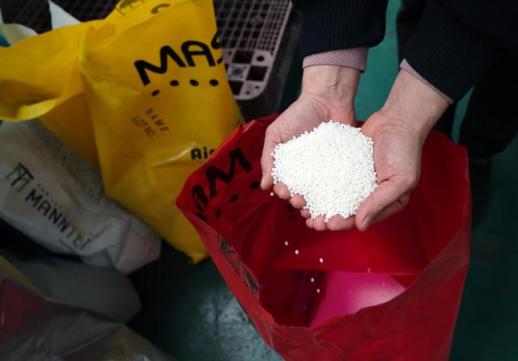 South Korea says U.S. is now top naphtha supplier; weighing extending oil swap into July Since the outbreak of the Middle East war, South Korea has been diversifying alternative sources of naphtha imports, with the United States emerging as the largest supplier. The government is extending its strategic oil swap program through June and is reviewing whether to extend it into July as well. Yang Gi-uk, director general for industrial resources security at the Ministry of Trade, Industry and Energy, said at a daily briefing of the Middle East war response task force on Wednesday that “the results of introducing support for the gap in import unit prices for basic feedstocks such as naphtha are becoming visible.” He said import sources have diversified from the Middle East to the United States, India, Algeria and Greece, and that “since the Middle East war, the United States has become the largest naphtha import country.” The government, through a supplementary budget, has been covering 50% of the import unit price for contracts for basic feedstocks signed starting April 1, the ministry said. The program covers naphtha, LPG, condensate and base oils, among others. For naphtha, the ministry said, contract volumes that took all of March to secure were finalized in just two weeks in April. The ministry expects supply conditions to improve next month. In May, it expects to secure naphtha at about 85% to 90% of prewar levels. Yang said naphtha imports had previously come from the United Arab Emirates, Algeria, Qatar, Kuwait and India, but diversification has pushed the United States to the top. He said the United States, which ranked seventh among naphtha suppliers last year, has become the largest supplier, adding that the longer lead time suggests shipments have been arriving since April. He cautioned it was too early to call the shift structural, saying the naphtha market has become segmented and traders are adjusting volumes. Yang said diversification is expected to lift petrochemical plant operating rates, which had fallen to 55%, to about 90% to 95%, and that in absolute terms it is expected to reach above 70%. On base oils, he said imports continue because many purchases come from China, adding that, taking those factors into account, supply conditions should improve in May. The government is also considering further extending its strategic oil swap program. Yang said the program, originally set to run through May, will be extended through June, and that an extension into July is under review. “It will likely continue as long as there is corporate demand,” he said. On any plan to release strategic reserves, Yang said companies are actively using the swap program and the government needs to confirm demand. He said officials will need to see how much companies want releases under the existing method, what inventory levels look like, and how alternative import volumes develop.* This article has been translated by AI. 2026-04-30 11:45:58
 -
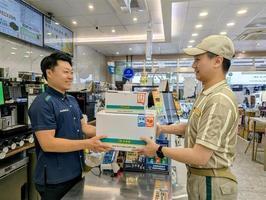 Taiwan FamilyMart Begins Accepting Yamato Transport Parcel Drop-Offs FamilyMart Taiwan operator FamilyMart Co. (全家便利商店) said on the 28th it began accepting Yamato Transport parcel shipments the same day. Customers can drop off Yamato Transport room-temperature and refrigerated parcels at more than 4,400 stores across Taiwan, including outlying islands. Shipping labels can be entered and printed at in-store “FamiPort” terminals, or customers can book online via the FamilyMart app, Yamato Transport’s LINE account or its official website and then scan a code in stores to print the label. Delivery fees within Taiwan’s main island are 130 Taiwan dollars (about 657 yen) for room-temperature shipments up to S60 size (total of length, width and height of 60 centimeters or less), and 160 Taiwan dollars for refrigerated shipments. The company said it plans to add a parcel pickup service later.* This article has been translated by AI. 2026-04-30 11:45:32